



Ohio State, COTA to offer discount pass to faculty, staff
They will now have the option of purchasing discounted COTA monthly fares for local routes via pre-tax payroll deduction. After enrolling in payroll deduction, the program will require participating employees to obtain a new BuckID and “swipe it” for unlimited access to local COTA fixed routes, beginning May 1, 2015.

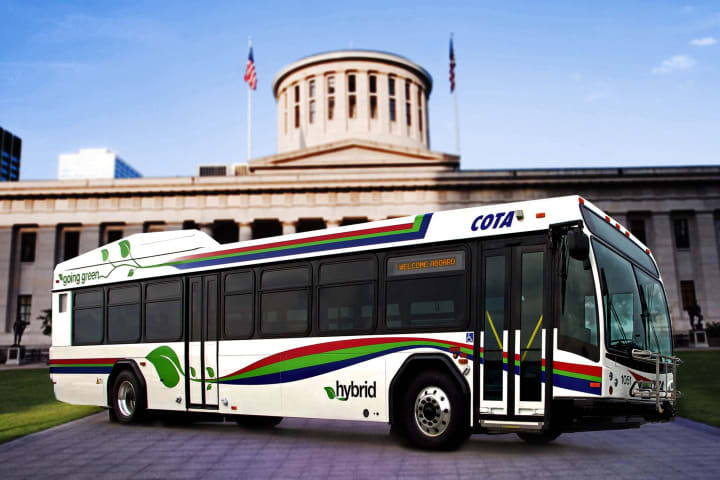
Ohio State University and the Central Ohio Transit Authority (COTA) announced a new discount transit access program for Ohio State faculty and staff.
Ohio State faculty and staff members will now have the option of purchasing discounted COTA monthly fares for local routes via pre-tax payroll deduction. After enrolling in payroll deduction, the program will require participating employees to obtain a new BuckID and “swipe it” for unlimited access to local COTA fixed routes, beginning May 1, 2015.
“COTA values the long-standing partnership with Ohio State and its students, and we’re pleased to partner with Ohio State on providing additional payment options to faculty and staff,” said COTA President/CEO W. Curtis Stitt. “The opportunity to swipe a BuckID instead of purchasing a pass on-site makes using COTA’s services more convenient.”
Multiple COTA routes provide service between the Ohio State campus and locations throughout central Ohio. The Ohio State University Campus Area Bus Service (CABS) shares multiple on campus bus stops with COTA, further promoting connectivity between the transit systems and enhancing travel options on and around the university.
“Additional payment options will allow faculty and staff to more conveniently access COTA routes,” said Beth Snoke, director, Ohio State Transportation and Traffic Management. “This program is another great example of how the university’s partnership with COTA continues to enhance transportation offerings to the university community.”
Since 1996 COTA has also offered Ohio State faculty and staff a $4 discount on monthly and 31-DayPasses. The $4 discount will be offered through the new payroll deduction program, and 31-DayPasses will also be available to purchase at select locations on the Ohio State campus. The combination of the longstanding $4 discount and the added value of the pre-tax benefit, represent a greater savings to those who choose to utilize COTA as a transportation option.
"We’re confident that the program will encourage increased public transportation use by Ohio State faculty and staff,” said Stitt.
More Bus
Report: Transit Bus Manufacturing Supports 34,100 Jobs, $5.1B in GDP
The “Buses Mean Business” report examines the transit bus manufacturing industry’s economic footprint, supply chain, and rising demand for vehicle replacements.
Read More →
Biz Briefs: New Flyer Delivers in Columbus, Houston, Beep and Freebee Merge, and More
In this edition of Biz Briefs, we spotlight the latest developments shaping the future of mobility.
Read More →
People Movement: Dan Dipert Coaches Adds Third-Generation Leader, Keolis Names New Valley Metro VP/GM, and More
In this edition, we also cover recent appointments and announcements at the Wabtec, SilverRide, HNTB, and more, showcasing the individuals helping to shape the future of transportation.
Read More →
New York MTA Plans Largest Bus Fleet Upgrade in More Than a Decade
The agency is seeking manufacturers for 650 new CNG buses to replace aging vehicles, improve reliability, and advance its broader fleet modernization strategy.
Read More →
Building a Flexible Path to Transit Electrification
John Hroncich discusses BAE Systems’ modular and scalable approach, lessons learned from decades of real-world operations, and how agencies can identify electrification strategies that fit their fleets.
Read More →
Bus Tech Talk: Keeping Transit Technicians Ahead of the Technology Curve
LA Metro’s Obed Mejia discusses technician training, evolving maintenance technology, fleet replacement, and strategies for getting the most out of today’s transit fleets.
Read More →
Biz Briefs: RIPTA Unveils New Frontrunners, Clevland RTA Adds New Siemens, and More
In METRO's latest installment, we take a look at recent news from Siemens, Prevost, Dodge, and more partnerships making headlines across the transportation sector.
Read More →
People Movement: Holly Arnold Joins Transdev and More
In this edition, we also cover recent appointments and announcements at Pace, CamTran, MCI, and more, showcasing the individuals helping to shape the future of transportation.
Read More →
The High Cost of Transit Buses: Industry Leaders Look to Procurement Reform
Transit leaders and policymakers examine how standardized bus designs, streamlined procurement, and predictable funding could help agencies stretch budgets and deliver better service.
Read More →
The Business Voice Behind Public Transportation
As chair of APTA’s Business Members Board of Governors, Ray Melleady explains how more than 850 business members are partnering with transit agencies to advance funding, innovation, and industry-wide collaboration.
Read More →