




RELATED: Ga.'s Athens Transit named top 'Urban Community' system
UGA receives $10 million for electric bus purchase
The19 40-foot buses should arrive on campus in 2017 and are part of the University of Georgia's strategic plan to advance campus sustainability.
June 27, 2016

Electric buses, manufactured by New Flyer, conducted a demo on the UGA campus last year. Photo: University of Georgia
2 min to read
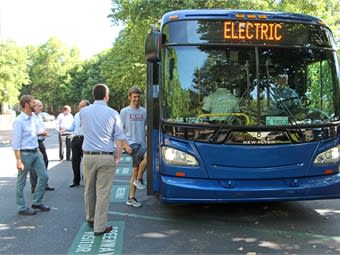
Electric buses, manufactured by New Flyer, conducted a demo on the UGA campus last year. Photo: University of Georgia
The University of Georgia (UGA) has been awarded $10 million from the state of Georgia to purchase 19 electric buses.
The funding was awarded by GO! Transit Capital Program, a competitive funding program administered by Georgia's State Road and Tollway Authority. UGA will provide $5 million in matching funds.
The 40-foot zero-emission electric buses should arrive on campus in 2017 and are part of the university's strategic plan to advance campus sustainability. The buses will augment the university's existing fleet of 59 diesel buses and will replace the university's oldest buses.
"By adding sustainable electric buses to our UGA fleet, we also are helping to raise the air quality in our community," said Robert Holden, associate VP, Auxiliary Services.
UGA's Campus Transit system serves 11 million passengers a year, including UGA students and Athens community members. Buses in the UGA system, which is the state's second-largest bus system in ridership behind Atlanta's MARTA system, drive a combined 900,355 miles a year. The new electric buses are expected to use 171,000 fewer gallons of diesel in a year. The battery-powered motors have simpler maintenance and could last for 20 years or more, according to UGA officials. Over the buses' lifetime, fuel and maintenance costs are expected to be 84% less than those for diesel buses, according .
"We are excited about bringing this cutting-edge and sustainable electric bus technology to the University of Georgia and the Athens-Clarke County community," said Don Walter, director of transportation and parking services at UGA. "These buses will enhance research opportunities, greatly reduce emissions and will slow the growth of transportation costs."
The electric buses will provide opportunities for campus research. Scientists and engineers in the UGA College of Engineering are working to develop charging technologies — fast-charging and wireless-charging for electric vehicles, such as buses. Researchers also are building a database of electric vehicle usage, operation and charge-time data to come up with a set of best practices. With the addition of the buses, the researchers will have more data to access.
In addition, the electric buses can be used as batteries to power buildings — such as residence halls or dining facilities — for up to five hours per bus. This capacity could be useful during snowstorms or other emergencies, Walter said.
More Bus

New York MTA Plans Largest Bus Fleet Upgrade in More Than a Decade
The agency is seeking manufacturers for 650 new CNG buses to replace aging vehicles, improve reliability, and advance its broader fleet modernization strategy.
Read More →
Building a Flexible Path to Transit Electrification
John Hroncich discusses BAE Systems’ modular and scalable approach, lessons learned from decades of real-world operations, and how agencies can identify electrification strategies that fit their fleets.
Read More →
Bus Tech Talk: Keeping Transit Technicians Ahead of the Technology Curve
LA Metro’s Obed Mejia discusses technician training, evolving maintenance technology, fleet replacement, and strategies for getting the most out of today’s transit fleets.
Read More →
Biz Briefs: RIPTA Unveils New Frontrunners, Clevland RTA Adds New Siemens, and More
In METRO's latest installment, we take a look at recent news from Siemens, Prevost, Dodge, and more partnerships making headlines across the transportation sector.
Read More →
People Movement: Holly Arnold Joins Transdev and More
In this edition, we also cover recent appointments and announcements at Pace, CamTran, MCI, and more, showcasing the individuals helping to shape the future of transportation.
Read More →
The High Cost of Transit Buses: Industry Leaders Look to Procurement Reform
Transit leaders and policymakers examine how standardized bus designs, streamlined procurement, and predictable funding could help agencies stretch budgets and deliver better service.
Read More →
The Business Voice Behind Public Transportation
As chair of APTA’s Business Members Board of Governors, Ray Melleady explains how more than 850 business members are partnering with transit agencies to advance funding, innovation, and industry-wide collaboration.
Read More →
From Surviving to Thriving: Building Stronger Transportation Organizations
Bus Business Consultants founder Brian Dickson shares lessons on leadership, organizational health, and creating options for long-term success in a changing transportation industry.
Read More →
Finding the ‘Happy Medium’: Optimizing Maintenance Without Sacrificing Reliability
The key to maintenance optimization isn’t doing less work—it’s doing the right work at the right time on the right assets.
Read More →
LA Metro, City of West Hollywood, and Partners Advance Smarter Bus Lane Enforcement
The award-winning partnership combines AI-powered detection with human oversight to improve bus reliability, accessibility, and enforcement efficiency.
Read More →