




Related: Grad students explore feasibility of Hyperloop system
UCLA adds 2 BYD electric buses, boasts all clean fuel fleet
The move is also in step with the University of California’s systemwide goal of carbon neutrality by 2025. UCLA has already met its 2020 goal of using less energy per square foot of buildings than in 1990.
October 3, 2016
Brent Pantell/UCLA
2 min to read
Brent Pantell/UCLA
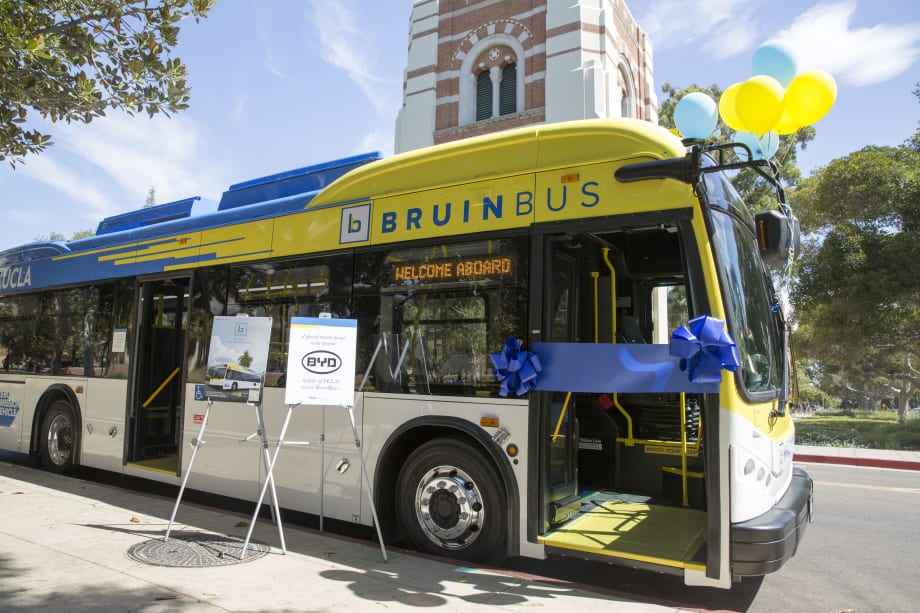
UCLA became the first public university in California with electric buses, when two zero-emissions BYD electric buses replaced the last diesel buses in the BruinBus transit fleet.
Combined with the 14 current compressed natural gas (CNG) buses in UCLA’s fleet, UCLA’s first electric buses switch the BruinBus fleet to all clean fuel and continue to reduce the university’s reliance on fossil fuel. The move is also in step with the University of California’s systemwide goal of carbon neutrality by 2025. UCLA has already met its 2020 goal of using less energy per square foot of buildings than in 1990, in part by converting more than half of its campus fleet to alternative-fuel vehicles and growing its roster of LEED-certified green buildings.
“UCLA Transportation began its commitment to operating alternative-fuel vehicles in its university fleet 18 years ago,” said Renée Fortier, executive director, UCLA Events and Transportation. “Adding two new emission-free electric buses to the BruinBus transit fleet is an exciting and natural progression of our efforts to move sustainable transportation from ideas to practice.”
The project also aligns with UCLA’s Sustainable LA Grand Challenge, a university-wide research initiative to transition the Los Angeles region to 100% renewable energy, 100% local water, and enhanced ecosystem health by 2050.
“In California, transportation is estimated to create almost 40 percent of our greenhouse gases, so a huge part of reducing emissions and improving public health comes down to clean fuel,” said Nurit Katz, chief sustainability officer for UCLA.
Bruins first boarded the new electric buses after a ribbon-cutting ceremony at the BruinBus stop by Dickson Court. UCLA Transportation hopes to order additional electric buses later this year. The department is also conducting a feasibility study on the installation of solar-powered charging stations so that zero-emission buses would also be powered by clean energy, Fortier said.
The iron-phosphate batteries, designed by the company BYD, can run for up to 145 miles of typical driving on the service routes and can recharge in four hours. The department can charge the buses overnight using low-cost, off-peak electricity to provide additional cost savings.
“UCLA is the first University of California campus and the first California public university to have electric buses,” said Clinton Bench, director, UCLA Fleet and Transit. “This supports our commitment to reduce greenhouse gas emissions from university fleet vehicles.”
The new buses are five times more efficient compared to diesel, CNG, and hybrid technologies. This translates into hundreds of thousands of dollars in savings per bus from the reduced cost in fuel and maintenance, according to UCLA Transportation. UCLA students on campus will notice something unexpected as well — the new fleet addition will be half as loud as buses operated by fossil fuels.
More Bus

Report: Transit Bus Manufacturing Supports 34,100 Jobs, $5.1B in GDP
The “Buses Mean Business” report examines the transit bus manufacturing industry’s economic footprint, supply chain, and rising demand for vehicle replacements.
Read More →
Biz Briefs: New Flyer Delivers in Columbus, Houston, Beep and Freebee Merge, and More
In this edition of Biz Briefs, we spotlight the latest developments shaping the future of mobility.
Read More →
People Movement: Dan Dipert Coaches Adds Third-Generation Leader, Keolis Names New Valley Metro VP/GM, and More
In this edition, we also cover recent appointments and announcements at the Wabtec, SilverRide, HNTB, and more, showcasing the individuals helping to shape the future of transportation.
Read More →
New York MTA Plans Largest Bus Fleet Upgrade in More Than a Decade
The agency is seeking manufacturers for 650 new CNG buses to replace aging vehicles, improve reliability, and advance its broader fleet modernization strategy.
Read More →
Building a Flexible Path to Transit Electrification
John Hroncich discusses BAE Systems’ modular and scalable approach, lessons learned from decades of real-world operations, and how agencies can identify electrification strategies that fit their fleets.
Read More →
Bus Tech Talk: Keeping Transit Technicians Ahead of the Technology Curve
LA Metro’s Obed Mejia discusses technician training, evolving maintenance technology, fleet replacement, and strategies for getting the most out of today’s transit fleets.
Read More →
Biz Briefs: RIPTA Unveils New Frontrunners, Clevland RTA Adds New Siemens, and More
In METRO's latest installment, we take a look at recent news from Siemens, Prevost, Dodge, and more partnerships making headlines across the transportation sector.
Read More →
People Movement: Holly Arnold Joins Transdev and More
In this edition, we also cover recent appointments and announcements at Pace, CamTran, MCI, and more, showcasing the individuals helping to shape the future of transportation.
Read More →
The High Cost of Transit Buses: Industry Leaders Look to Procurement Reform
Transit leaders and policymakers examine how standardized bus designs, streamlined procurement, and predictable funding could help agencies stretch budgets and deliver better service.
Read More →
The Business Voice Behind Public Transportation
As chair of APTA’s Business Members Board of Governors, Ray Melleady explains how more than 850 business members are partnering with transit agencies to advance funding, innovation, and industry-wide collaboration.
Read More →