



N.Y. transit hub attains LEED certification
The Hub, which was designed by QPK Design and constructed by Bette & Cringe, opened in September 2012 and serves as the main transfer location for more than one million Centro riders annually.

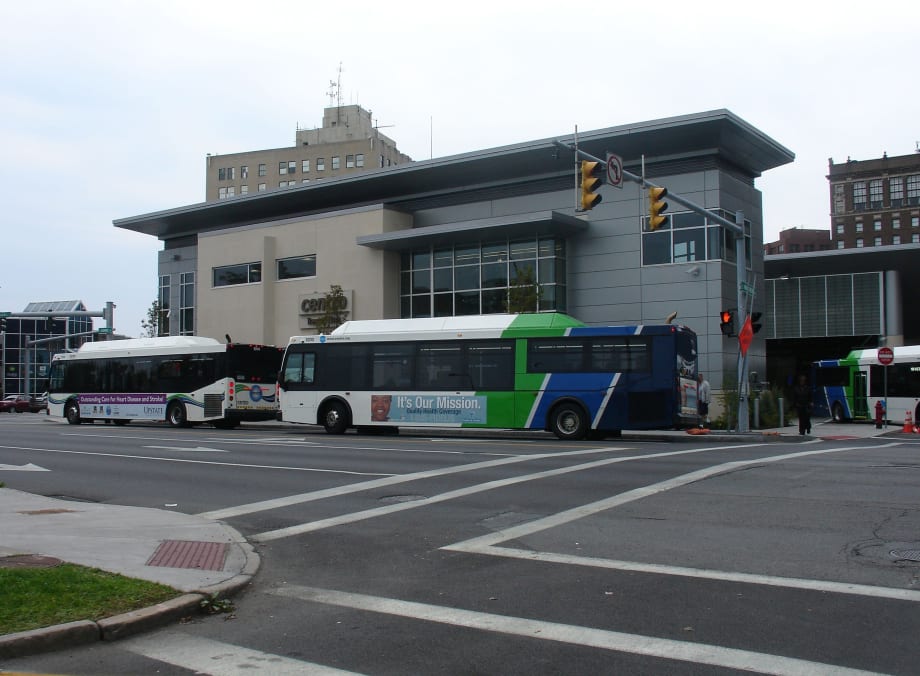
The Hub, which was designed by QPK Design and constructed by Bette & Cringe, opened in September 2012 and serves as the main transfer location for more than one million Centro riders annually.
The certification recognizes Centro’s participation in the voluntary LEED green building process and demonstrates the agency’s leadership, innovation, environmental stewardship, and social responsibility.
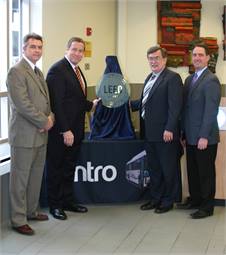
From left to right: David Harding, partner with QPK Design of Syracuse;Rick Fedrizzi, USGBC president/CEO and founding chair; Frank Kobliski, Centro executive director; and Matt Millea, deputy county executive for physical services at a presentation recently held to celebrate Centro's The Hub reaching LEED certification.
The state-of-the-art transit center features 22 bus bays covered by a 55,000-square-foot canopy and an adjoining indoor waiting area for customers. The Transit Hub’s LEED/sustainability features include:
Heated bus platforms and sidewalks that utilize radiant heat to prevent icing and snow build-up.
A storm water infiltration system that captures rainwater and removes particulates via a hydrodynamic device prevents the need for treatment at a sewage plant and reduces taxpayer costs. Funding for this project component was provided by Onondaga County’s “Save the Rain” program.
LED overhead lights with automatic brightness sensors maintain uniform lighting throughout the Hub, and sensors turn lights on and off throughout the day and night depending on needs.
A 55,000-square-foot roof canopy above the center platform contains skylights to allow in natural sunlight.
An energy management system that automatically controls heat, cooling, and lighting based on current conditions and occupancy.
Low flow plumbing fixtures that contribute to a 32% reduction in water use.
More Bus

New York MTA Plans Largest Bus Fleet Upgrade in More Than a Decade
The agency is seeking manufacturers for 650 new CNG buses to replace aging vehicles, improve reliability, and advance its broader fleet modernization strategy.
Read More →
Building a Flexible Path to Transit Electrification
John Hroncich discusses BAE Systems’ modular and scalable approach, lessons learned from decades of real-world operations, and how agencies can identify electrification strategies that fit their fleets.
Read More →
Bus Tech Talk: Keeping Transit Technicians Ahead of the Technology Curve
LA Metro’s Obed Mejia discusses technician training, evolving maintenance technology, fleet replacement, and strategies for getting the most out of today’s transit fleets.
Read More →
Biz Briefs: RIPTA Unveils New Frontrunners, Clevland RTA Adds New Siemens, and More
In METRO's latest installment, we take a look at recent news from Siemens, Prevost, Dodge, and more partnerships making headlines across the transportation sector.
Read More →
People Movement: Holly Arnold Joins Transdev and More
In this edition, we also cover recent appointments and announcements at Pace, CamTran, MCI, and more, showcasing the individuals helping to shape the future of transportation.
Read More →
The High Cost of Transit Buses: Industry Leaders Look to Procurement Reform
Transit leaders and policymakers examine how standardized bus designs, streamlined procurement, and predictable funding could help agencies stretch budgets and deliver better service.
Read More →
The Business Voice Behind Public Transportation
As chair of APTA’s Business Members Board of Governors, Ray Melleady explains how more than 850 business members are partnering with transit agencies to advance funding, innovation, and industry-wide collaboration.
Read More →
From Surviving to Thriving: Building Stronger Transportation Organizations
Bus Business Consultants founder Brian Dickson shares lessons on leadership, organizational health, and creating options for long-term success in a changing transportation industry.
Read More →
Finding the ‘Happy Medium’: Optimizing Maintenance Without Sacrificing Reliability
The key to maintenance optimization isn’t doing less work—it’s doing the right work at the right time on the right assets.
Read More →
LA Metro, City of West Hollywood, and Partners Advance Smarter Bus Lane Enforcement
The award-winning partnership combines AI-powered detection with human oversight to improve bus reliability, accessibility, and enforcement efficiency.
Read More →