



8 Open Source Benefits Every Agency Should Know
Lower cost is one of the chief reasons agencies should consider open source, which unlike proprietary licensed software, is a base platform that any agency can use free of charge and adapt to meet its specific needs.
Cambridge Systematics

Cambridge Systematics
Open source software has the potential to change the transit industry, which explains its growing rates of acceptance and adoption by an increasing number of companies and agencies. In the commercial market, open source products abound (e.g., the WordPress blogging platform and both the web browsers Mozilla and Firefox). Yet, open source often flies below transit agencies’ radar due to lack of familiarity in the industry. Agencies can benefit from a more complete understanding of the innovation, collaboration and cost efficiency these platforms offer.
The common definition for open source is software with source code that anyone can inspect, modify and enhance. Unlike proprietary licensed software where use is governed by strict licensing compliance, open source is a base platform that any agency can use free of charge and adapt to meet its specific needs. The platform can be modified either by an IT department, if the agency has one, or by vendors whose development fees are finite and considerably less expensive than annual license fees for proprietary software.
What agencies need
Lower cost is among eight reasons for agencies to consider open source as their software option, but it is not the only one. While open source may not be the right approach for every software project, what it delivers often is what agencies need.
Benefit #1: Users never pay license fees.
Annual increases in software license fees are the bane of financial officers, particularly those from small- to medium-sized transit entities. They justifiably reject the prohibitive expenses of annual fees and inevitable upgrade costs. With open source, agencies get a foundation that is free and unencumbered by restrictive and ongoing costly fees, unlike proprietary platforms that most agencies cannot afford.
Benefit #2: Open source uses up-to-date tools and technologies.
Many proprietary or off-the-shelf platforms have been in existence for a number of years and rely on older tools and technologies. No one wants to be locked into obsolescence, but that is the risk agencies take with these software models and their limited upgrades. In contrast, open source platforms tend to leverage cutting edge technologies and stay current with the latest design, user interface and user experience standards.
Benefit #3: Enhancements made by other users are available free of charge for everyone.
Every open source project has rules that govern how enhancements developed by other users can be available for all. With regional and local nuances and the cross-order communities built around open source, projects facilitate better outcomes by sharing the cost of enhancing or modifying a software solution, or through the simple exchange of knowledge about best practices and lessons learned.
Benefit #4: The agency can use its own staff to manage and deploy the software.
Any transit agency IT staff with the skills to manage software can do so. There is no need to retain permanent relationships with proprietary vendors. For example, more and more transit groups are taking advantage of this capability with Open Trip Planner and OneBusAway — two of the more widely used transportation-specific open source software platforms, which are considerably more cost-efficient than the alternative.
Benefit #5: The agency can seek assistance from a competitive market of contractors.
A number of vendors have the skills to modify open source software. By adopting open source, the pool of potential vendor partners can expand beyond transportation-specific, proprietary software companies to include consulting firms, university students and general software development firms. Selection of the right partner should always encompass more than fee comparisons. Agencies should carefully examine each contractor’s approach to fulfilling the agency’s needs, as well as the commitment to maintain quality and innovation. The vendor should display the ability to generate a robust and reliable platform and commit to the principles of the open source community.
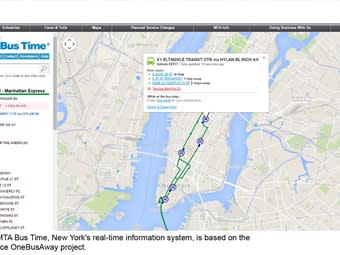
Agencies have qualified for, and received, federal grants for open source solutions, including the New York MTA’s OneBusAway project.
Benefit #6: Federal grants are available to develop and enhance platforms.
Any grant that allows for capital funding can be leveraged for open source platforms. Entities that seek to implement open source programs have the same opportunity as those using proprietary software, which have long relied on grants for funding assistance. Agencies have qualified for, and received, federal grants for open source solutions, including Open Trip Planner, OneBusAway, 1-Click and TransAM.
Benefit #7: Open source can be deployed either in-house or in the cloud.
Open source is flexible for on premise and cloud environments with minimal differences in system operation. The cloud and its servers comprise an alternative for platform operations by those agencies preferring not to use their IT department servers.
Benefit #8: Open source is designed for easy integration with other systems.
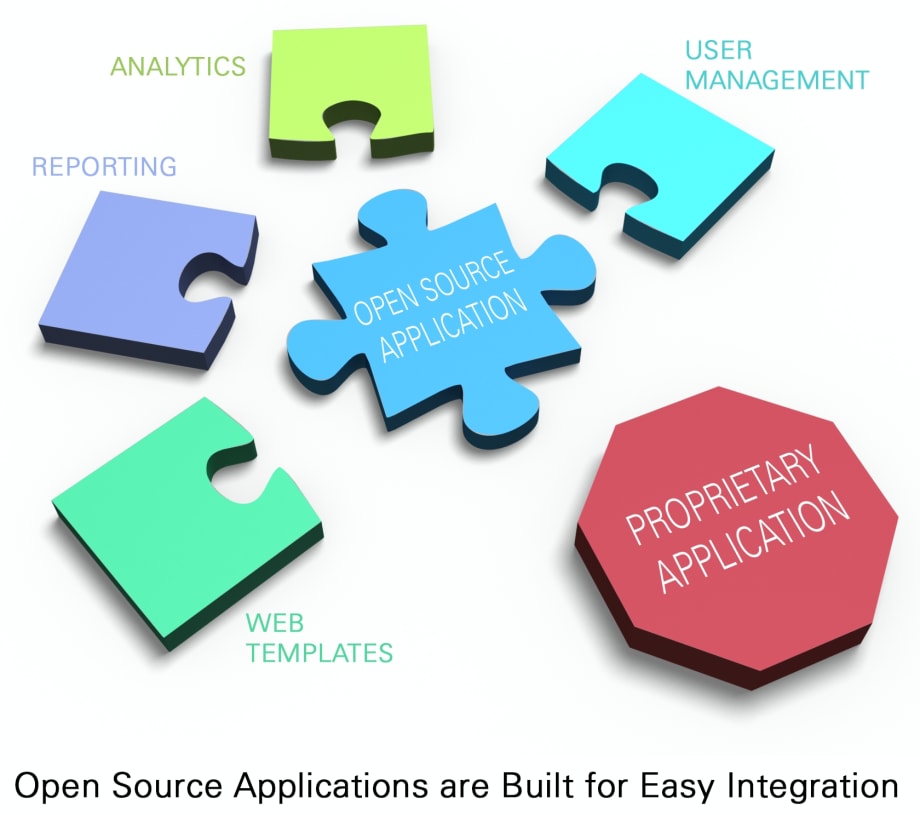
This may well be the greatest differentiator between open source and proprietary or off-the-shelf options. Transit IT systems perform at their best when integrated with other programs for the betterment of the agency and its partners. Integration is problematic, at best, and nearly impossible, at worst, with proprietary software, which is designed to protect it and increase its value by barring communication with other systems. Open source, however, benefits from its own communities of agencies in which integration is never an issue and modifications are open for everyone to adopt and change as they wish.
Leveraging open source
Sound Transit, the regional transportation agency serving the Seattle metropolitan area with express bus, light rail and commuter train services, attests to the value and cost savings of open source platforms. Sound Transit expanded OneBusAway for real-time information and turned to Open Trip Planner after previously relying on proprietary software.
“You need to have the right technical resources either in-house or through your vendor to keep the software running,” says Michael Berman, research and technology program manager at Sound Transit. “Even with a vendor, it’s less expensive than paying ongoing license fees.”
Rider feedback is overwhelmingly positive about the platforms, Berman adds, which “allows us more flexibility to meet our riders’ needs for accurate information and trip accuracy.”
Best practices
Before adoption of open source, agencies need to clearly delineate their goals in every discipline from customer service (e.g., GPS displaying on-time arrivals) to cost-effective route management. It is beneficial for agencies to communicate with their counterparts elsewhere to seek suggestions, learn from their experience and insist upon software that integrates with all systems.

Sound Transit expanded OneBusAway for real-time information and turned to Open Trip Planner after previously relying on proprietary software. (Sound Transit / Don Wilson)
Agencies should expect open source to free them from vendor cold-calls because no one entity owns open source. Unfortunately, this also makes these solutions less visible, so agencies may need to take the initiative to find them. One option is to include open source in the agency’s RFPs, which enables thorough cost comparisons with proprietary and off-the-shelf software, followed by due diligence of vendors in terms of experience, track record and history of customer solutions.
By its very nature, open source is innovative and collaborative. The agency can get a clearer picture of the best practices for comprehensive open source usage by collaborating with a community of transit entities. An individual agency can adopt and/or modify others’ successes with much less expense than a budget-constraining licensing contract. That is why open source agency communities have become the foundation of ever-evolving and sophisticated platform use. They are a wellspring of cutting-edge innovation and it behooves agencies to take advantage of them.
Sarah Anderson is a senior associate, CS Software, for Cambridge Systematics Inc. (www.camsys.com)
This article originally appeared in TransitFocus.
More Technology

From Hardware to Digital Partner: Luminator Charts Its Next Chapter
CEO Magnus Friberg discusses Luminator’s shift toward becoming a digital partner, the growing importance of software and interoperability, and how AI can help agencies improve operations and passenger experience.
Read More →
Beyond the Checklist: A Structured Approach to Transit Maintenance
Reliability-Centered Maintenance helps transit agencies move beyond routine checklists to focus limited resources on the assets and failures that have the greatest impact on safety, reliability, and service.
Read More →
NJ TRANSIT Advances Bus Technology Upgrades Across Statewide Fleet
More than 1,500 buses now feature upgraded technology designed to improve arrival predictions and provide free Wi-Fi, with deployment expected to reach nearly 2,000 buses by the end of 2026.
Read More →

Building a Flexible Path to Transit Electrification
John Hroncich discusses BAE Systems’ modular and scalable approach, lessons learned from decades of real-world operations, and how agencies can identify electrification strategies that fit their fleets.
Read More →
Biz Briefs: Alstom Lands Canadian Contract, LYT to Supply California TSP, and More
In METRO's latest installment, we take a look at recent news from Complete Coach Works, Beep, FlixBus, and more partnerships making headlines across the transportation sector.
Read More →
From Legacy Silos to Conversational Intelligence
What if transit leaders could ask any operational question and get a trusted answer in seconds? Conversational AI is transforming how agencies use their data.
Read More →
USDOT Announces Rail Vehicle Replacement Grants, Chattanooga AV Shuttle Funding
More than $191 million in federal funding will help three transit agencies replace aging rail vehicles and support a new autonomous shuttle service in Chattanooga.
Read More →
Bus Tech Talk: Keeping Transit Technicians Ahead of the Technology Curve
LA Metro’s Obed Mejia discusses technician training, evolving maintenance technology, fleet replacement, and strategies for getting the most out of today’s transit fleets.
Read More →
Biz Briefs: RIPTA Unveils New Frontrunners, Clevland RTA Adds New Siemens, and More
In METRO's latest installment, we take a look at recent news from Siemens, Prevost, Dodge, and more partnerships making headlines across the transportation sector.
Read More →
Why Simulating Pedestrian Movement Has Become Essential for Modern Rail Stations
Pedestrian microsimulation is helping rail planners identify bottlenecks, test station designs, and prepare complex transit hubs for growing passenger volumes.
Read More →