




Related: NY MTA completes 4th phase of Wi-Fi installation
NYC Transit rebounds quickly from near record weekend blizzard
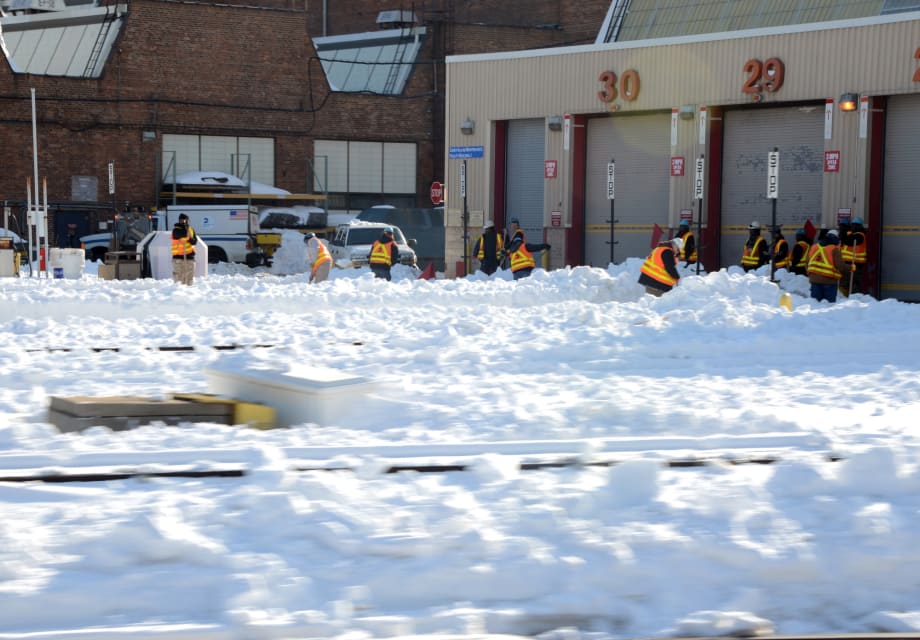
The Monday morning rush was as near normal as possible considering the city had been battered by 26.8 inches of snow as measured at Central Park.
January 27, 2016
4 min to read
By Charles Seaton, MTA New York City Transit
Mother Nature threw a curveball past New York City when a weather event originally predicted to be a routine six to 10 inch January snowstorm, developed into a monstrous blizzard that amassed snowfall totals only one-tenth of an inch behind the worst snowstorm in the city’s history. The storm also made the books by bringing the snowiest 24 hours in New York City history.
The blizzard marked the first time that the Metropolitan Transportation Authority's (MTA) New York City Transit put into operation a service plan that limited subways to underground portion – about 60% of the system’s 469 stations. We accompanied the service change with a special subway map outlining for customers the limits of service. The modified subway map was posted prominently on the MTA’s website on NYC Transit’s twitter and Facebook pages.
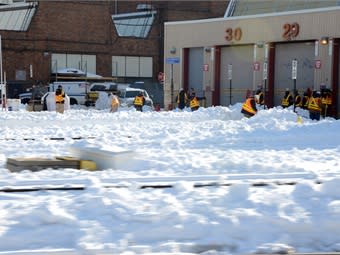
The Monday morning rush was as near normal as possible considering the city had been battered by 26.8 inches of snow as measured at Central Park. The effects of the storm, which brought even higher totals to boroughs outside of Manhattan, forced a planned suspension of bus service city-wide at noon on Saturday, Jan. 23, followed by an orderly halt, four hours later, to all outdoor subway service.
“This was one for the record books. The planned shutdown of all bus and outdoor subway service was necessary due to the conditions but suspending those trains also allowed us to restore service to a majority of our outdoor stations less than 24 hours later,” said MTA New York City Transit President Ronnie Hakim. “We owe a tremendous debt to our bus and subway workers who labored to maintain services where we could and restore them as quickly as possible after they were suspended.”
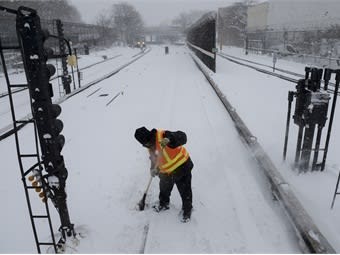
Throughout the weekend, an army of transit workers labored to keep trains up and running and fought to minimize the storm’s effects on outdoor segments so that restoration of train service could be accomplished as quickly as possible. Non-revenue trains continued running outdoors staffed with maintenance personnel, who cleared switches and corrected problems as they were encountered. They were joined by snow fighting and de-icing equipment which continued running throughout the storm.
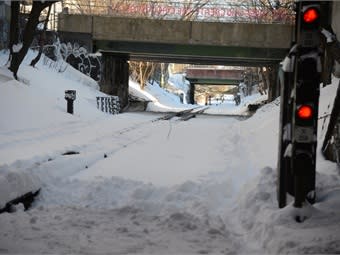
Lines running through open-cut sections (essentially a subway without a roof) in Brooklyn and the North Bronx were especially hard hit, including the Sea Beach N, Brighton Q and Dyre 5. The A line over Jamaica Bay to the Rockaways was also stressed with blowing snow and ice. Workers labored to keep subway station entrances and stairs cleared of snow driven by 50 mph wind gusts, clearing and salting more than 2,200 street stairways.
Wynton Habersham, acting sr. VP, department of subways, noted that the enhanced storm preparation and response led to a much improved ability to restore safe operations quickly. “By mid-day Sunday, 68 miles of track and 400 stations were cleared and operating,” Habersham noted. “This is credited in no small part to the personal sacrifices of thousands of employees who worked long hours in unimaginably harsh conditions.”
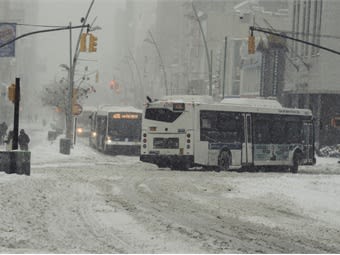
Conditions on the city’s streets deteriorated rapidly and the decision was made early Saturday to cease all bus operations by noon and restore those services after careful examination after a route by route inspection by supervisors.
“Rapid snowfall, high gusting winds, low visibility, and treacherous conditions all contributed to the decision to suspend services at noon on Saturday,” noted Darryl Irick, president, MTA Bus, and sr. VP, NYC Transit Department of Buses. “The entire Buses team worked to maintain a safe and orderly suspension of services and the prompt recovery beginning at 7 a.m., the next day. There was a tremendous amount of cooperation and commitment among hourlies, supervision, management, and the unions who all contributed to this complex operation.”
Service information was disseminated around the clock throughout the weekend via web posts, emails and social media postings through the Department of Customer Communications and the MTA Press Office.
“A major part of good customer service is effective communications and we worked throughout the weekend to alert our customers of plans to suspend service and when and how those services would resume,” noted Paul Fleuranges, VP, corporate communications. “The creation of the new map outlining underground-only service is an example.”
Topics:Management
More Management

LIT Marks 10-Year Milestone at Annual Summit
Hosted by the COTA from September 10 to 13, the Summit carried the theme “Celebrating 10 Years of Excellence, Leadership, and Impact,” with every part of the program honoring the people, agencies, and partners who built LIT over its first decade.
Read More →
People Movement: Dan Dipert Coaches Adds Third-Generation Leader, Keolis Names New Valley Metro VP/GM, and More
In this edition, we also cover recent appointments and announcements at the Wabtec, SilverRide, HNTB, and more, showcasing the individuals helping to shape the future of transportation.
Read More →
METRO Opens Submissions for 2026 Motorcoach Awards
Nominations are now being accepted for METRO Magazine’s Operator of the Year and Innovative Operator of the Year awards.
Read More →

New York MTA Advances Final Contract for Second Avenue Subway Expansion
Contract Four is the largest in the Second Avenue Subway Phase 2 project and includes construction of station infrastructure, tracks, and signals for the subway expansion, MTA officials said. Work on Contract Four will begin in 2027.
Read More →
Transit Agencies Highlight Safety Gains at National Summit
Leaders from 15 major transit systems shared crime-reduction results and safety initiatives while discussing the role of continued federal support.
Read More →
NITA Names New Leadership, Expands Reduced-Fare Program at First Board Meeting
The new regional transit authority appointed its first board chair and interim executive director while extending reduced fares across CTA, Metra, and Pace for eligible riders.
Read More →
Beyond the Checklist: A Structured Approach to Transit Maintenance
Reliability-Centered Maintenance helps transit agencies move beyond routine checklists to focus limited resources on the assets and failures that have the greatest impact on safety, reliability, and service.
Read More →
APTA 2026 Nominating Committee Selects Leadership Slate, Names Chair and Vice Chair Nominees
Leadership changes will help shape the association’s priorities and its representation of the transportation industry during the 2026–2027 term.
Read More →
DART Launches Major Security, Fare Enforcement Initiative
The 90-day demonstration will deploy coordinated security teams at five light rail stations while testing controlled access and gathering data to guide future investments.
Read More →
Sponsored•September 9, 2026
Advancing Fare Collection Through Technology and Innovation
Learn about delivering 1300 gates at 91 stations while managing fare evasion. Explore the large scale deployment, solution customization and real-world results that affect the region. Prepare for deployment in your region now.
Read More →