




RELATED: San Francisco introduces interactive, online performance dashboards
San Francisco MTA to add 185 40-foot trolley buses
The new vehicles will replace buses currently in service that are over 17 years old and account for 40% of system-wide delays, due to mechanical issues.
June 15, 2017
SFMTA
2 min to read
SFMTA
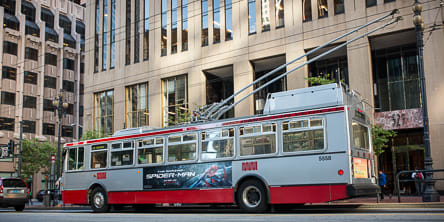
The San Francisco Municipal Transportation Agency (SFMTA), which manages the transportation network, announced that the Board of Supervisors voted to authorize the acquisition of 185 40-foot trolley buses to replace Muni’s aging fleet. The new vehicles will replace buses currently in service that are over 17 years old and account for 40% of system-wide delays, due to mechanical issues.
This is the most recent milestone for this procurement, which has received unwavering support from Mayor Ed Lee, the SFMTA Board of Directors, and the Board of Supervisors to improve the reliability of Muni by replacing and renewing the rubber tire fleet.
“Replacing aging vehicles is vital to Muni’s reliability and performance,” said SFMTA Chair Cheryl Brinkman. “This city deserves a safe and affordable 21st Century transit system, and these sustainable upgrades will improve service for our City’s working families and workforce for many years to come.”
Electric trolley buses are rubber-tired vehicles with motors powered by electricity from overhead wires. Although their operations can be less flexible than that of motor buses, trolley buses are more energy efficient, much quieter, and much less polluting. They are better on hills, require less maintenance, and are longer lasting than motor buses.
“The people of San Francisco deserve modern, reliable transportation services that support the quality of life and economic vitality of the city,” said SFMTA Director of Transportation Ed Reiskin. “By investing in new, high-performing, quiet and green electric trolley vehicles, we are able to provide better options for moving around the city.”
The approval by the Board of Supervisors culminates in the last of four bus procurements targeted to replace and expand our current fleet. The agency’s first new vehicles entered service in 2013 and the last trolley in this purchase will arrive in 2019. The contract approved concludes the largest zero-emission procurement in North America.
The SFMTA is aggressively pursuing replacement and rehabilitation programs on all its entire fleet of Muni buses, light rail vehicles, and historic street cars. With more people travelling throughout the city on a daily basis, more stress is being placed on the public transit system. By updating the bus fleet, the SFMTA is ensuring the city is preparing for economic growth while making sure the transportation system is accessible, equitable, and sustainable.
More Management

LIT Marks 10-Year Milestone at Annual Summit
Hosted by the COTA from September 10 to 13, the Summit carried the theme “Celebrating 10 Years of Excellence, Leadership, and Impact,” with every part of the program honoring the people, agencies, and partners who built LIT over its first decade.
Read More →
People Movement: Dan Dipert Coaches Adds Third-Generation Leader, Keolis Names New Valley Metro VP/GM, and More
In this edition, we also cover recent appointments and announcements at the Wabtec, SilverRide, HNTB, and more, showcasing the individuals helping to shape the future of transportation.
Read More →
METRO Opens Submissions for 2026 Motorcoach Awards
Nominations are now being accepted for METRO Magazine’s Operator of the Year and Innovative Operator of the Year awards.
Read More →

New York MTA Advances Final Contract for Second Avenue Subway Expansion
Contract Four is the largest in the Second Avenue Subway Phase 2 project and includes construction of station infrastructure, tracks, and signals for the subway expansion, MTA officials said. Work on Contract Four will begin in 2027.
Read More →
Transit Agencies Highlight Safety Gains at National Summit
Leaders from 15 major transit systems shared crime-reduction results and safety initiatives while discussing the role of continued federal support.
Read More →
NITA Names New Leadership, Expands Reduced-Fare Program at First Board Meeting
The new regional transit authority appointed its first board chair and interim executive director while extending reduced fares across CTA, Metra, and Pace for eligible riders.
Read More →
Beyond the Checklist: A Structured Approach to Transit Maintenance
Reliability-Centered Maintenance helps transit agencies move beyond routine checklists to focus limited resources on the assets and failures that have the greatest impact on safety, reliability, and service.
Read More →
APTA 2026 Nominating Committee Selects Leadership Slate, Names Chair and Vice Chair Nominees
Leadership changes will help shape the association’s priorities and its representation of the transportation industry during the 2026–2027 term.
Read More →
DART Launches Major Security, Fare Enforcement Initiative
The 90-day demonstration will deploy coordinated security teams at five light rail stations while testing controlled access and gathering data to guide future investments.
Read More →
Sponsored•September 9, 2026
Advancing Fare Collection Through Technology and Innovation
Learn about delivering 1300 gates at 91 stations while managing fare evasion. Explore the large scale deployment, solution customization and real-world results that affect the region. Prepare for deployment in your region now.
Read More →