



NYC Transit launching town halls to discuss system modernization
The Fast Forward Plan includes goals such as installing new signal and track infrastructure for subways and accelerating accessibility.

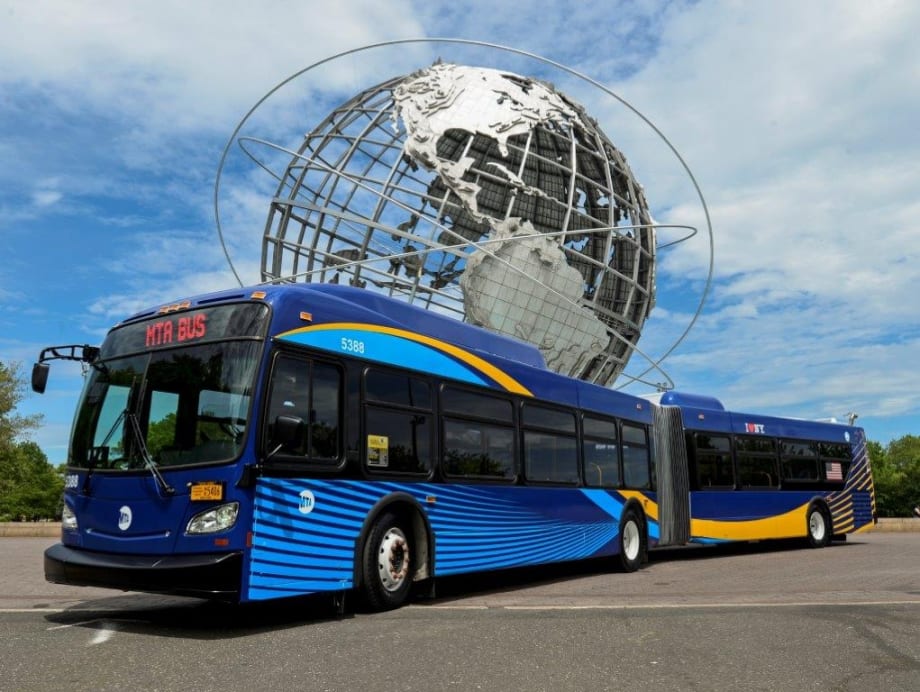
To track and report progress and to hold itself accountable to stakeholders and the public, MTA New York City Transit plans to issue twice-yearly reports on the progress of its Fast Forward Plan initiatives.
Marc A. Hermann/MTA NYC Transit

To track and report progress and to hold itself accountable to stakeholders and the public, MTA New York City Transit plans to issue twice-yearly reports on the progress of its Fast Forward Plan initiatives.
Marc A. Hermann/MTA NYC Transit
MTA New York City Transit is hosting a series of town hall-style public meetings in every borough of New York City this year to discuss the recently announced Fast Forward Plan to modernize the subway system and reimagine bus and paratransit service, with the first meeting planned for Tuesday, Aug. 21.
“The Fast Forward Plan is a massive undertaking that requires buy-in from all stakeholders — our customers, our colleagues, advocates, the business community, and elected officials at every level of government,” NYC Transit President Andy Byford said. “The future success of New York City depends upon the success of this comprehensive plan to modernize our transit system, and we’ll be out there in every borough making the case.”
In May, Byford introduced the Fast Forward Plan: The Plan to Modernize New York City Transit as a roadmap to modernizing all services offered by MTA New York City Transit, including subway service and subway stations, local, express and SBS bus routes, and paratransit options. The plan also sets out to improve accessibility across all services, and addresses how NYCT can improve its organizational structure, corporate culture, and customer service including communication with the public.
The Fast Forward Plan, which was delivered to the MTA Board, includes goals such as installing state-of-the-art new signal and track infrastructure for subways within five years, accelerating accessibility improvements across the subway system by ensuring all customers will be no more than two stops from an accessible station within five years, repairing and improving more than 150 subway stations over five years, putting a new modern fleet of thousands of subway cars and buses into service within five years, and completely redesigning the bus network to meet new ridership demands and population trends.
To track and report progress and to hold itself accountable to stakeholders and the public, MTA New York City Transit plans to issue twice-yearly reports on the progress of its Fast Forward Plan initiatives. Since the plan was announced, the agency has moved forward on accessibility improvements at three subway stations, moved forward on redesigning the entire Staten Island express bus network to improve reliability and service, increased off-peak service on bus routes with high growth potential, and launched the quarterly Customer Commitment report to set and track clear goals on customer-focused improvements.
Additionally as part of the Fast Forward Plan NYC Transit is implementing a redesign of the Staten Island Express Bus network this week and is embarking on a redesign of bus travel in the Bronx as part of a plan to redesign the bus network throughout the entire city. In June, Byford appointed the agency’s first advisor for systemwide accessibility to improve paratransit service and implement accessibility initiatives in the Fast Forward Plan.
More Management

METRO Opens Submissions for 2026 Motorcoach Awards
Nominations are now being accepted for METRO Magazine’s Operator of the Year and Innovative Operator of the Year awards.
Read More →
New York MTA Advances Final Contract for Second Avenue Subway Expansion
Contract Four is the largest in the Second Avenue Subway Phase 2 project and includes construction of station infrastructure, tracks, and signals for the subway expansion, MTA officials said. Work on Contract Four will begin in 2027.
Read More →
Transit Agencies Highlight Safety Gains at National Summit
Leaders from 15 major transit systems shared crime-reduction results and safety initiatives while discussing the role of continued federal support.
Read More →

NITA Names New Leadership, Expands Reduced-Fare Program at First Board Meeting
The new regional transit authority appointed its first board chair and interim executive director while extending reduced fares across CTA, Metra, and Pace for eligible riders.
Read More →
Beyond the Checklist: A Structured Approach to Transit Maintenance
Reliability-Centered Maintenance helps transit agencies move beyond routine checklists to focus limited resources on the assets and failures that have the greatest impact on safety, reliability, and service.
Read More →
APTA 2026 Nominating Committee Selects Leadership Slate, Names Chair and Vice Chair Nominees
Leadership changes will help shape the association’s priorities and its representation of the transportation industry during the 2026–2027 term.
Read More →
DART Launches Major Security, Fare Enforcement Initiative
The 90-day demonstration will deploy coordinated security teams at five light rail stations while testing controlled access and gathering data to guide future investments.
Read More →
Advancing Fare Collection Through Technology and Innovation
Learn about delivering 1300 gates at 91 stations while managing fare evasion. Explore the large scale deployment, solution customization and real-world results that affect the region. Prepare for deployment in your region now.
Read More →
Game Day in Motion: Moving Millions During the 2026 World Cup
Between packed transit stations and team motorcoaches, see how agencies and operators across North America tackled the transportation demands of the 2026 FIFA World Cup.
Read More →
Surface Transportation Extension Averts Shutdown, Leaves Transit Funding Gap
The stopgap keeps federal transportation programs moving, but missing advance funding could complicate the transit and rail projects agencies are planning next.
Read More →