




RELATED: MTA launches 'Genius' challenge seeking subway fixes
NY MTA approves $1.4B purchase of 535 new railcars
As part of the contract awarded to Kawasaki Rail, the new subway cars will be built in New York and Nebraska.
January 24, 2018

The R211 cars feature 58-inch-wide door openings, which are eight inches wider than standard doors on existing cars. Photo: MTA New York City Transit / Marc A.Hermann
3 min to read
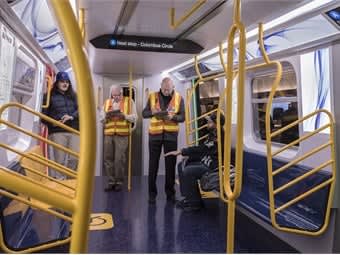
The R211 cars feature 58-inch-wide door openings, which are eight inches wider than standard doors on existing cars. Photo: MTA New York City Transit / Marc A.Hermann
The Metropolitan Transportation Authority (MTA) Board voted today to approve the purchase of 535 state-of-the-art, next-generation R211 subway cars for use on the “B Division,” which are the lettered routes, as well as the Staten Island Railway.
The $1.4 billion contract, awarded to Kawasaki Rail Car Inc., includes options for up to 1,077 additional cars, for a total acquisition of up to 1,612 cars at a cost of $3.7 billion, pending future Board approval.
For the initial, base contract, Kawasaki will design and deliver 440 new closed-end cars for the B Division, 75 closed-end cars for Staten Island Railway, and 20 innovative open gangway cars as part of a pilot program to MTA New York City Transit. The R211 cars feature 58-inch-wide door openings, which are eight inches wider than standard doors on existing cars.
The expanded doors are designed to reduce delays and speed up train movement by speeding boarding and reducing the amount of time trains sit in stations. Cars delivered to the B Division will be compatible with an advanced signaling system known as Communications-Based Train Control, enabling New York City Transit to deliver more frequent and reliable service by operating trains more closely together.
Some of the R211 cars will feature an “open gangway” pilot program located at the ends of the cars. This open design allows riders to move freely between cars to reduce crowding and distribute passenger loads more evenly throughout the train. All of the cars also include digital displays that will provide real-time, location-specific information about service and stations, new grab rails including double-poles, and brighter and clearer lighting, signage, and safety graphics.
In December 2017, New York City Transit presented prototypes of the new R211 designs at 34 Street -Hudson Yards to seek customer feedback, as well as introduce the future of the New York City subway to the public. MTA staff was on-hand and on social media as customers helped further refine the design.
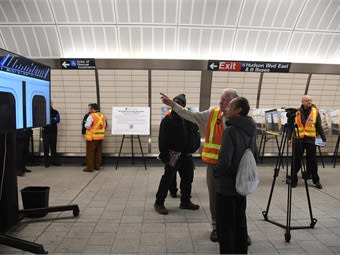
In December 2017, New York City Transit presented prototypes of the new R211 designs at 34 Street -Hudson Yards to seek customer feedback. Photo: MTA New York City Transit / Marc A.Hermann
Delivery of new cars for testing will begin in 2020. The base contract for the new R211 cars was awarded after a competitive procurement process involving bidders from around the world, and includes the delivery of the 535 new cars, as well as spare parts, special tools, diagnostic test equipment, technical documentation, and training.
The cars will be built and tested in Kawasaki facilities in Yonkers, N.Y., and Lincoln, Neb. This is the first New York City Transit contract to stipulate that proposers must submit detailed plans for the creation and retention of U.S. jobs through the inclusion of a “U.S. Employment Plan.”
Kawasaki, along with its subcontractors, has committed to provide approximately 470 U.S. jobs for the base award with a total estimated value of $125 million. If both options are exercised, the total potential value of U.S. jobs from this contract is estimated to be $270 million.
The funding for this project will be provided by the Federal Transit Administration.
More Rail
First Full MetroLink Rail Expansion Completed in 20 Years with $192M Airport Project
The project links two St. Louis-area airports by light rail while adding roadway and bike trail connections to improve regional access and mobility.
Read More →
Utilimarc Launches SmartReplace to Optimize Fleet Replacement Decisions
AI-powered SmartReplace helps fleets prioritize vehicle replacements, model budget scenarios, and build more defensible long-term strategies.
Read More →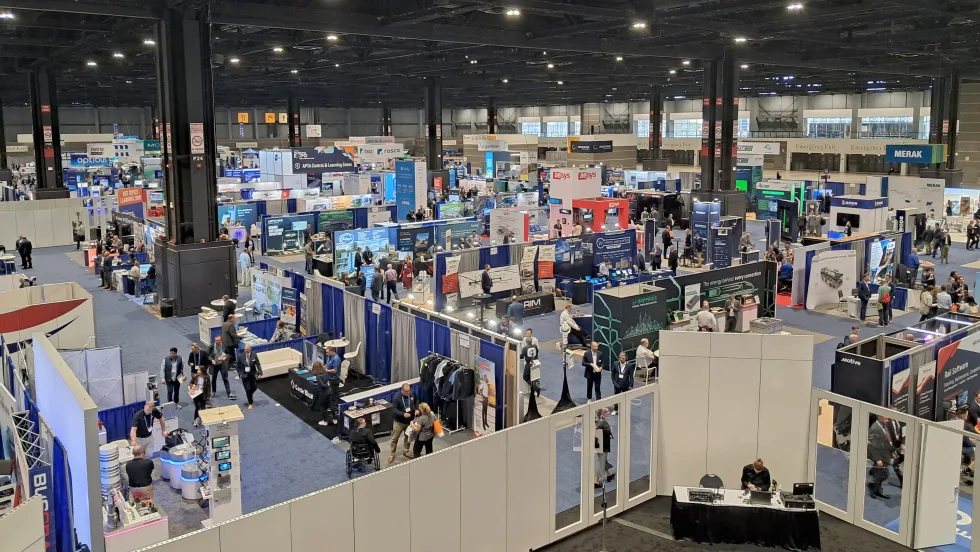
Scenes from APTA TRANSform & EXPO 2026
Transit leaders, manufacturers, and industry professionals gathered in Chicago to explore new technologies, share ideas, and discuss the future of public transportation.
Read More →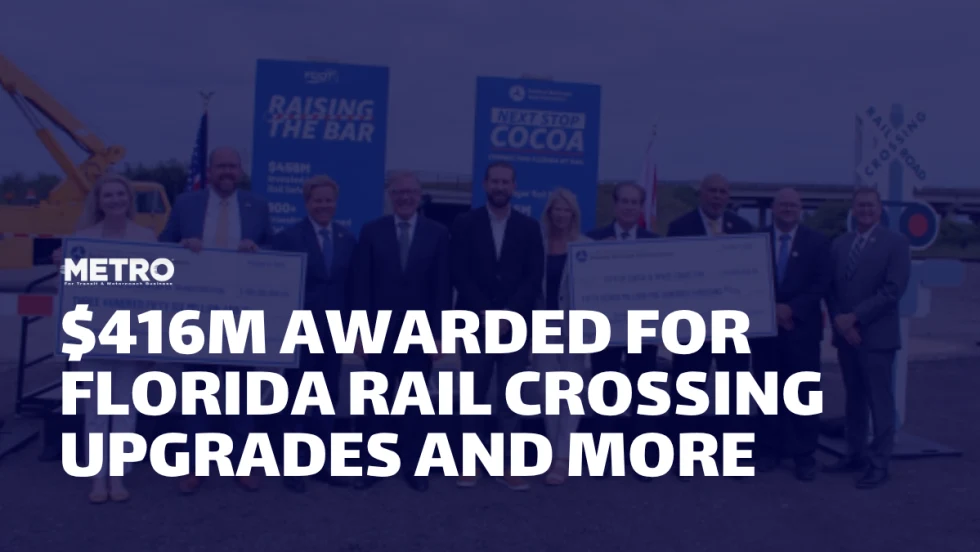
USDOT Awards $416 Million for Florida Rail Crossing Safety Upgrades, New Brightline Station
The projects aim to reduce risks for motorists and pedestrians at rail crossings while expanding passenger rail access along Florida’s Space Coast.
Read More →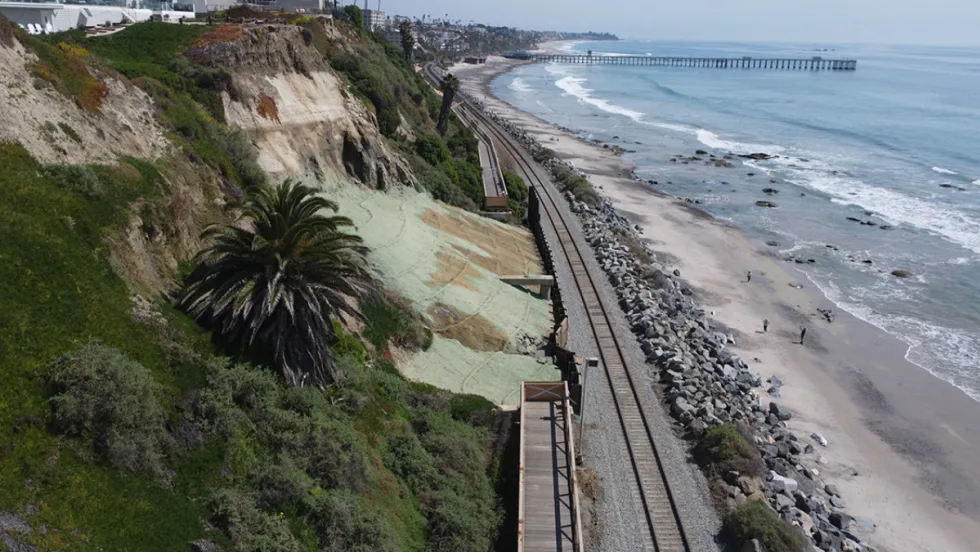
OCTA Declares Emergency to Protect Rail Corridor From Coastal Erosion
The California agency is accelerating shoreline protection and plans to place approximately 690,000 cubic yards of sand along the San Clemente coast to protect a key passenger and freight rail link.
Read More →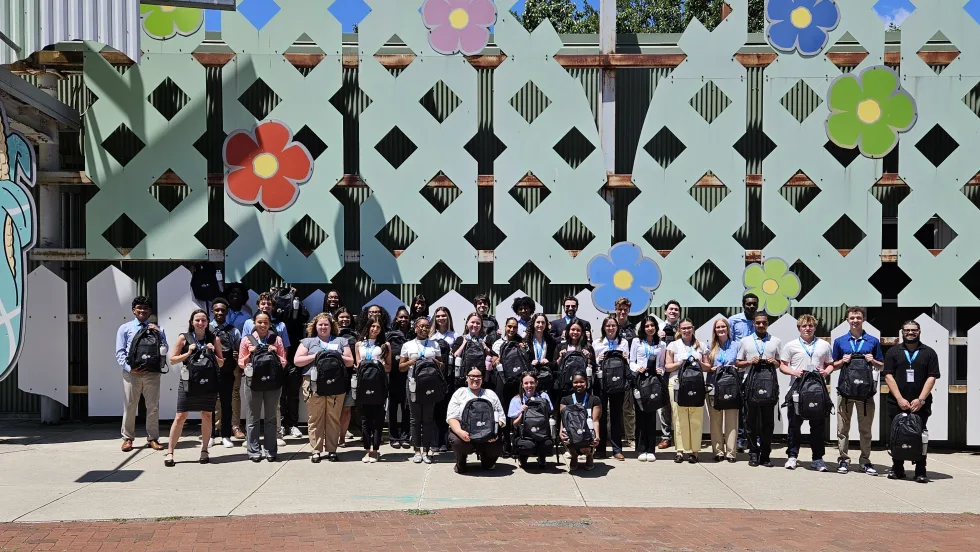
More Than a Summer Job: Building the Next Generation of Transit Talent
The Delaware River Port Authority and PATCO have transformed their internship program into a hands-on professional development experience that introduces students to the breadth of transportation careers — and creates a pipeline for future employees.
Read More →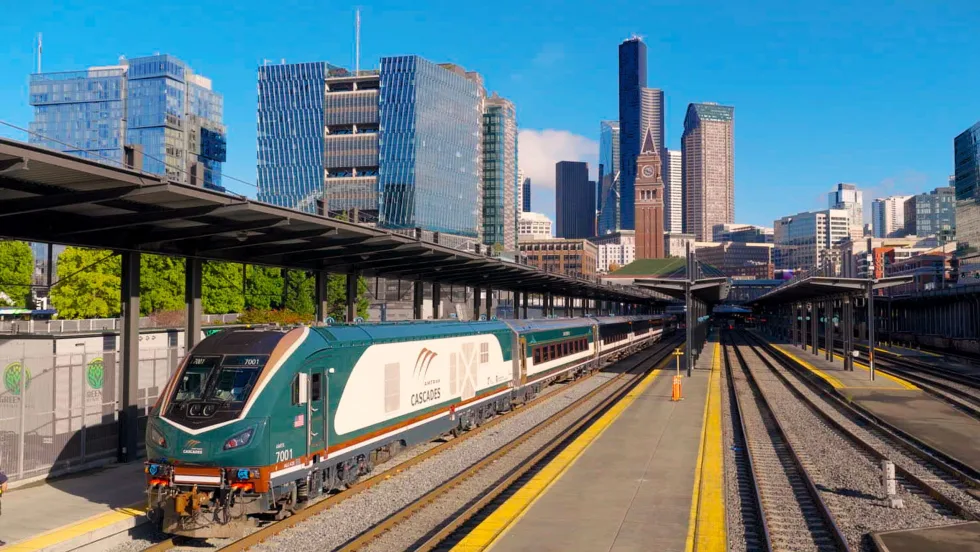
Airo Trains Make Their Amtrak Cascades Debut in the Pacific Northwest
Effective immediately, two cutting-edge Airo trainsets will join the Amtrak Cascades route, operating four daily trips between Vancouver, B.C., Seattle, Portland, and Eugene, Oregon, marking the first introduction of Airo trains into passenger service anywhere in the country.
Read More →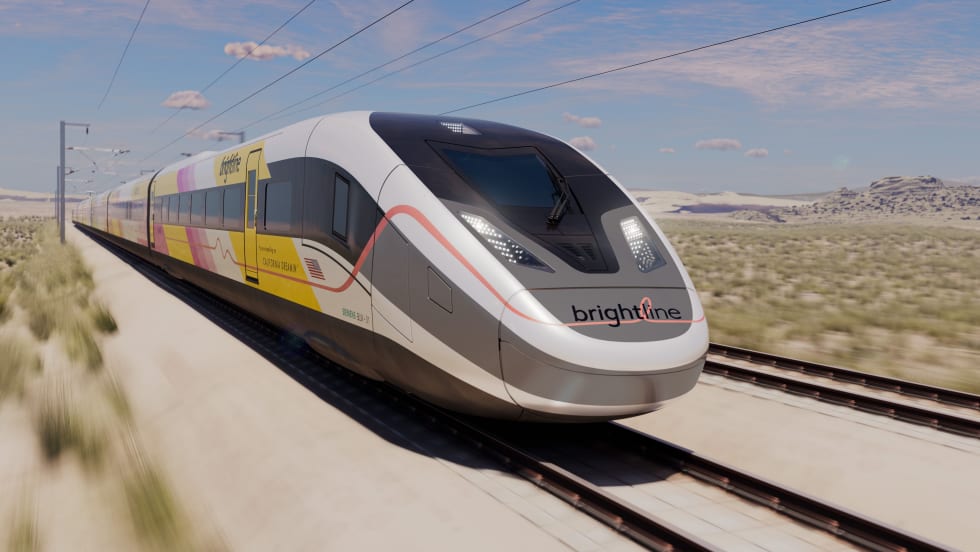
Florida's Brightline Announces Financial Restructuring
Brightline Florida says train operations will continue as normal as certain parent entities enter Chapter 11 and financial stakeholders provide $490 million in new long-term capital.
Read More →
ENC Lands MATA Contract and More in Biz Briefs
In this edition of Biz Briefs, we spotlight the latest developments shaping the future of mobility.
Read More →
Strada360’s Steve Lassey on Turning Transit Data Into Better Decisions
From breaking down data silos to preparing for AI, Strada360 CEO Steve Lassey discusses how transit agencies can use technology to improve operations, customer information, and long-term decision-making.
Read More →