



M-1 RAIL unveils streetcar station design concept
Stations will be Wi-Fi enabled, heated and equipped with security cameras, emergency phones, and next-vehicle alert screens.

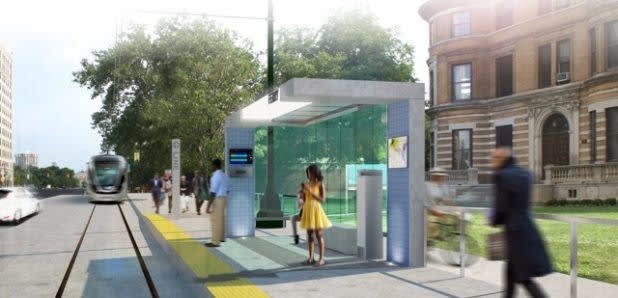
Rendering courtesy M-1 Rail
Rendering courtesy M-1 Rail
M-1 RAIL unveiled the design for the 20 streetcar stations along the QLINE route. The stations will recognize corporate and philanthropic partners whose support formed the foundation of the landmark public-private partnership that brought the QLINE streetcar project to life.
The 98-by-12-foot glass and concrete stations will recognize each sponsor with an individual custom Pewabic Pottery tile corresponding to their corporate brand along with a plaque commemorating their contribution to the project. Rossetti, a Detroit-headquartered architecture firm, developed the concept and design for QLINE stations.
Stations will also be Wi-Fi enabled, heated and equipped with security cameras, emergency phones, and next-vehicle alert screens. A mobile app is also under development that will include rider-friendly alerts about the QLINE and how to connect with other modes of transit along the Woodward Corridor, according to officials.
Sponsors of the twelve QLINE stops from Downtown to Midtown, New Center and the North End include Quicken Loans; Wayne State University; Ford Motor Co.; and Penske Corp.
Each recognized station sponsorship came with a pledge to contribute $3 million, with JPMorgan Chase & Co. and Compuware sharing the Canfield station. The $142 million project is also supported by the State of Michigan, Wayne County, the Downtown Development Authority, the U.S. Department of Transportation along with DTE, the Ford Foundation, the Hudson-Webber Foundation and Bank of America.
Work on the underground and vertical elements of the stations is well underway and will continue into 2017. The QLINE remains on schedule to begin passenger operations in the spring, officials said.
More Rail

New York MTA Advances Final Contract for Second Avenue Subway Expansion
Contract Four is the largest in the Second Avenue Subway Phase 2 project and includes construction of station infrastructure, tracks, and signals for the subway expansion, MTA officials said. Work on Contract Four will begin in 2027.
Read More →
San Diego MTS Breaks Monthly Trolley Ridership Record
Agency officials said July’s ridership indicates MTS’s continued recovery from the pandemic.
Read More →
Report Examines NJ TRANSIT Reliability, Funding Challenges
The Garden State Initiative analysis examines the roles of Amtrak infrastructure, fleet management, and agency operations while recommending a more performance-based approach to improving reliability.
Read More →
Stadler, CapMetro Sign Long-Term Rail Fleet Support Agreement
Beginning in 2027, Stadler will provide on-site technical expertise, spare parts support, training, and obsolescence management to help extend the reliability and longevity of CapMetro’s GTW fleet.
Read More →
Biz Briefs: Alstom Lands Canadian Contract, LYT to Supply California TSP, and More
In METRO's latest installment, we take a look at recent news from Complete Coach Works, Beep, FlixBus, and more partnerships making headlines across the transportation sector.
Read More →
CATS Gold Line Marks 5 Years of Service, 2.8M Passenger Trips
With a six-mile expansion planned, the Charlotte streetcar is positioned to connect more neighborhoods and major transit hubs across the region.
Read More →
Why Simulating Pedestrian Movement Has Become Essential for Modern Rail Stations
Pedestrian microsimulation is helping rail planners identify bottlenecks, test station designs, and prepare complex transit hubs for growing passenger volumes.
Read More →
Amtrak Begins Major Construction at New York’s Sunnyside Yard
The new maintenance facility will support Amtrak’s Airo trainsets while improving maintenance efficiency and turnaround times in New York.
Read More →
Chicago Leaders Unveil Plans for O’Hare Airport Express Train
The privately developed project would offer a 15-minute trip between downtown and O’Hare’s Terminal 2, with trains operating every 15 minutes on a dedicated track. The service would use battery-electric trains and three existing freight rail rights-of-way.
Read More →
OCTA Maps Out 30-Year Strategy to Protect Coastal Rail Corridor
The draft feasibility report identifies strategies to protect the coastal rail line for decades as the agency continues near-term stabilization and sand placement efforts.
Read More →