



UConn rolls out 10 New Flyer buses
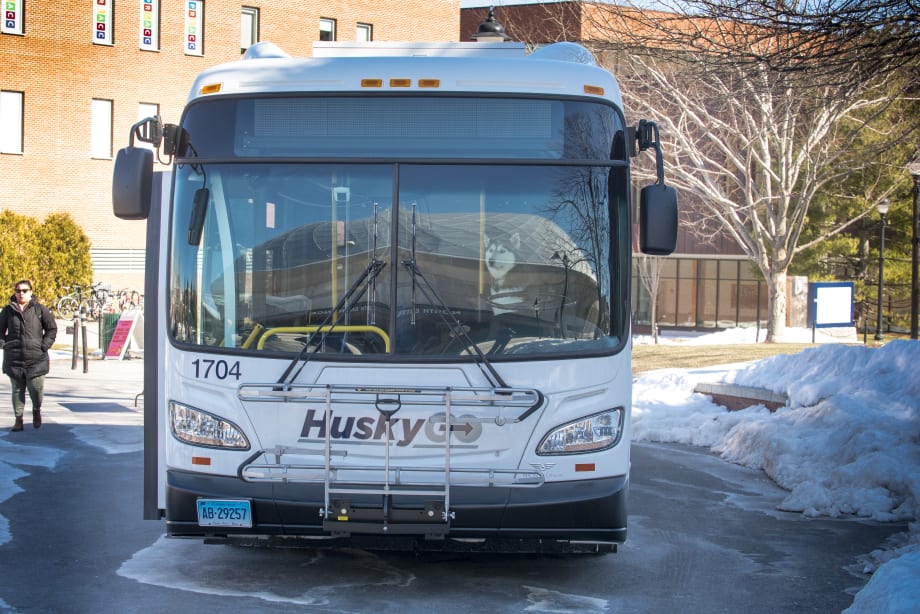
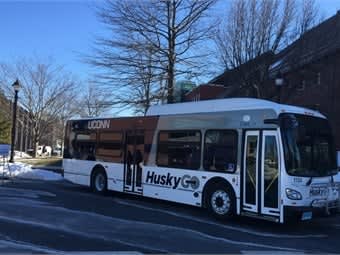
Each bus seats 31 passengers, not including people who prefer to stand; has two positions for wheelchairs; and carry “Husky GO” designs on the exterior, introducing the new brand by which the bus service will be known.

All photos Sean Flynn/UConn photo
By Stephanie Reitz - UConn Communications
Bus service at UConn has certainly changed since the school’s early days, when students rode in an old Pierce-Arrow they jokingly called the “Black Maria,” a common nickname for police paddy wagons.
From that time almost 100 years ago, UConn’s bus fleet has improved substantially in style and reliability — and the 10 new vehicles introduced last week represent a significant jump forward into the next generation of high-tech buses.
UConn Transportation Services put the new buses into service starting Thursday, and parked one of them on Fairfield Way to give students and employees the chance to check out the new 35-foot vehicles, ask questions, and provide suggestions about UConn’s bus service.
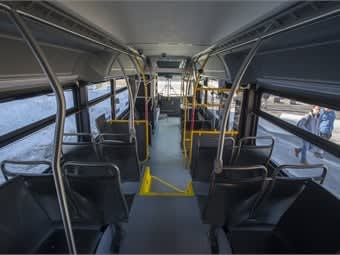
The new buses each have 16 USB ports along with bike racks, “kneeling” technology that lowers the front to help people get on and off more easily, soft blue LED lighting, and other technology. Starting in the next academic year, they’ll also have Wi-Fi service.
“The new buses are state-of-the-art, modern vehicles that will be dependable and far more cost-efficient to operate,” said Dennis Solensky, GM of transportation and fleet services at UConn Transportation, which operates the bus system.
“Our expectation is that with our talented maintenance staff, we will be able to run them for at least the next 12 years,” Solensky said, noting the 10 new buses alone will transport more than one million passenger trips annually on the Storrs campus, not including trips on other buses already in the fleet.
The buses were built by New Flyer Corp. in St. Cloud, Minn., and represent the latest in large transit bus technology. In addition to the improved passenger amenities, they also have cameras to capture the view inside and outside of the buses; automated passenger counters; and suspensions and seats that offer a more comfortable ride.
Each bus seats 31 passengers, not including people who prefer to stand; has two positions for wheelchairs; and carry “Husky GO” designs on the exterior, introducing the new brand by which the bus service will be known.
The university has strongly supported the state’s plan to extend its CTfastrak service east to Storrs. Once that service launches, the Husky GO buses will also travel off campus to link Storrs with a local stop near I-84, connecting students to network of bus lines throughout central Connecticut.
“I love the new Husky GO brand,” Solensky said. “It’s catchy and it dovetails well with the marketing efforts being conducted by our partners at the state Department of Transportation.”
Some of the university’s oldest buses will be taken out of service because they have become too costly to maintain and have exceeded their useful life, but the popular and relatively new “Ice Bus” and other buses with UConn scenes on them will remain in the fleet for several more years.
Today’s buses are a far cry from the vehicles used to transport the Huskies of yesteryear — or, more accurately, the “Aggies” of what was then known as the Connecticut Agricultural College.
A news story from a 1921 version of the student paper, The Connecticut Campus, includes a colorful description of the transportation options in previous years: a 25-passenger Kissel car that often lost its front wheel on Spring Hill; a Studebaker that was faster but lasted only a few years; and that renowned “Black Maria,” a Pierce-Arrow — or “Fierce Sparrow,” as some called it.
“Students will remember a good many times when they gave vent to their feelings because of Maria’s mulish behavior. Maria was an old model ‘Fierce Sparrow’ that could be really fierce at times,” the newspaper wrote in an April 1921 profile of the driver, who transported students three times daily between Willimantic and “the Hill,” as they called the campus.
The Black Maria even found a place in a poem written in the student paper in January 1920 to honor members of the college’s Student Army Training Corps who served in World War I:
“You went across in nice big boats
And landed safe in France;
We came up here in the Black Maria,
Now who took the greater chance?”
While UConn’s new buses may not inspire poetry or gain catchy nicknames, transportation officials hope students will see them as a pleasant, reliable part of their daily routines.
“We really want our students and campus community to have a comfortable and enjoyable experience on the buses,” Solensky said, “and these new vehicles will be a great addition to that.”
More Bus

Brian Dickson on Building Stronger, More Resilient Transportation Organizations
Bus Business Consultants Founder Brian Dickson discusses the leadership principles, operational discipline, and strategic planning that separate transportation companies positioned for long-term success from those stuck in survival mode.
Read More →
LA Metro Breaks Ground on Vermont BRT Project
The 12.4-mile corridor is projected to serve 66,200 daily riders, reduce travel times by up to 24%, and create the nation's busiest bus rapid transit corridor.
Read More →
Roman Cornell on ABC Companies’ Evolution and the Future of Passenger Transportation
The company’s CEO discusses carrying forward a third-generation family legacy, ABC’s continued evolution in passenger transportation, support for increasingly complex fleets, and how technology and continued investment could help operators improve uptime.
Read More →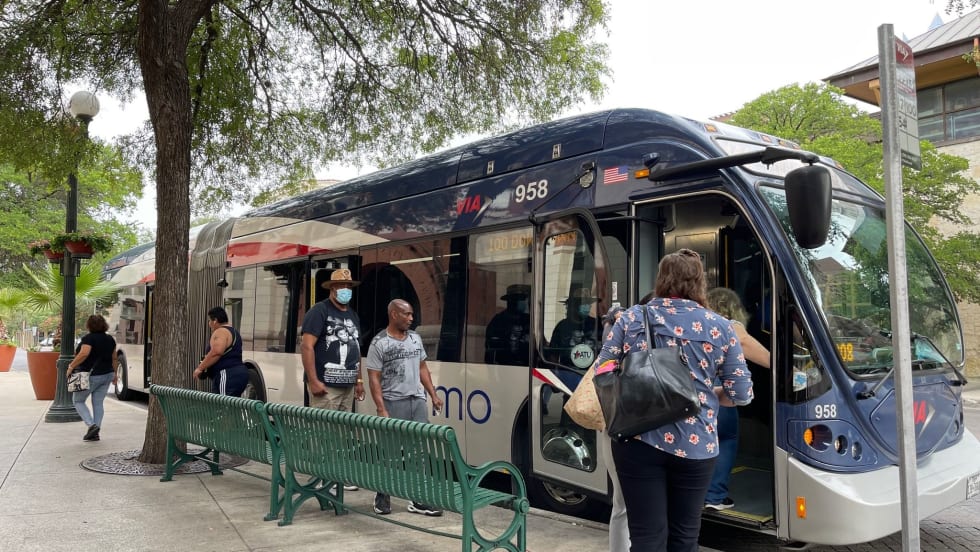
VIA Bus Ridership Grows 10.1% Through August 2026
San Antonio's VIA Metropolitan Transit reported the highest bus ridership growth among major Texas transit systems. Federal Transit Administration data ranked it second among the nation's 50 largest transit systems.
Read More →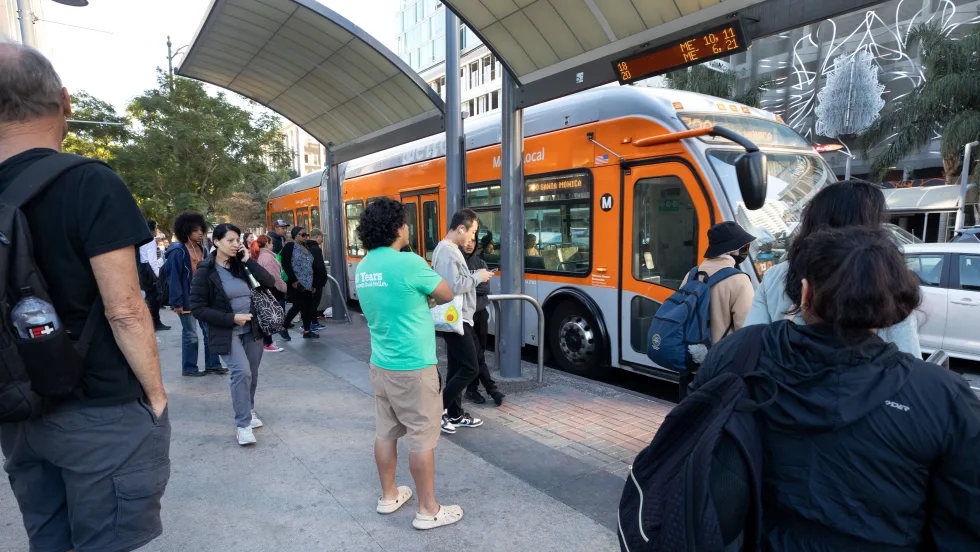
LA Metro September Ridership Climbs 3.9%, Led by Rail Growth
The agency recorded more than 27.2 million boardings, with rail ridership increasing 12.4% year over year and the D Line posting the largest gains.
Read More →
Frontrunner Bus Group Introduces XF Low-Floor Bus with Enhanced Accessibility
The new mid-sized bus features a full flat-floor design, eight-inch curbside step-in height, and zero-entry rear ramp to improve passenger access and operational flexibility.
Read More →
Scenes from APTA TRANSform & EXPO 2026
Transit leaders, manufacturers, and industry professionals gathered in Chicago to explore new technologies, share ideas, and discuss the future of public transportation.
Read More →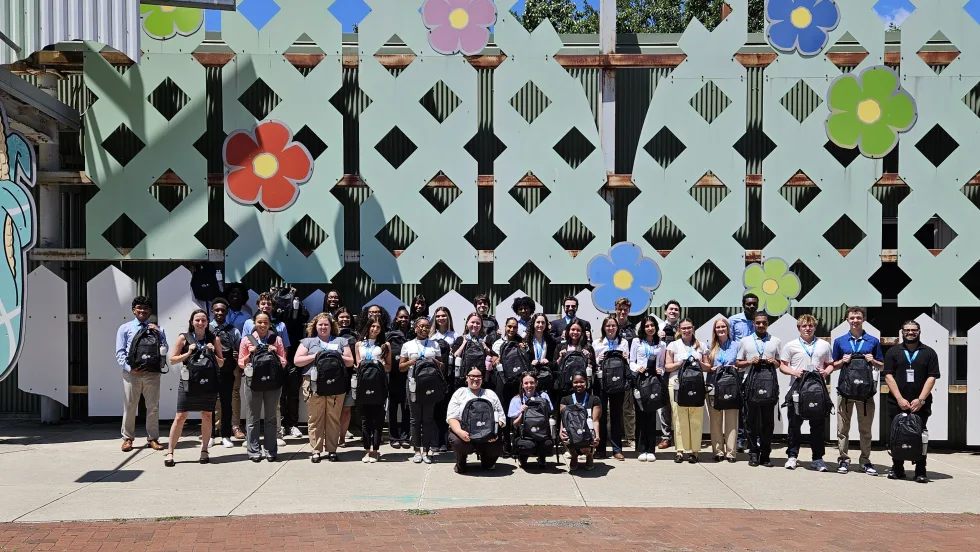
More Than a Summer Job: Building the Next Generation of Transit Talent
The Delaware River Port Authority and PATCO have transformed their internship program into a hands-on professional development experience that introduces students to the breadth of transportation careers — and creates a pipeline for future employees.
Read More →
LA Metro Board Awards 220 Battery-Electric Bus Contract to ENC
The contract, which is the largest base award of battery-electric buses by a U.S. transit agency, will be built in Southern California, sustaining good jobs as LA prepares to welcome the world in 2028
Read More →
Public Transit Conference Returning to GFX in 2027, Call for Papers Now Open
The Call for Papers is now open, allowing transit agency professionals and industry experts to help shape the PTC educational program by submitting session ideas for consideration.
Read More →