



WMATA issues RFP for 8000-series railcars
Plans to acquire at least 256 8000-series cars to allow for the retirement of the 2000- and 3000-series cars at the end of their 40-year service life.

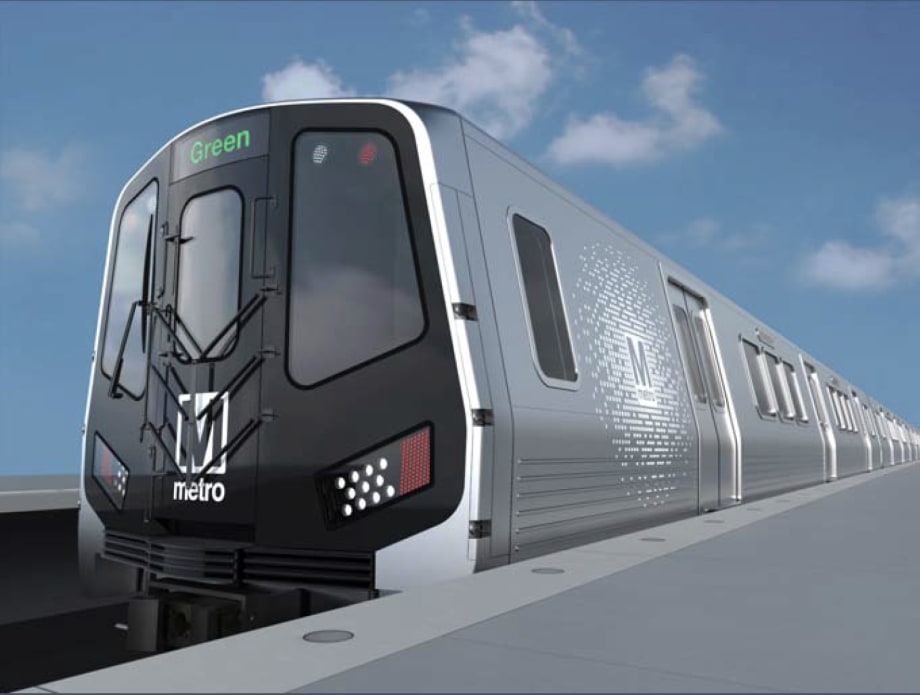
Proposals for the new 8000-series railcars are due in late January, and WMATA expects to award the contract late next year.
Proposals for the new 8000-series railcars are due in late January, and WMATA expects to award the contract late next year.
The Washington Metropolitan Area Transit Authority (WMATA) took the first step toward acquiring its next generation of railcars, building on the success of the popular and reliable 7000-series fleet, with the issuance of a Request for Proposals for the design and construction of hundreds of new 8000-series cars to be delivered starting in 2024.
WMATA plans to acquire at least 256 8000-series cars to allow for the retirement of the 2000- and 3000-series cars at the end of their 40-year service life. Options in the contract would allow WMATA to purchase "up to" 800 cars in all, giving the transit agency the flexibility to support a range of initiatives and scenarios, including expanding all trains to the maximum eight-car length, running trains more frequently during rush hours, and retiring the 6000-series fleet in lieu of a midlife overhaul program.
With the 8000-series procurement, WMATA is seeking to build on the success of its 7000-series cars, which account for more than half of all trains in service and include popular features such as digital information screens, automated announcements, "smart doors" that individually respond to an obstruction, high-definition security cameras, more space between seats, wider aisles, and non-slip flooring rather than carpet. The 7000-series cars currently travel an average of 156,000 miles before experiencing a delay due to a mechanical issue - more than double the reliability of WMATA's legacy fleet.
Like the 7000-series, the 8000-series car design will incorporate the most advanced safety technology available, and improve upon the customer experience with new features:
New digital advertising screens to generate revenue and reduce labor costs associated with manually changing ads.
Support for remote PA announcements from the Rail Operations Control Center, in addition to automated and train-operator announcements.
Dynamic digital system maps, rather than today's paper maps.
110-volt power outlets for charging electronic devices.
Additional hand holds Improvements to lighting, floor markings and signage for ADA space.
Proposals for the new railcars are due in late January, and WMATA expects to award the contract late next year.
Delivery of the 7000-series railcars is on schedule, with the 748th and final car expected to be delivered late next year.
The RFP document can be found here.
More Rail

New York MTA Advances Final Contract for Second Avenue Subway Expansion
Contract Four is the largest in the Second Avenue Subway Phase 2 project and includes construction of station infrastructure, tracks, and signals for the subway expansion, MTA officials said. Work on Contract Four will begin in 2027.
Read More →
San Diego MTS Breaks Monthly Trolley Ridership Record
Agency officials said July’s ridership indicates MTS’s continued recovery from the pandemic.
Read More →
Report Examines NJ TRANSIT Reliability, Funding Challenges
The Garden State Initiative analysis examines the roles of Amtrak infrastructure, fleet management, and agency operations while recommending a more performance-based approach to improving reliability.
Read More →
Stadler, CapMetro Sign Long-Term Rail Fleet Support Agreement
Beginning in 2027, Stadler will provide on-site technical expertise, spare parts support, training, and obsolescence management to help extend the reliability and longevity of CapMetro’s GTW fleet.
Read More →
Biz Briefs: Alstom Lands Canadian Contract, LYT to Supply California TSP, and More
In METRO's latest installment, we take a look at recent news from Complete Coach Works, Beep, FlixBus, and more partnerships making headlines across the transportation sector.
Read More →
CATS Gold Line Marks 5 Years of Service, 2.8M Passenger Trips
With a six-mile expansion planned, the Charlotte streetcar is positioned to connect more neighborhoods and major transit hubs across the region.
Read More →
Why Simulating Pedestrian Movement Has Become Essential for Modern Rail Stations
Pedestrian microsimulation is helping rail planners identify bottlenecks, test station designs, and prepare complex transit hubs for growing passenger volumes.
Read More →
Amtrak Begins Major Construction at New York’s Sunnyside Yard
The new maintenance facility will support Amtrak’s Airo trainsets while improving maintenance efficiency and turnaround times in New York.
Read More →
Chicago Leaders Unveil Plans for O’Hare Airport Express Train
The privately developed project would offer a 15-minute trip between downtown and O’Hare’s Terminal 2, with trains operating every 15 minutes on a dedicated track. The service would use battery-electric trains and three existing freight rail rights-of-way.
Read More →
OCTA Maps Out 30-Year Strategy to Protect Coastal Rail Corridor
The draft feasibility report identifies strategies to protect the coastal rail line for decades as the agency continues near-term stabilization and sand placement efforts.
Read More →