



Congress’ favorite sacrificial lambs
Commuter benefits may be significantly reduced soon. The ARC tunnel died a second death. With so much partisan gridlock on the eve of the midterms, does transit — or the environment — stand a chance?

This week, I was disappointed with two pieces of news: New Jersey’s Gov. Chris Christie’s second declaration that he will not support the Access to the Region’s Core tunnel, and that the commuter benefit cap, currently at $230, will, more likely than not, be reduced back to its pre-stimulus level of $120.
The $230 cap will sunset on Dec. 31, 2010, barring any last-minute changes in Congress, and with the mid-term elections taking the lion’s share of the attention, it’s doubtful that will happen.
Dan Neuburger, president and CEO of TransitCenter, a New York-based, nonprofit organization and provider of tax-free commuter benefits, says that there is still a high degree of support in Congress for the benefit. In a conversation that I had with him yesterday, he told me that he believes that members of Congress across the country will join together in supporting the benefit extension. Still, it won’t be in time to maintain the benefit at the $230 level for early 2011.
Slashing the allowance will mainly impact commuters in San Francisco, New York, Chicago and Boston where cost of commuting is greater than $120. Neuberger estimates that between 850,000 and a million people across the country take advantage of the benefit.
Neuburger hopes that the Senate Finance Committee takes the lead role in addressing the upcoming reduction in the lame duck session at the end of this year. “We just want to get it attached to legislation that has some chance of passing. We have yet to meet a member of congress that has not told us they are, quote, unquote, our friends, that they support us getting this done,” he said. “This piece of legislation has historically had bipartisan support, but we’re still in the spot we were in: we haven’t gotten it attached to legislation that has been voted on favorably.”
I trust that Neuburger is right, but I couldn’t help but be reminded of a recent piece in the New Yorker, “As the World Burns.” It describes the frustrating ordeal of how Sen. John Kerry (D-Mass.), Sen. Lindsay Graham (R-S.C.) and Sen. Joseph Lieberman (D-Conn.) managed to unite a rarely found coalition of environmentalists and industries to back a bill that took action to “shift the economy away from carbon consumption and toward environmentally sound sources of energy.”
The congressmen even had support from both the major green groups and “the biggest polluters,” as the author, Ryan Lizza, puts it. However, their momentum ground to a screeching halt once the deal-making began. Plenty of congressmen and women told them they supported the bill, but when it came time to vote? Not so much. Now, if that well-loved and charismatic trifecta can’t make it work, well, what hope is there?
And, of course, this frustration isn’t just felt at the federal level. I recently interviewed transit advocacy groups across the U.S. for a story that will appear in the November/December issue. I was very intrigued by comments from Wiley Norvell, formerly the communications director at New York-based Transportation Alternatives. He pointed to the New York state legislature as the main albatross around the New York MTA’s neck. Elected officials in Albany voted to rip $143 million from the MTA budget, necessitating the biggest in modern memory this past year. “If any new funding measures are going to come to our rescue, like congestion pricing, it has to happen in Albany. It’s not within the MTA’s breadth to see those measures enacted. There’s a very important responsibility that state legislators have with respect to funding transit. We don’t feel in all honesty they’ve been living up to [that],” Norvell said.
While I understand that politics is a complicated and messy business, and this is nothing new, I still couldn’t help but feel this week that we’d get so much more done if Congress would just get out of the way.
More Blog Posts
How Propane is Keeping EVs on the Road
Propane-powered EV charging offers reliability and scalability without sacrificing emissions goals.
Read More →
2022 Bringing Renewed Energy
Having already been on the road for a couple of conferences, both folks in the public transit and motorcoach sectors have a lot of optimism the ship is starting to correct itself, and it’s good to see all the energy out on the show floors and in the halls.
Read More →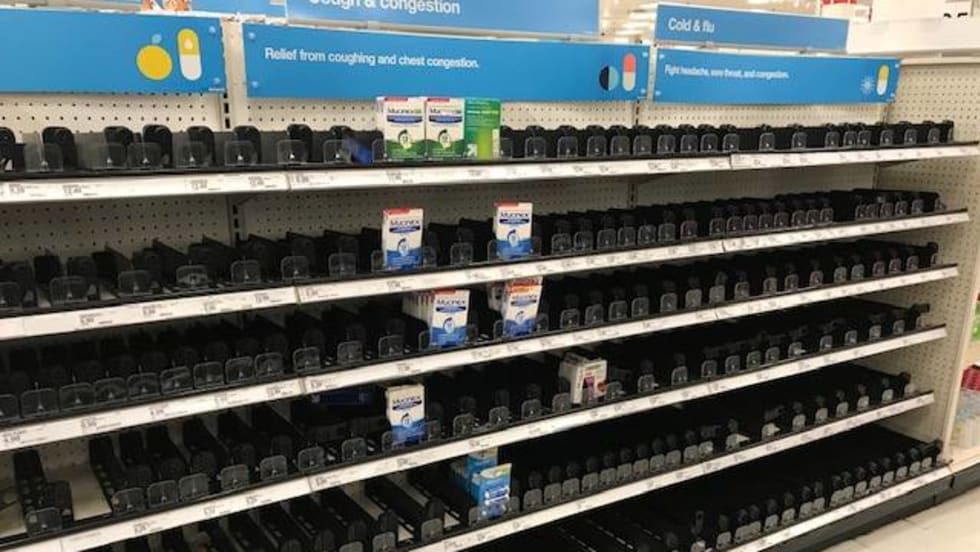
Have you thanked your 'essential' service worker today?
When panic surrounding the coronavirus began to ramp up in my area, I’ll admit, I was right there with everyone else stockpiling up...
Read More →
Leadership should ride transit — 'just like us'
Recently, media outlets in Boston were all atwitter when Massachusetts Gov. Charlie Baker was spotted riding the T.
Read More →
Transit can no longer ignore the benefits linked to offering free fares
Six years ago, Tallinn, the capital of Estonia, became “the world's first" to introduce free public transport for all its residents.
Read More →
Safeguard my personal data — our democracy depends on it
“Cities and private companies must take steps to safeguard data and ensure that individual privacy — a foundation of democratic society — is protected.”
Read More →
Fighting against human trafficking is everyone's duty
U.S. traffickers have been shown to use all modes of transportation to find their next victims. Initiatives are being placed to combat trafficking and empower operators to act.
Read More →
Focusing on ‘abilities’ gives those with disabilities a ‘sense of purpose’
I recently learned about a program offered by Transport for London that provides “people with mild to moderate learning disabilities and those on the autism spectrum the chance to gain skills and work experience.”
Read More →
Come Together to Shut Down the Shutdown, Fund a Transit Bill
As I write this, we are a few days away from another potential government shutdown if negotiations on border security are not hammered out.
Read More →
New Year, New Hopes for the Motorcoach Industry
Hiring and retaining drivers is the greatest challenge facing motorcoach operators, according to 70% of respondents of METRO Magazine's 2019 Motorcoach Survey. The public transit industry is not immune to this issue either.
Read More →