



Switching to Propane Pays Off for Mich. Fleet
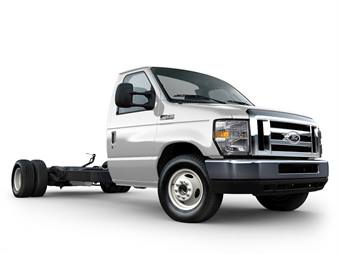
Currently, Livonia has four ROUSH CleanTech Ford E-450 Cutaway buses that are used for its Community Transit system.

Looking for ways to alleviate budget issues, a mayor’s community outreach initiative led to two Michigan neighbors — the City of Livonia and propane fuel supplier, ROUSH CleanTech, to form a beneficial partnership.
“Once a month, our mayor and his staff try to meet with different companies as a way to get to know the businesses in our community,” explains Don Rohraff, superintendent, public utilities. “After meeting with ROUSH and hearing a presentation with all of this eye-opening information about using propane autogas, he followed up with to say we should look into alternative fuels.”
To that end, the City partnered with ROUSH a couple of years ago to purchase both new vehicles and convert existing vehicles to run on propane.
Currently, the City has four ROUSH CleanTech Ford E-450 Cutaway buses that are used for its Community Transit system, which provides transportation service for seniors and disabled residents, as well as “To Work” service for passengers coming to Livonia using Suburban Mobility Authority for Regional Transportation and Detroit Department of Transportation bus systems.
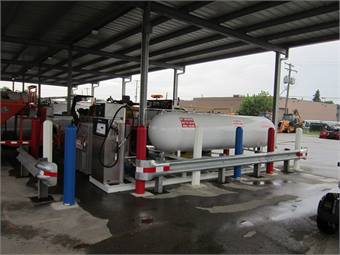
Additionally, the City uses propane autogas to fuel three ROUSH CleanTech Ford F-250 trucks and 12 mowers. In June, the City completed the installation of its own fueling station, which allows them to take advantage of a 50-cent per gallon tax incentive offered by the federal government.
Infrastructure Cost
ROUSH’s Todd Mouw, VP, sales and marketing, explains many times the cost of implementing the necessary propane autogas infrastructure is a major concern for operations, therefore, the company urges interested operators to reach out to fueling suppliers as part of its initial information gathering.
“Typically when we go and meet with the customer, we explain what our technology does, our relationship with Ford, how we will support them, and then, give them contact information for companies, such as Amerigas, that can answer their questions related to fueling and infrastructure,” says Mouw. “We like to do that initially, so we can make sure the customer has all of their issues and concerns addressed up front and move forward in the process with confidence.”
Fueling Advantages
Mouw explains the benefits of a fleet switching to propane are mostly economic, with the current cost of propane autogas coming in very close to $2 less per gallon equivalent compared to diesel and gasoline.
Although there is an approximate 15% decrease in mileage per gallon compared with diesel or gasoline, he adds public transportation or airport fleets that have switched to propane autogas typically realize financial savings in about 18 months.
Additionally, propane autogas is sourced domestically and can significantly reduce emissions, with 12% less carbon dioxide, about 20% less nitrogen oxide, up to 25% less greenhouse gases and up to 60% less carbon monoxide than gasoline-powered vehicles.
Mouw adds ROUSH’s propane-powered cutaways are Altoona-tested, which enables public transportation agencies to purchase the vehicles using Federal Transit Administration grant funding.
Rohraff explains that although the City is not able to provide documentation, its propane use is paying off: the City has saved approximately $1.25 per gallon since beginning its program. He also adds it has made an impact on the maintenance of its vehicles.
“The one huge advantage that gets overlooked is we have been able to increase our preventive maintenance from 4,000 to 5,000 miles to more like 8,000 to 10,000 miles,” he says. “The big reason we have been able to do that is because propane burns much cleaner so there is less wear and tear.”
Currently, the City is planning on replacing its remaining Community Transit fleet with propane-powered vehicles as they reach their retirement age. Rohraff also explains the City has spoken to ROUSH about the possibility of expanding its usage of propane to other types of vehicles, such as dump trucks.
“We have really moved out of the pilot phase of this program,” says Rohraff. “I don’t see it going away anytime soon, unless something happens with propane from a pricing standpoint.”
More Bus

New York MTA Plans Largest Bus Fleet Upgrade in More Than a Decade
The agency is seeking manufacturers for 650 new CNG buses to replace aging vehicles, improve reliability, and advance its broader fleet modernization strategy.
Read More →
Building a Flexible Path to Transit Electrification
John Hroncich discusses BAE Systems’ modular and scalable approach, lessons learned from decades of real-world operations, and how agencies can identify electrification strategies that fit their fleets.
Read More →
Bus Tech Talk: Keeping Transit Technicians Ahead of the Technology Curve
LA Metro’s Obed Mejia discusses technician training, evolving maintenance technology, fleet replacement, and strategies for getting the most out of today’s transit fleets.
Read More →
Biz Briefs: RIPTA Unveils New Frontrunners, Clevland RTA Adds New Siemens, and More
In METRO's latest installment, we take a look at recent news from Siemens, Prevost, Dodge, and more partnerships making headlines across the transportation sector.
Read More →
People Movement: Holly Arnold Joins Transdev and More
In this edition, we also cover recent appointments and announcements at Pace, CamTran, MCI, and more, showcasing the individuals helping to shape the future of transportation.
Read More →
The High Cost of Transit Buses: Industry Leaders Look to Procurement Reform
Transit leaders and policymakers examine how standardized bus designs, streamlined procurement, and predictable funding could help agencies stretch budgets and deliver better service.
Read More →
The Business Voice Behind Public Transportation
As chair of APTA’s Business Members Board of Governors, Ray Melleady explains how more than 850 business members are partnering with transit agencies to advance funding, innovation, and industry-wide collaboration.
Read More →
From Surviving to Thriving: Building Stronger Transportation Organizations
Bus Business Consultants founder Brian Dickson shares lessons on leadership, organizational health, and creating options for long-term success in a changing transportation industry.
Read More →
Finding the ‘Happy Medium’: Optimizing Maintenance Without Sacrificing Reliability
The key to maintenance optimization isn’t doing less work—it’s doing the right work at the right time on the right assets.
Read More →
LA Metro, City of West Hollywood, and Partners Advance Smarter Bus Lane Enforcement
The award-winning partnership combines AI-powered detection with human oversight to improve bus reliability, accessibility, and enforcement efficiency.
Read More →