



FTA issues Final Rule to strengthen state oversight of rail systems
Applies to states where a rail transit system operates and carries out several explicit Federal statutory requirements, including that a state must submit its State Safety Oversight program to FTA for certification.

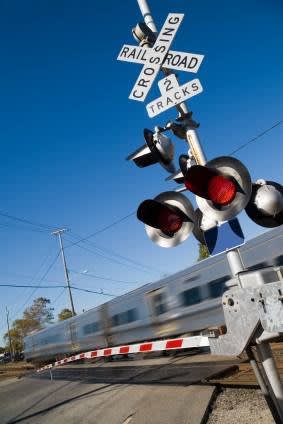

The Federal Transit Administration (FTA) announced a final rule that will significantly strengthen state safety oversight and enforcement authority to prevent and mitigate accidents and incidents on rail transit systems.
“With the more rigorous and effective state safety oversight required by this final rule and federal law, transit systems across the nation will receive greater safety oversight with the aim of improving safety for passengers and transit system employees,” said U.S. Transportation Secretary Anthony Foxx “Greater investigatory and enforcement power combined with better training will give state safety oversight watchdogs sharper teeth to help rail transit agencies keep their systems safe.”
The final rule will officially be published in the Federal Register on March 16, 2016, and will take effect 30 days after publication. It applies to states where a rail transit system operates and carries out several explicit Federal statutory requirements, including that a state must submit its State Safety Oversight (SSO) program to FTA for certification and that the designated SSO Agency must have financial and legal independence from the rail transit agencies it oversees.
In addition, the final rule requires that a state must ensure that the SSO Agency adopts and enforces relevant Federal and state safety laws, has investigatory authority, and has appropriate financial and human resources for the number, size and complexity of the rail transit systems within its jurisdiction. Furthermore, SSO Agency personnel responsible for performing safety oversight activities must have proper training and certification.
“FTA has delivered exactly what Congress authorized: a stronger, more robust state safety oversight program with increased enforcement tools,” said FTA Acting Administrator Therese McMillan. “States should act swiftly to come into compliance to provide a higher level of safety for their rail transit system riders and workers.”
Within three years of the effective date of this final rule, states with an operating rail transit system must have a SSO program certified by FTA. FTA has already certified two of the affected 30 states as being compliant: California and Massachusetts. Most of the remaining 28 states have also already taken some actions toward compliance with these critical safety requirements.
If a state is non-compliant after the three-year period, FTA may withhold Federal funds until its SSO program is certified. If a state fails to establish an SSO program, FTA is prohibited by law from obligating any Federal financial assistance to any entity in that state otherwise eligible to receive FTA program funding.
More Management

METRO Opens Submissions for 2026 Motorcoach Awards
Nominations are now being accepted for METRO Magazine’s Operator of the Year and Innovative Operator of the Year awards.
Read More →
New York MTA Advances Final Contract for Second Avenue Subway Expansion
Contract Four is the largest in the Second Avenue Subway Phase 2 project and includes construction of station infrastructure, tracks, and signals for the subway expansion, MTA officials said. Work on Contract Four will begin in 2027.
Read More →
Transit Agencies Highlight Safety Gains at National Summit
Leaders from 15 major transit systems shared crime-reduction results and safety initiatives while discussing the role of continued federal support.
Read More →

NITA Names New Leadership, Expands Reduced-Fare Program at First Board Meeting
The new regional transit authority appointed its first board chair and interim executive director while extending reduced fares across CTA, Metra, and Pace for eligible riders.
Read More →
Beyond the Checklist: A Structured Approach to Transit Maintenance
Reliability-Centered Maintenance helps transit agencies move beyond routine checklists to focus limited resources on the assets and failures that have the greatest impact on safety, reliability, and service.
Read More →
APTA 2026 Nominating Committee Selects Leadership Slate, Names Chair and Vice Chair Nominees
Leadership changes will help shape the association’s priorities and its representation of the transportation industry during the 2026–2027 term.
Read More →
DART Launches Major Security, Fare Enforcement Initiative
The 90-day demonstration will deploy coordinated security teams at five light rail stations while testing controlled access and gathering data to guide future investments.
Read More →
Advancing Fare Collection Through Technology and Innovation
Learn about delivering 1300 gates at 91 stations while managing fare evasion. Explore the large scale deployment, solution customization and real-world results that affect the region. Prepare for deployment in your region now.
Read More →
Game Day in Motion: Moving Millions During the 2026 World Cup
Between packed transit stations and team motorcoaches, see how agencies and operators across North America tackled the transportation demands of the 2026 FIFA World Cup.
Read More →
Surface Transportation Extension Averts Shutdown, Leaves Transit Funding Gap
The stopgap keeps federal transportation programs moving, but missing advance funding could complicate the transit and rail projects agencies are planning next.
Read More →