



L.A. Metro’s Art Leahy Talks Growing Rail and Next-Generation Recruits
Upon leaving the agency after six years, the outgoing CEO discusses his successes, including five new rail projects currently under construction and a sixth just recently approved by the feds, and his future plans.
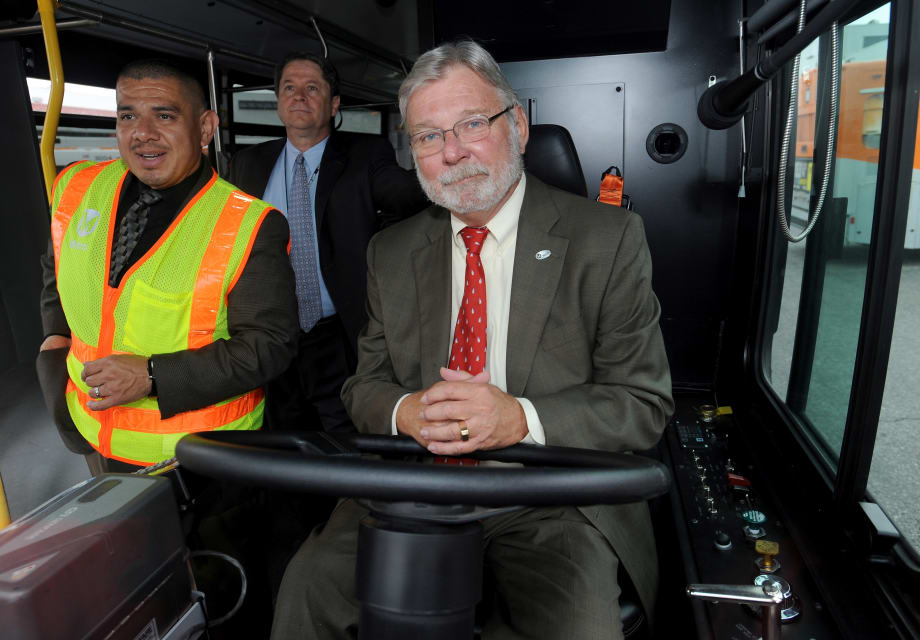
During his six-year tenure as CEO of the Los Angeles County Metropolitan Transportation Authority (Metro), Art Leahy has guided implementation of one of the largest public works programs in U.S. history and helped secure billions of dollars in federal and state funding to match local transit sales taxes to finance construction of dozens of transit and highway projects.
Those projects, valued today at more than $14 billion, feature an unprecedented five new rail projects under construction, including the Expo line extension to Santa Monica and the Metro Gold Line Foothill Extension to Azusa, both scheduled to open next year; the Crenshaw/LAX Transit Project; the Regional Connector that will connect the Expo, Blue and Gold Lines in downtown Los Angeles; and the first phase of the Westside Purple Line subway extension to Wilshire and La Cienega. Metro also recently received federal approval to start the engineering phase for extending the Purple Line to Century City.
Having started his transit career as a bus operator 44 years ago at Metro, Leahy also focused on improving bus on-time performance, cleanliness and ADA compliance. In January, he announced that he was leaving Metro when his current contract expired in April. METRO Magazine spoke with Leahy to find out his successes and challenges.
METRO: What do you view as successes during your tenure at Metro?
Leahy: First of all, it has been a wonderful six years. I came here because I had a chance to contribute to the future in the second biggest city and the most populous county in the nation, and it’s just been an adrenaline high.
We have received two [FTA] Full Funding Grant Agreements for two different rail lines during my tenure and are in process to get our third for the subway out west. That is a remarkable achievement — three Full Funding Grant Agreements in six years. That’s never been done before in Los Angeles.
We are also beginning to receive railcars on a $1.5 billion light rail purchase from Kinkisharyo. During my tenure, on-time performance of the bus system has significantly improved. It was around 60% or lower when I arrived, and we have been in the high 70s for five years now. There was $1.5 billion of deferred maintenance when I arrived. We have significantly attacked and reduced that.
It really is not rocket science. We have looked at deferred maintenance, station cleanliness, bus cleanliness and landscaping. We have improved the system in all those areas. We have five rail projects under construction right now, and soon, a sixth [one on the way]. In addition to that, we do highways. We widened the 405 Freeway over the Sepulveda Pass, the I-5 Golden State Freeway is being widened right now and a variety of other freeway projects are underway.
What is more nuanced and subtle, but really important, is that I have done a lot of things in organizational development, specifically, looking at the next-generation issue. We have a lot of Baby Boomers here who are, like me, retirement-eligible, so we have brought in a bunch of young people in their 20s and 30s, and many of them are in operations. What they are doing is learning the business from the ground up. They are going to be the next generation of managers and leaders at Metro. That won’t happen during my tenure here, but it will benefit the organization for the next 10 or 20 years, so I’m very proud of that.
Talking about the focus on on-time performance and cleanliness as well as on ADA compliance, what were some of the reasons for that?
It is basic transit service. When a person has a public timetable and they read that there’s a bus leaving at 4:45 p.m., that’s a promise. And, they are going to build their schedule for that day or whatever they are doing — going out to dinner or going to work — around our schedule. If we are not reliable, we are breaking our promise to the customer. If we expect to have regular ridership and retain that ridership, we have to offer a service that is reliable and usable.
For issues like maintenance and cleanliness, it’s the same thing. If I board a bus or a train and it’s not clean or if it’s dark and dingy, that will look unsafe to me. And if it looks unsafe, I’m less likely to ride. It’s just a matter of good customer service to build the organization and build ridership.
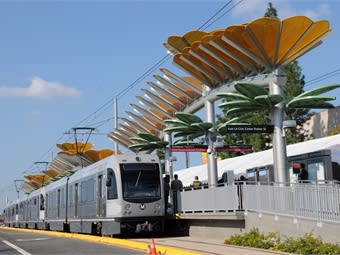
The agency received two Full Funding Grant Agreements for two different rail lines during Leahy’s tenure, with a third in the works. Metro’s Gold Line pictured.
What are your future plans?
I’m very fortunate with the new grand-children up in Portland, Ore., so we’ll spend some time up there. Some people want to talk to me about working elsewhere, and I would be willing to have those conversations. I don’t see myself as retiring, at least not quite yet. We will see what happens.
Having grown up in California, how do you feel about the move toward public transportation in the city?
I feel wonderful. By the way, let me just note, we purchased Union Station during my tenure here too and are rehabbing that. It is an L.A. place and Metro bought it, so I’m really happy about that.
If you look at the transformation in Greater L.A., it is stunning. We went to a thing on Broadway [in downtown Los Angeles] a few Saturday nights ago and there were a ton of people walking around. The old theaters down there are beautiful. The east side of downtown is just a happening place. Then, if you look at Culver City, Long Beach, Pasadena, Hollywood, we are beginning to have a real sense of a place. When I was growing up, we would say it’s not really a big city, it’s a big village. No one says that anymore. We all know in the world this is a big city, and we are beginning to show it and act like it.
All these communities all over Los Angeles County are becoming really wonderful places to be. Maybe Metro didn’t cause that, but we certainly contributed to it and are re-enforcing it. The fact that you can go out to East L.A. and live over there and then commute into L.A. on a train, and many, many other places, is really just wonderful.
What do you see Metro looking like 20 years down the road?
We have six rail projects underway right now. That will continue to expand the net of rail lines. I think that growth will continue. I think Metro has moved center stage in Los Angeles. Mayor Eric Garcetti, who is also the chair of the Metro board, is very interested in going for an additional sales tax to build additional rail lines.
In the longer term we’re looking into high-speed rail coming into downtown. We’re looking at coordinating that with Metrolink and the Amtrak service. We are in initial stages of a toll road tunnel rail line from the Westwood area out to the Van Nuys area.
All those projects are going to continue to happen. I think L.A. is just going to become a better and better place to live. It’s a wonderful place today, but it’s getting better.
What kind of advice would you give your successor?
You should come in here and get excited about the place and enjoy it. There’s no point in being passive. It’s a big city, and things need to get done. I would just recommend to him or her a very active approach to getting all these things done as soon as possible. In addition to aspirational values, we [in L.A.] certainly have a hurry-up value as well.
More Management

METRO Opens Submissions for 2026 Motorcoach Awards
Nominations are now being accepted for METRO Magazine’s Operator of the Year and Innovative Operator of the Year awards.
Read More →
New York MTA Advances Final Contract for Second Avenue Subway Expansion
Contract Four is the largest in the Second Avenue Subway Phase 2 project and includes construction of station infrastructure, tracks, and signals for the subway expansion, MTA officials said. Work on Contract Four will begin in 2027.
Read More →
Transit Agencies Highlight Safety Gains at National Summit
Leaders from 15 major transit systems shared crime-reduction results and safety initiatives while discussing the role of continued federal support.
Read More →

NITA Names New Leadership, Expands Reduced-Fare Program at First Board Meeting
The new regional transit authority appointed its first board chair and interim executive director while extending reduced fares across CTA, Metra, and Pace for eligible riders.
Read More →
Beyond the Checklist: A Structured Approach to Transit Maintenance
Reliability-Centered Maintenance helps transit agencies move beyond routine checklists to focus limited resources on the assets and failures that have the greatest impact on safety, reliability, and service.
Read More →
APTA 2026 Nominating Committee Selects Leadership Slate, Names Chair and Vice Chair Nominees
Leadership changes will help shape the association’s priorities and its representation of the transportation industry during the 2026–2027 term.
Read More →
DART Launches Major Security, Fare Enforcement Initiative
The 90-day demonstration will deploy coordinated security teams at five light rail stations while testing controlled access and gathering data to guide future investments.
Read More →
Advancing Fare Collection Through Technology and Innovation
Learn about delivering 1300 gates at 91 stations while managing fare evasion. Explore the large scale deployment, solution customization and real-world results that affect the region. Prepare for deployment in your region now.
Read More →
Game Day in Motion: Moving Millions During the 2026 World Cup
Between packed transit stations and team motorcoaches, see how agencies and operators across North America tackled the transportation demands of the 2026 FIFA World Cup.
Read More →
Surface Transportation Extension Averts Shutdown, Leaves Transit Funding Gap
The stopgap keeps federal transportation programs moving, but missing advance funding could complicate the transit and rail projects agencies are planning next.
Read More →