



2016 Bus Maintenance Survey: Shops Still Dealing with Electrical Learning Curve
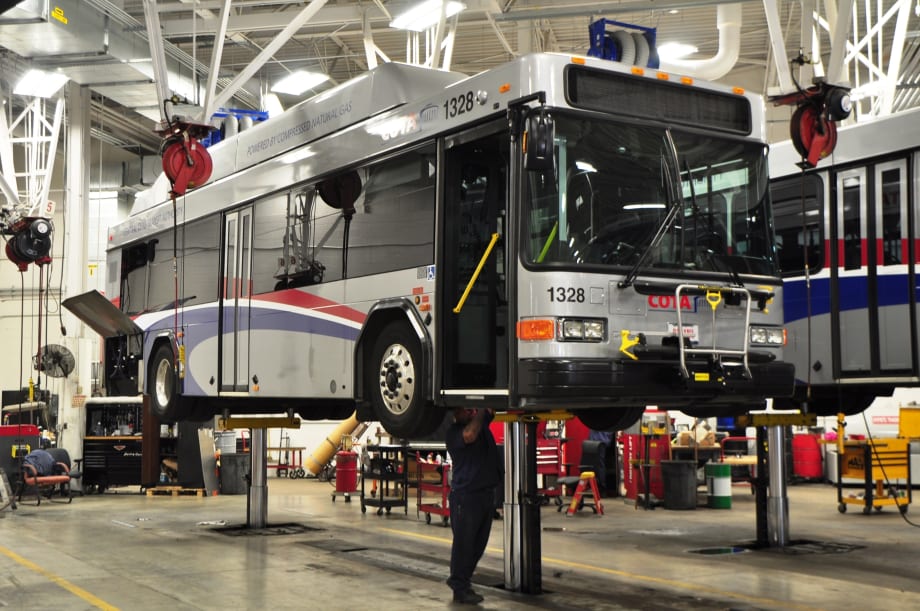
With electric bus usage and the adaptation of electric cooling fans continuing to grow, maintenance departments around the nation are working hard to find ways to both address issues and provide specialized training for their staff.
COTA
COTA
With electric vehicle usage and the transitioning to electric cooling fans continuing to grow at transit agencies around the nation, electrical (issues/training) continues to be the top issue in the shop, according to respondents to METRO’s 2016 Bus Maintenance Survey.
Overall, electric vehicle usage is up six percentage points from last year’s survey, while three-quarters of this year’s respondents report that their agency is moving from hydraulic to electric cooling fans. To address the issues being caused by these changes, maintenance officials report that they are adding specialized training programs or requesting increased training from their OEM partners.
When asked what new issues have had to be addressed through training in the last year, respondents reported a range of topics, including aftertreatment systems, supercapacitor care and maintenance, high-voltage propulsion systems and electric buses.
Ninety-four percent of this year’s respondents reported filters as the fast-moving part they buy the most, followed by fluids and brakes. More than half of this year’s respondents reported alternators as their most-purchased lifecycle part, followed by starter motors and compressors.
When asked what questions an agency should ask when exploring the possibility of adding alternatively propelled vehicles, the top answers were: “What infrastructure upgrades will be necessary and what will those modifications cost?” “What are the true maintenance costs?” “What additional training will be required?” and “What hiccups have other transit agencies experienced both early in the adoption process and down the road?”
METRO sent out its survey to hundreds of maintenance shops, spanning a wide demographic consisting of large metropolitan to small and rural transit agencies, as well as university-focused systems.
Now in its sixth year, METRO sent out its survey to even more maintenance shops, spanning a wide demographic consisting of large metropolitan to small and rural transit agencies as well as university-focused systems. Questions covered topics ranging from fleet size to average age of their fleet, hours-of-training provided per year and how that training is delivered, and the top issues in their shops to what parts they buy most often.
Agencies varied in fleet size, with the largest maintaining 5,800 buses and the smallest 17, with the mean boasting a fleet of 534 buses — up significantly from last year’s 288 buses.
If you have a question to add for next year’s survey or would like to participate in the future, please contact us at info@metro-magazine.com. As always, thanks to all those who took the time to submit their info this year.
More Management

METRO Opens Submissions for 2026 Motorcoach Awards
Nominations are now being accepted for METRO Magazine’s Operator of the Year and Innovative Operator of the Year awards.
Read More →
New York MTA Advances Final Contract for Second Avenue Subway Expansion
Contract Four is the largest in the Second Avenue Subway Phase 2 project and includes construction of station infrastructure, tracks, and signals for the subway expansion, MTA officials said. Work on Contract Four will begin in 2027.
Read More →
Transit Agencies Highlight Safety Gains at National Summit
Leaders from 15 major transit systems shared crime-reduction results and safety initiatives while discussing the role of continued federal support.
Read More →

NITA Names New Leadership, Expands Reduced-Fare Program at First Board Meeting
The new regional transit authority appointed its first board chair and interim executive director while extending reduced fares across CTA, Metra, and Pace for eligible riders.
Read More →
Beyond the Checklist: A Structured Approach to Transit Maintenance
Reliability-Centered Maintenance helps transit agencies move beyond routine checklists to focus limited resources on the assets and failures that have the greatest impact on safety, reliability, and service.
Read More →
APTA 2026 Nominating Committee Selects Leadership Slate, Names Chair and Vice Chair Nominees
Leadership changes will help shape the association’s priorities and its representation of the transportation industry during the 2026–2027 term.
Read More →
DART Launches Major Security, Fare Enforcement Initiative
The 90-day demonstration will deploy coordinated security teams at five light rail stations while testing controlled access and gathering data to guide future investments.
Read More →
Advancing Fare Collection Through Technology and Innovation
Learn about delivering 1300 gates at 91 stations while managing fare evasion. Explore the large scale deployment, solution customization and real-world results that affect the region. Prepare for deployment in your region now.
Read More →
Game Day in Motion: Moving Millions During the 2026 World Cup
Between packed transit stations and team motorcoaches, see how agencies and operators across North America tackled the transportation demands of the 2026 FIFA World Cup.
Read More →
Surface Transportation Extension Averts Shutdown, Leaves Transit Funding Gap
The stopgap keeps federal transportation programs moving, but missing advance funding could complicate the transit and rail projects agencies are planning next.
Read More →