



Idea to merge rail systems has lessons for us all
Unless there are clearly defined responsibilities with defined funding sources and some levels of autonomy, they become troubled.
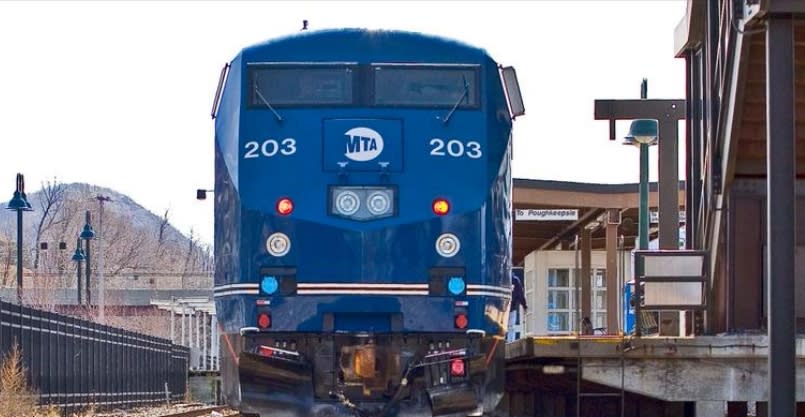
The merger would be undertaken in three phases over 30 years. Importantly, the plan would need an additional annual investment of $2.4 billion over that time frame.
Metro-North
The merger would be undertaken in three phases over 30 years. Importantly, the plan would need an additional annual investment of $2.4 billion over that time frame.
Metro-North
The recent release of a report recommending restructuring and expansion of the New York region’s three commuter rail networks has lessons for the industry that go far beyond commuter rail and New York. Accordingly, they are worth a read by everyone in our industry. The report, “Trans-Regional Express: Transforming the New York Region’s Commuter Rail System Into an Integrated Regional Rail Network,” conducted by the think tank New York Regional Plan Association, can be found here.
The report calls for a $71.4-billion merger of the Long Island Rail Road, Metro North and New Jersey Transit commuter rail lines to form an integrated “Trans-Regional Express” region-wide network, or “T-REX” for short. The merger would be undertaken in three phases over 30 years. Importantly, the plan would need an additional annual investment of $2.4 billion over that time frame, above the investment program already needed by existing agencies to fund the Gateway project and the two additional tracks they want to build.
What T-REX says about us all
The T-REX report, though New York-centric, has three important aspects that should draw all of our attention. First its ambition and scale, like Los Angeles’ commitment to transition its entire bus fleet to zero-emission, will affect the industry as a whole. These effects range from the kinds of cars and technology that the upgraded and merged services will demand to the production schedules of their car builders and supply chains to the effects on federal, state, and regional funding sources, including the bond markets. That alone makes these recommendations, if adopted, a big deal.
There are two more aspects that deserve our watching. Because the legacy infrastructure was all inherited from private railroads built more than a century ago, many areas in the greater region are at best poorly served, or at worst, are not served by direct regional rail service at all, including important economic centers. The asset management challenges must sound familiar not only to places like Chicago, San Francisco, and Cleveland, but legacy systems are challenged virtually everywhere else, where bus lines still follow old streetcar lines or bus networks that were taken over from private sector companies.
Governance may be most challenging
The third takeaway is perhaps most difficult. The merger of these lines also implies a new governance structure, perhaps like that of the Port Authority of New York and New Jersey, which governs the region’s ports, airports, the bus terminal, the Port Authority Trans-Hudson rail line, and several tunnels and bridges. Whether in charge of bus or rail lines, these regional bodies are complex, because they cross multiple political lines, including states in more cases than this one. And, unless there are clearly defined responsibilities with defined funding sources and some levels of autonomy, they become troubled. The ones that have worked best keep it simple, with a narrow mission, defined roles, and enduring funding.
More Management

LIT Marks 10-Year Milestone at Annual Summit
Hosted by the COTA from September 10 to 13, the Summit carried the theme “Celebrating 10 Years of Excellence, Leadership, and Impact,” with every part of the program honoring the people, agencies, and partners who built LIT over its first decade.
Read More →
People Movement: Dan Dipert Coaches Adds Third-Generation Leader, Keolis Names New Valley Metro VP/GM, and More
In this edition, we also cover recent appointments and announcements at the Wabtec, SilverRide, HNTB, and more, showcasing the individuals helping to shape the future of transportation.
Read More →
METRO Opens Submissions for 2026 Motorcoach Awards
Nominations are now being accepted for METRO Magazine’s Operator of the Year and Innovative Operator of the Year awards.
Read More →

New York MTA Advances Final Contract for Second Avenue Subway Expansion
Contract Four is the largest in the Second Avenue Subway Phase 2 project and includes construction of station infrastructure, tracks, and signals for the subway expansion, MTA officials said. Work on Contract Four will begin in 2027.
Read More →
Transit Agencies Highlight Safety Gains at National Summit
Leaders from 15 major transit systems shared crime-reduction results and safety initiatives while discussing the role of continued federal support.
Read More →
NITA Names New Leadership, Expands Reduced-Fare Program at First Board Meeting
The new regional transit authority appointed its first board chair and interim executive director while extending reduced fares across CTA, Metra, and Pace for eligible riders.
Read More →
Beyond the Checklist: A Structured Approach to Transit Maintenance
Reliability-Centered Maintenance helps transit agencies move beyond routine checklists to focus limited resources on the assets and failures that have the greatest impact on safety, reliability, and service.
Read More →
APTA 2026 Nominating Committee Selects Leadership Slate, Names Chair and Vice Chair Nominees
Leadership changes will help shape the association’s priorities and its representation of the transportation industry during the 2026–2027 term.
Read More →
DART Launches Major Security, Fare Enforcement Initiative
The 90-day demonstration will deploy coordinated security teams at five light rail stations while testing controlled access and gathering data to guide future investments.
Read More →
Advancing Fare Collection Through Technology and Innovation
Learn about delivering 1300 gates at 91 stations while managing fare evasion. Explore the large scale deployment, solution customization and real-world results that affect the region. Prepare for deployment in your region now.
Read More →