



Report: U.S. should employ mileage-based usage fee
With expected shift to more fuel efficient vehicles, it will be increasingly difficult to rely on the gas tax to raise the funds needed to improve and maintain nation’s surface transportation infrastructure.

The National Surface Transportation Infrastructure Financing Commission (NSTIFC), a bi-partisan Congressionally-created group, urged lawmakers on Thursday to fundamentally shift the way the federal government collects revenues to fund transportation infrastructure.
Culminating nearly two years of study and deliberation, the Commission offered its consensus view and roadmap for sweeping reform of the nation’s transportation infrastructure funding approach with the release of its final report, Paying Our Way: A New Framework for Transportation Finance.
One of the specific recommendations offered for addressing the significant and widening gap between federal investment and the nation's transportation infrastructure needs included moving away from a motor fuel tax toward more direct fees charged to transportation infrastructure users.
Charging vehicle drivers a mileage fee embodies the “user pays” principle and more accurately aligns the costs and benefits of the surface transportation system to those who are using it. More transparent charges for using infrastructure may also spur drivers to use the system more efficiently, reducing the overall investment need.
“With the expected shift to more fuel efficient vehicles,” said Robert Atkinson, the chair of the Financing Commission and president of the Information Technology and Innovation Foundation, “it will be increasingly difficult to rely on the gas tax to raise the funds needed to improve, let alone maintain our nation’s surface transportation infrastructure.”
In addition to a federal mileage-based charge, the Commission called for the federal government to facilitate state and local governments’ ability to raise their share of needed revenues in ways that also spur efficient use of the system and stepped-up investment, including through tolling portions of roads and charging premiums for rush-hour travel in heavily used urban corridors, so-called congestion pricing.
The Financing Commission provided detailed recommendations for lawmakers to facilitate the effective use of private investment and to provide government credit support to assist in the financing of transportation infrastructure projects to stretch the federal government’s limited resources. In order to support the transition from the gas tax to a mileage-based charge, the Financing Commission recommended a ten-cent-per-gallon increase in the federal gas tax (15 cents for diesel) and indexing the tax to inflation going forward.
The gas tax, which is not currently indexed to inflation, has lost one third of its purchasing power since 1993, the last time the tax was increased. The Financing Commission urged the federal government to act swiftly.
While the nearly $40 billion in transportation infrastructure spending included in the stimulus package will be helpful, it will cover only a very small share of the shortfall in highway and transit funding and will not address the systemic crisis the nation faces in its surface transportation infrastructure investment, says the Commission.
“We must start transitioning to a new paradigm now,” said Commissioner Mike Krusee. “If we don’t start, we will never get there.”
More Paratransit

Reinventing Fleet Maintenance with Real-time Visibility and AI
Transit leaders need to know what needs fixing, where to look, who is responsible, when work is completed, and what it costs without having to chase information across disconnected systems.
Read More →
SamTrans Sets Priorities for Potential Connect Bay Area Revenue
The board-approved framework allocates future funding to maintaining service, rider improvements, equity initiatives, and infrastructure repairs.
Read More →
Chicago's NITA Act Moves Into Next Phase as Service Improvements Begin
Rider-focused improvements will begin rolling out across the system immediately as CTA, Metra, and Pace increase service this summer in the six-county region.
Read More →
A True Low-Floor Minibus Design Delivers Better Accessibility and Efficiency for Everyone
As transit demands evolve, so should your fleet. Download the whitepaper to see how the Low-Floor Frontrunner Minibus compares to traditional options.
Read More →
2026 METRO Buyer’s Guide & Directory
Searching for the right vehicles, technology, equipment, or services for your public transit or motorcoach operation? This industry guide brings together manufacturers and suppliers from across the transportation market — all in one place. Download it to connect with the companies that help agencies and operators improve mobility, enhance operations, and move their organizations forward.
Read More →
Rays the Mark Foundation to Honor CDTA’s Emily DeVito at October Fundraiser
Event at Chicago-area Ravisloe Country Club will support DeVito, a transit employee and mother of twins battling kidney failure and awaiting a transplant.
Read More →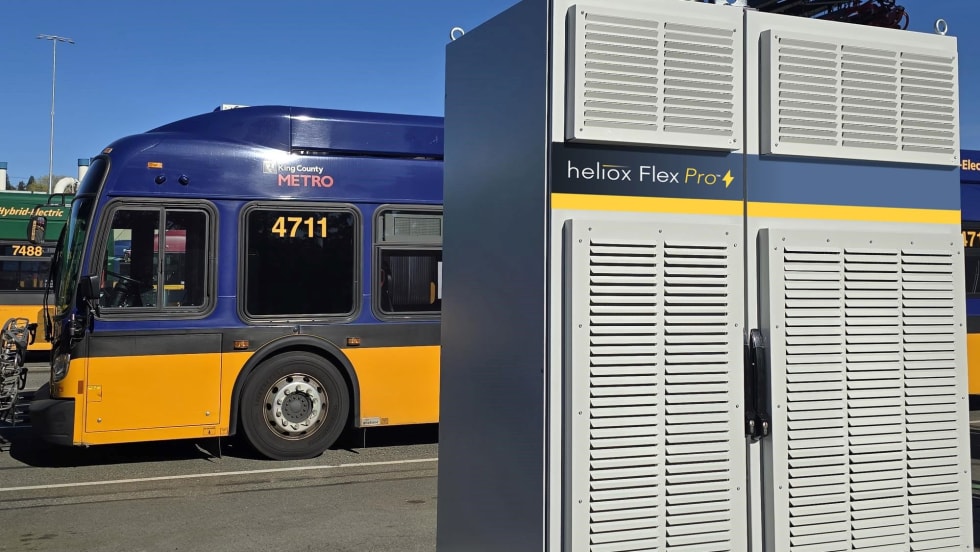
King County Test Heliox Chargers, Keolis Lands California Contract Top Biz Briefs
Stay informed with these quick takes on the projects and companies driving progress across the transportation landscape.
Read More →
Spare Expands AI-Native Operations Platform With Fixed-Route Capabilities
The launch marks a major milestone in Spare’s vision for unified transit operations.
Read More →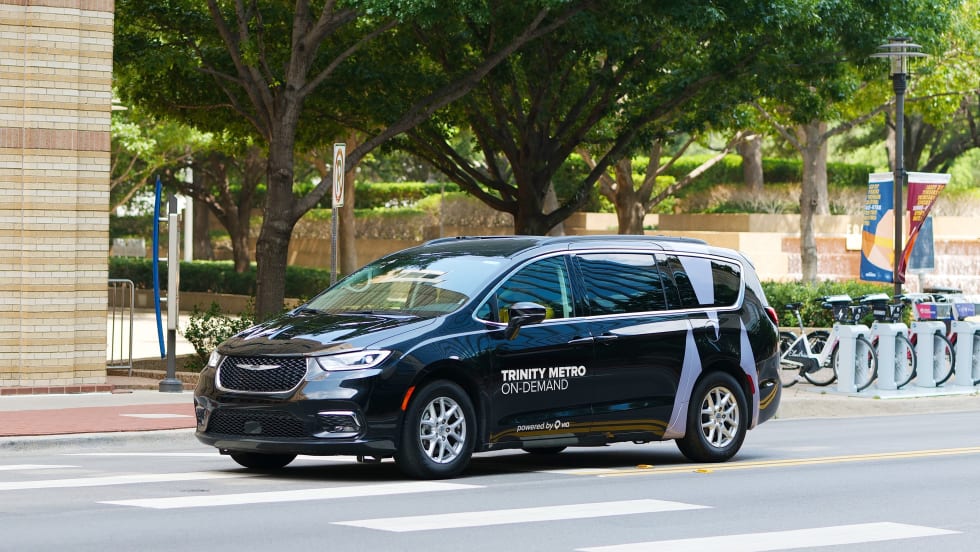
Via Announces Scheduling and Supply Studio
The Scheduling and Supply Studio provides the world’s first fully integrated platform for optimizing vehicle and driver availability to rider demand, said company officials.
Read More →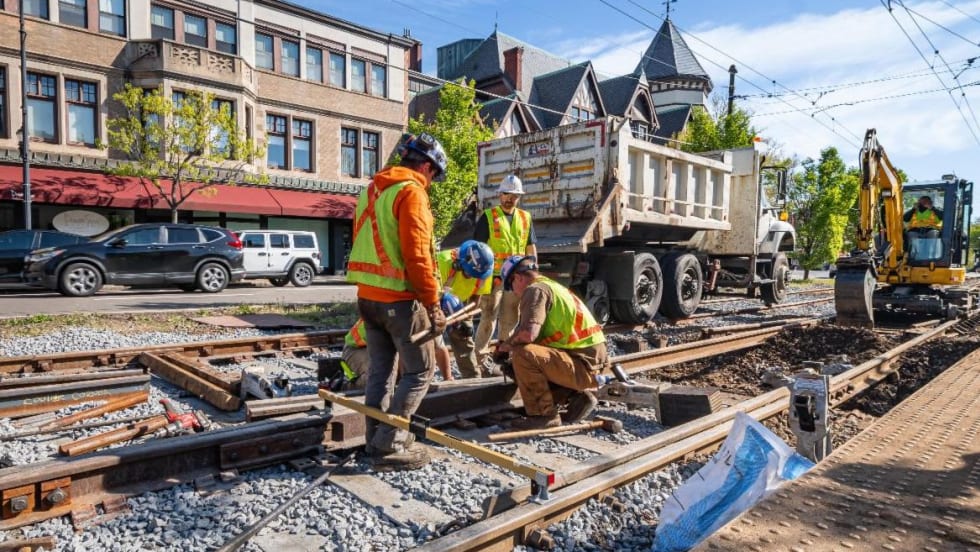
Boston's MBTA Completes Latest Green Line Work
The work took place during 12 consecutive days of shuttle bus service replacement between Kenmore and Cleveland Circle.
Read More →