



MBTA launches new developer platform
After first releasing its schedule data in the industry-standard GTFS format to developers in 2009, the MBTA jumped to the forefront of sharing real-time transit data by making live location and prediction data for all 1,000 buses available to developers in 2010.

The Massachusetts Bay Transportation Authority (MBTA) is launching MBTA-realtime, its new developer platform, on June 4. Service alerts will be available over an API and in GTFS-realtime, with real-time information to follow later this year.
After first releasing its schedule data in the industry-standard GTFS format to developers in 2009, the MBTA jumped to the forefront of sharing real-time transit data by making live location and prediction data for all 1,000 buses available to developers in 2010. It has since then made subway and commuter rail real-time data available; instead of offering predictions on its own website the “T” has a page highlighting over 50 third-party apps.
But, the fast-moving projects have left the data in a variety of mismatched formats, identifiers that only sporadically correspond to its own GTFS data and no integration with service alerts. That lack of integration meant that an application might tell a customer that a train would be at his station in five minutes, but have no good way to know that the station had just been temporarily closed.
MBTA-realtime is built from the ground up to integrate real-time information and alerts and to build them both around a core of GTFS data. For example, when dispatchers enters an alert that a bus route is on detour, they select not just the route from a list but each stop bypassed from a list of all stops served; if a commuter rail trip is delayed they can select the trip from a list of trips. Not only does this make alerts more detailed, but because the options chosen are shared with developers and are based on the same GTFS core they may be using, it opens up new opportunities in filtering, displaying and using the information.
The information is available through a straightforward new API which is ideal for mobile apps or websites that retrieve data as-needed, as well as in GTFS-realtime, the new Protocol Buffer extension to GTFS that lets applications get all available information in a very small package. Finally, an updated RSS feed of alerts remains available for those who just want a straightforward way to display them.
The MBTA plans to integrate real-time information for subway and commuter rail into the same system later this year. No decision has been made regarding whether to add real-time bus data in the future. The rollout coincides with a refreshed service alert Webpage on its website and a shift to a new provider, GovDelivery, for its “T-Alerts” alert notification service. T-Alerts has more than 50,000 email and SMS subscribers.
More Management

Joshua Schank on Transportation Innovation, Risk, and the Future of Mobility
In this edition of METROspectives, Joshua Schank discusses lessons from launching LA Metro’s Office of Extraordinary Innovation, the challenges of advancing new mobility technologies, and much more.
Read More →
Reinventing Fleet Maintenance with Real-time Visibility and AI
Transit leaders need to know what needs fixing, where to look, who is responsible, when work is completed, and what it costs without having to chase information across disconnected systems.
Read More →
Alstom Acquires Delaware Site to Support Amtrak NextGen Acela Fleet
The company is investing more than $55 million to acquire and improve the property and will employ approximately 100 people at this site once it is operational.
Read More →
SamTrans Sets Priorities for Potential Connect Bay Area Revenue
The board-approved framework allocates future funding to maintaining service, rider improvements, equity initiatives, and infrastructure repairs.
Read More →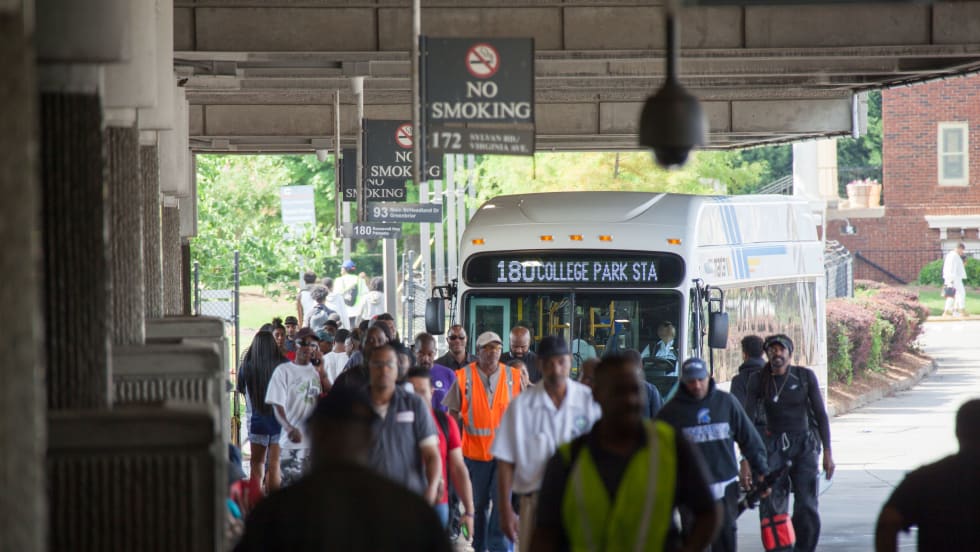
Federal Transit Officials Launch MARTA Safety Probe
FTA has given MARTA 15 days to provide records on crime prevention, fare evasion enforcement, and security funding as part of a broader safety investigation.
Read More →
ABA's Ferguson Testifies in Support of BUS Act, National Standards for Bus Operators
The BUSES Act would create a nationwide framework preventing state and local governments from enforcing bus idling restrictions of less than 15 minutes, a threshold consistent with existing Environmental Protection Agency guidance.
Read More →
When Routine Fails: How Public Transit Must Adapt for the World Cup
The 2026 FIFA World Cup will test transit agencies’ ability to manage unpredictable travel patterns, making real-time data and operational flexibility critical to moving millions of visitors efficiently.
Read More →
Florida’s JTA Puts Innovation in Motion Ahead of America250
The agency unveiled a commemorative America250 bus during a visit from U.S. DOT's Seval Oz and showcased its autonomous mobility programs.
Read More →
California Selects Team for Nation’s First True High-Speed Rail Track and Systems Contract
The board action follows completion of track installation at the 150-acre southern railhead in Kern County, which will serve as the staging and distribution hub for high-speed track and systems installation.
Read More →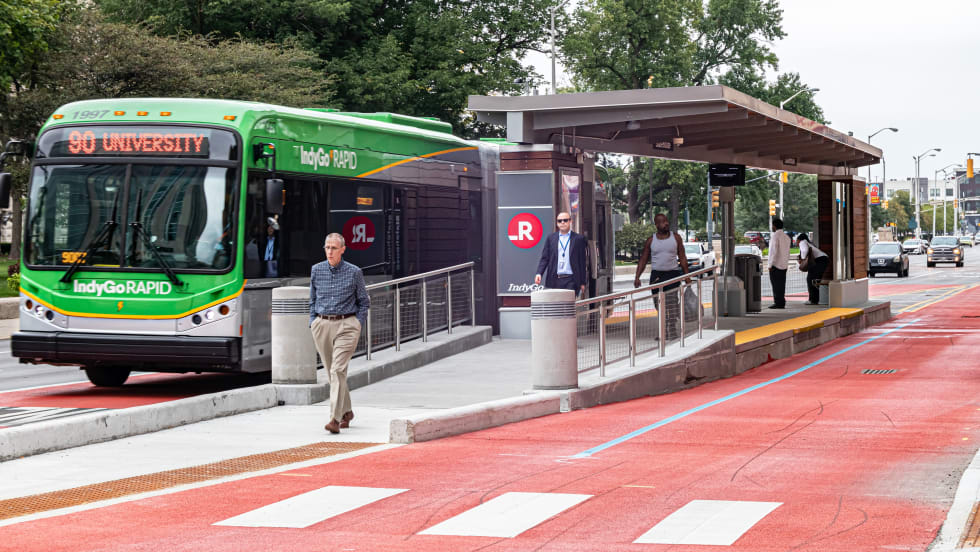
IndyGo, Cleveland RTA Expand Digital Fare Payment Options with Masabi
The new systems combine mobile apps, smart cards, and automatic fare capping to simplify payments, expand flexibility, and help riders access the lowest available fares.
Read More →