



Report: Chicago rail TOD lags behind other cities
Center for Neighborhood Technology recommends creating transit-oriented development zones, preserving affordable housing, matching jobs and transit, and providing alternatives to car ownership.

While Chicago has made significant investments in transit-oriented development (TOD) over the past decade, the region has not seen the same levels of success as other major U.S. metropolitan areas in the successful development of transit zones — the land areas within one half-mile of passenger rail stations, according to the Center for Neighborhood Technology (CNT).
Whereas peer cities such as New York, Philadelphia, Boston and San Francisco saw positive growth between 2000 and 2010, Chicago actually saw a decline in development. A report released by the CNT recommends a series of policy actions Chicago leaders can take to get transit-oriented development on track and improve the region’s economic, environmental and social sustainability.
In the report, “Transit-Oriented Development in the Chicago Region: Efficient and Resilient Communities for the 21st Century,” CNT researchers evaluated the dynamics of the Chicago region’s 367 fixed Metra and CTA rail stations and station areas between 2000 and 2010. Using the National TOD Database, a first-of-its-kind web tool developed by CNT that provides access to comprehensive information about more than 4,000 transit zones across the U.S., researchers identified the transit zones that performed well: those that anchored vital, walkable communities that possess an affordable, high quality of life with minimal impact on the environment.
“Understanding how transit zones perform, especially those that have performed well, helps chart a smart course for future investment and development,” said CNT President Scott Bernstein. “Local leaders can use this information to make data-driven policy and investment decisions, to make choices that prioritize connecting people to jobs and strengthening communities through more efficient use of land and resources.”
To maximize the return on public investment in transit and create a ripple of benefits for the communities that it serves, the report recommends Chicago-area leaders make five fundamental commitments to transit and transit-oriented development (TOD):
Create TOD zones. Many of the barriers to TOD are embedded in the land use policies of local governments, and are further complicated by regional, state, and federal policies. Creating TOD zones helps eliminate barriers to development.
Preserve affordable housing. To realize the full regional benefits of quality transit and TOD, mixed-income housing must be preserved and expanded in TOD zones. This may be accomplished through a combination of policies that prioritize housing assistance to TOD communities and enforce existing state requirements for affordable housing in all communities.
Match jobs and transit. Many limitations of metropolitan Chicago’s transit system — as well as high transportation costs, traffic congestion, and air pollution — stem from job centers moving away from mixed-income neighborhoods. A more efficient and healthier pattern may be established through systematic efforts to expand transit services to job centers, site new employers in existing transit-served communities, and promote incentives to commute through transit, biking, or walking.
Provide alternatives to car ownership. Even dedicated transit users often are forced to buy cars to meet transportation needs that transit cannot efficiently fill. To provide alternatives to car ownership, the region should support the growth of car-sharing services, build more extensive bicycle infrastructure, and establish more pedestrian-friendly streetscapes.
Prioritize TOD across agencies. While public agencies can set favorable conditions for TOD, public investments of more than $1 billion are needed through 2040 to remove impediments to redevelopment and attract the much larger private investments that will build the mixed-income housing, mixed-use buildings, and functioning businesses that constitute TODs. Coordinated priorities and investments among a range of public agencies are needed to generate these effective public investments.
Joe Costello, executive director, Chicago Regional Transportation Authority (RTA) said in response to the report’s release, “The RTA has been an active supporter of transit-oriented development over the past decade, providing funding and technical assistance support to local communities throughout our service area. We will continue to support all strategies to maximize ridership and build our region’s transit infrastructure. That’s why we invest in TOD implementation efforts to further enhance the region and encourage others to do the same.”
The report also found that between 2000 and 2010, household transportation costs in the Chicago region rose at a faster rate than median household incomes. Chicago-area residents, therefore, paid the price twice: in higher transportation costs, and in lost opportunity for enhanced transit access to jobs and job centers.
This new report is a continuation of CNT’s research and recommendations on transit-oriented development, including the 2012 publication Prospering in Place, which honored the Chicago Metropolitan Agency for Planning (CMAP) GO TO 2040 plan for its vision to increase the number of TOD areas of the region and make them communities of choice — and hence prioritized for public and private resource investment.
RELATED ARTICLE: Check out, "Report: Equitable TOD creates better communities."
More Rail

The Invisible Infrastructure of Passenger Flow
What a seat reservation system on Austria’s Railjet trains reveals about the future of rider experience, and why U.S. agencies should pay attention.
Read More →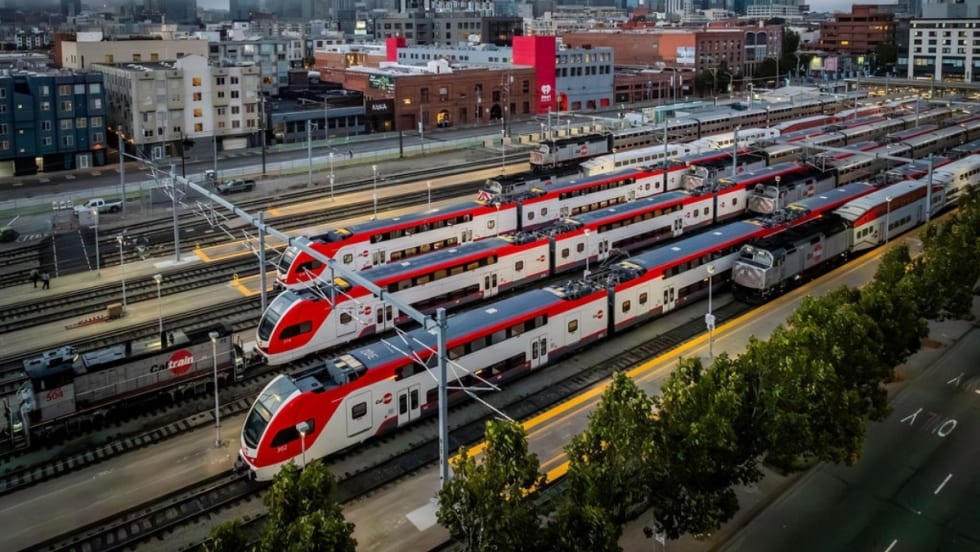
Caltrain Board Approves FY27 Budget, Endorses Efficiency Measures
The move ensures Caltrain service will continue operating as usual in the near term, but long-term financial challenges remain for the rail agency absent a new revenue source.
Read More →
Alstom Acquires Delaware Site to Support Amtrak NextGen Acela Fleet
The company is investing more than $55 million to acquire and improve the property and will employ approximately 100 people at this site once it is operational.
Read More →
When Routine Fails: How Public Transit Must Adapt for the World Cup
The 2026 FIFA World Cup will test transit agencies’ ability to manage unpredictable travel patterns, making real-time data and operational flexibility critical to moving millions of visitors efficiently.
Read More →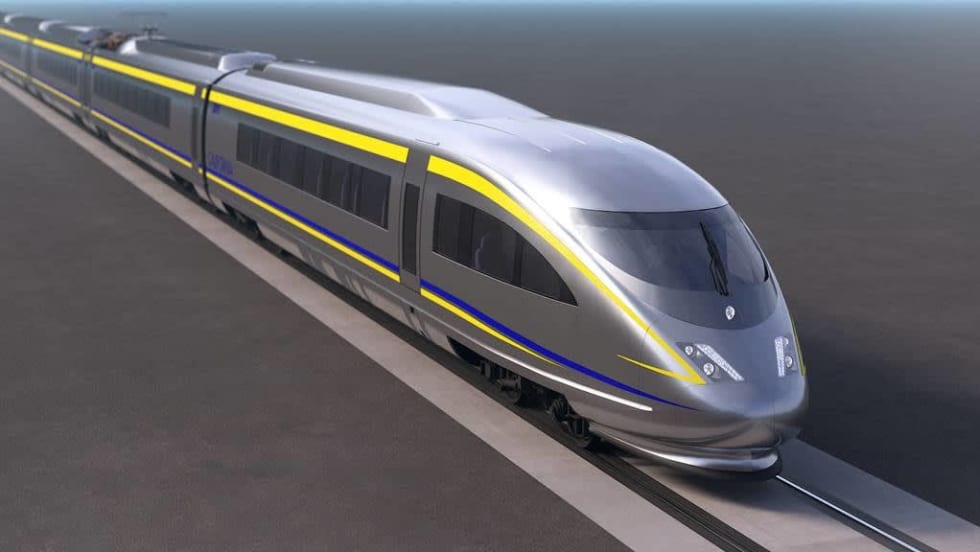
California Selects Team for Nation’s First True High-Speed Rail Track and Systems Contract
The board action follows completion of track installation at the 150-acre southern railhead in Kern County, which will serve as the staging and distribution hub for high-speed track and systems installation.
Read More →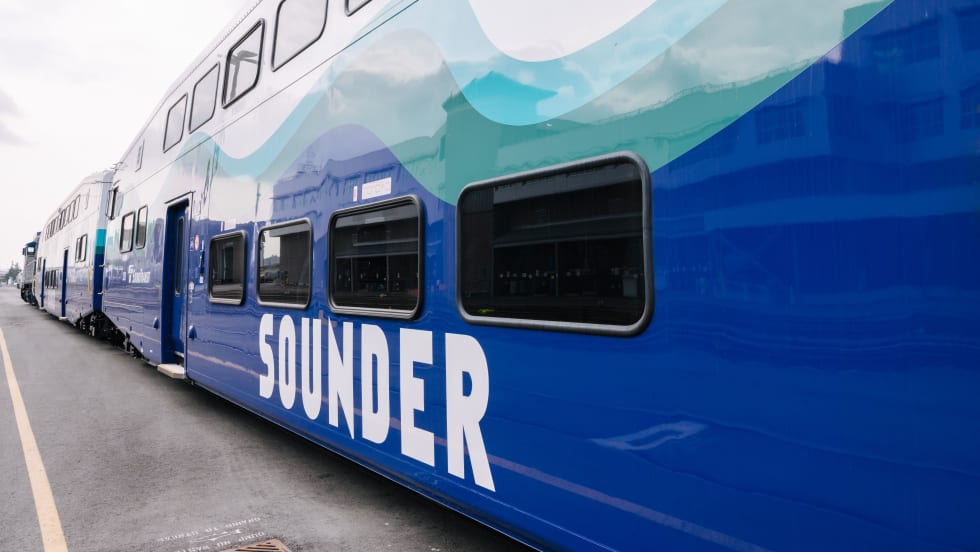
Seattle's Sound Transit Launches New Sounder Railcars into Service
Alstom manufactured all the cars under a $46.5 million contract and came into service in anticipation of summer crowds for soccer and baseball.
Read More →
Alstom Partners With Universities to Build Rail Talent Pipeline
The partnerships include a new engineering scholarship fund at Alfred State College in Western New York and collaborations with transportation centers at the University of Pennsylvania and New York University.
Read More →
Chicago's NITA Act Moves Into Next Phase as Service Improvements Begin
Rider-focused improvements will begin rolling out across the system immediately as CTA, Metra, and Pace increase service this summer in the six-county region.
Read More →
Seattle’s Sound Transit Adopts Updated ST3 System Plan
The updated system plan incorporates cost savings across the agency, including new revenue sources and financial policies, to set the agency on a sustainable path for the future.
Read More →
Inside Look: EMBARK Expands Fare-Free Transit Program Through New Public-Private Partnership
The OKC transit agency says sponsorship helps subsidize the Third Friday Free initiative while reducing barriers for first-time riders and boosting ridership across buses, streetcars, and river cruises.
Read More →