



SEPTA to increase fares, defer budget action
Proposed FY 2014 Operating Budget of approximately $1.3 billion, an increase of less than 3% compared to FY 2013. Budget is projected to have a $38 million shortfall. Deferred votes on its operating and capital budgets, due to uncertainties in state funding levels.

The Southeastern Pennsylvania Transportation Authority (SEPTA) board of directors approved a proposal to increase fares and simplify the payment process for customers in preparation for next year's move to a modernized fare system.
The board also deferred votes on SEPTA's operating and capital budgets, due to uncertainties in state funding levels. The board plans to revisit the spending plans for Fiscal Year 2014, which begins July 1, 2013, at a meeting later this year. It is hoped that state lawmakers will soon reach an agreement for funding transportation throughout Pennsylvania.
SEPTA's proposed Fiscal Year 2014 Operating Budget of approximately $1.3 billion represents an increase of less than 3% compared to Fiscal Year 2013, but is projected to have a $38 million shortfall. In addition, the proposed Capital Budget would remain at approximately $300 million for the fourth consecutive year — a 25% decrease compared to Fiscal Year 2010 levels. The capital budget funds critical initiatives, such as infrastructure improvement projects and new vehicle purchases.
Overall, SEPTA's capital budget is at a 15-year low, and is less than half of that of peer transit agencies such as Boston's Massachusetts Bay Transportation Authority ($800 million capital budget), Washington Metropolitan Area Transit Authority in Washington, D.C. ($1 billion) and New Jersey Transit ($1.1 billion).
A recent independent report by the Economy League of Greater Philadelphia found SEPTA has made efficient use of the state and federal capital dollars it receives, but would require more than $450 million in additional funds each year over the next two decades to address state-of-good-repair needs. At current projected funding levels for the Fiscal Year 2014 Capital Budget, SEPTA will have no money for a number of vital projects, such as repairs to 1930s-era electrical substations or upgrades to aging bridges.
SEPTA continues to follow state recommendations designed to raise additional revenue through periodic fare increases, and bolster efforts to generate new revenues through methods such as an expanded advertising program, which has grown significantly in recent years and is projected to bring in $14 million during Fiscal Year 2014. The fare increase approved by the SEPTA board is also in keeping with this strategy, as the agency has adopted a policy of enacting cost-of-living priced fare increases every three years. This helps SEPTA ensure fare revenue will continue to increase, and also helps customers prepare their personal budgets for these regular adjustments.
The fare plan approved by the board, which is effective July 1, includes a number of changes made in response to public feedback received during a series of 10 public hearings held throughout the five counties in which SEPTA operates after the proposal was announced.
Revisions include:
• Freezing CCT Paratransit fares at the current level of $4, rather than an increase to $4.50;
• Lowering increases to weekly and monthly TransPasses, which will go from $22 to $24, and $83 to $91, respectively;
• Raising ride limits on weekly and monthly passes to 56 and 240, respectively.
The new fare plan includes the first increase since 2001 to the base cash fare for buses, subways and trolleys. The cash fare will increase from $2 to $2.25 on July 1, and then to $2.50 with the implementation of NPT mid-next year. Discounted single-trip fares of $1.80 will be available with tokens, and this price reduction will remain in effect under the New Payment Technology (NPT) project with use of new smart media options.
As part of the effort to simplify fares and introduce an "open" fare payment and collection system under NPT, extra-fare zone charges will be eliminated on dozens of transit routes, and there will be some consolidation of zones on Regional Rail. In addition, gender stickers will be eliminated on all passes for transit and Regional Rail as of July 1.
Smart media payment methods will include a SEPTA-branded card that will be available for purchase at all transit stations, Center City Regional Rail hubs, SEPTA sales locations and hundreds of retail outlets throughout the region. In addition, customers will be able to use their own devices — such as compliant credit and debit cards that offer contactless payment, near field communication-enabled smartphones and smart-chip equipped identification cards, just to name a few — as part of the open fare system. Discounted fare rates will be available simply by registering these devices with SEPTA.
More Management

Joshua Schank on Transportation Innovation, Risk, and the Future of Mobility
In this edition of METROspectives, Joshua Schank discusses lessons from launching LA Metro’s Office of Extraordinary Innovation, the challenges of advancing new mobility technologies, and much more.
Read More →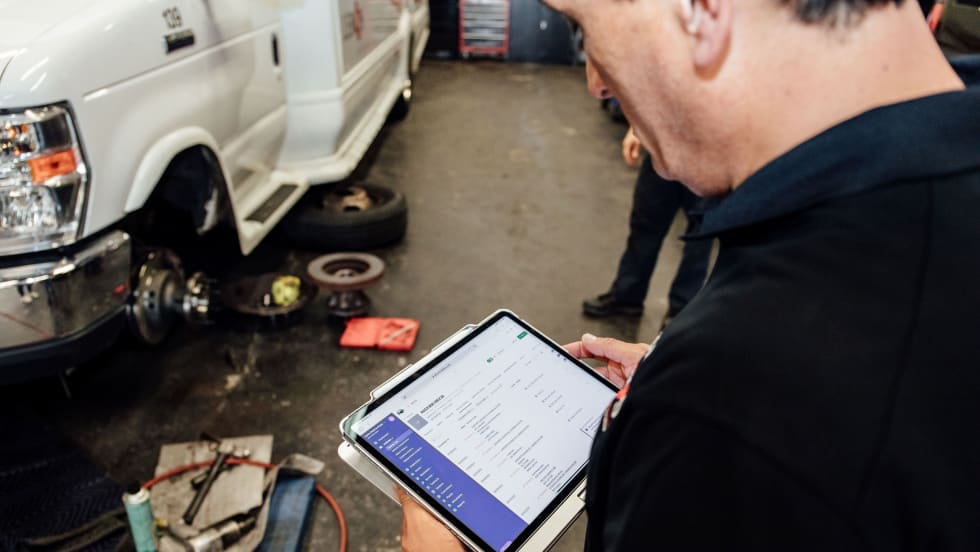
Reinventing Fleet Maintenance with Real-time Visibility and AI
Transit leaders need to know what needs fixing, where to look, who is responsible, when work is completed, and what it costs without having to chase information across disconnected systems.
Read More →
Alstom Acquires Delaware Site to Support Amtrak NextGen Acela Fleet
The company is investing more than $55 million to acquire and improve the property and will employ approximately 100 people at this site once it is operational.
Read More →
SamTrans Sets Priorities for Potential Connect Bay Area Revenue
The board-approved framework allocates future funding to maintaining service, rider improvements, equity initiatives, and infrastructure repairs.
Read More →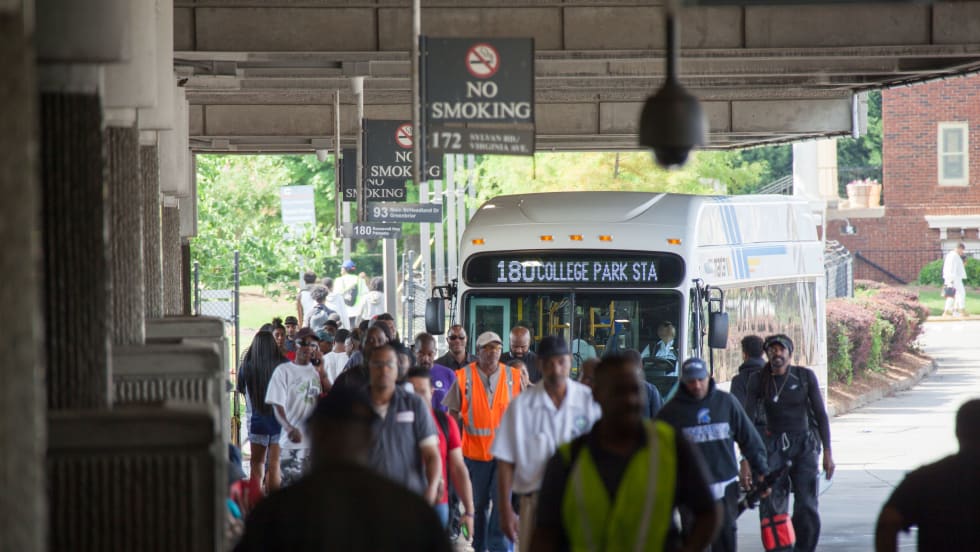
Federal Transit Officials Launch MARTA Safety Probe
FTA has given MARTA 15 days to provide records on crime prevention, fare evasion enforcement, and security funding as part of a broader safety investigation.
Read More →
ABA's Ferguson Testifies in Support of BUS Act, National Standards for Bus Operators
The BUSES Act would create a nationwide framework preventing state and local governments from enforcing bus idling restrictions of less than 15 minutes, a threshold consistent with existing Environmental Protection Agency guidance.
Read More →
When Routine Fails: How Public Transit Must Adapt for the World Cup
The 2026 FIFA World Cup will test transit agencies’ ability to manage unpredictable travel patterns, making real-time data and operational flexibility critical to moving millions of visitors efficiently.
Read More →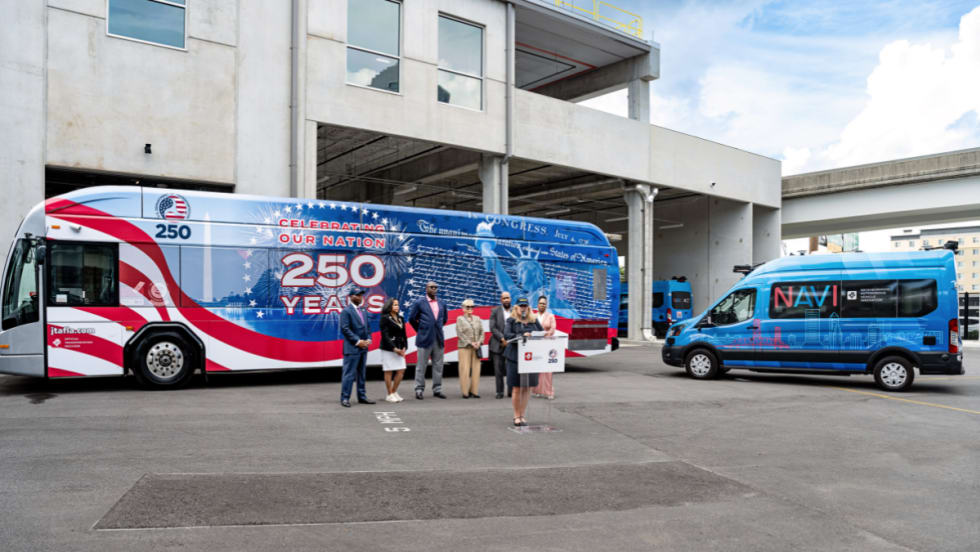
Florida’s JTA Puts Innovation in Motion Ahead of America250
The agency unveiled a commemorative America250 bus during a visit from U.S. DOT's Seval Oz and showcased its autonomous mobility programs.
Read More →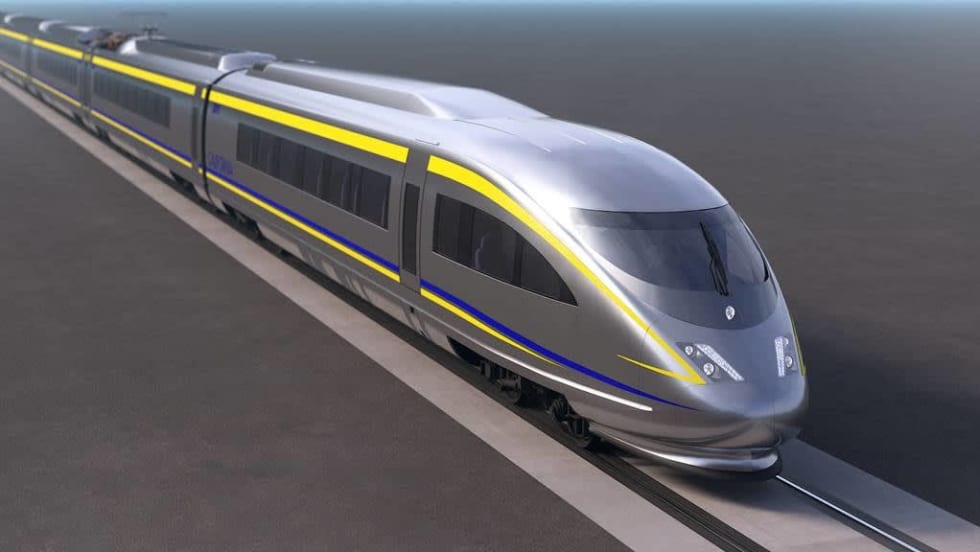
California Selects Team for Nation’s First True High-Speed Rail Track and Systems Contract
The board action follows completion of track installation at the 150-acre southern railhead in Kern County, which will serve as the staging and distribution hub for high-speed track and systems installation.
Read More →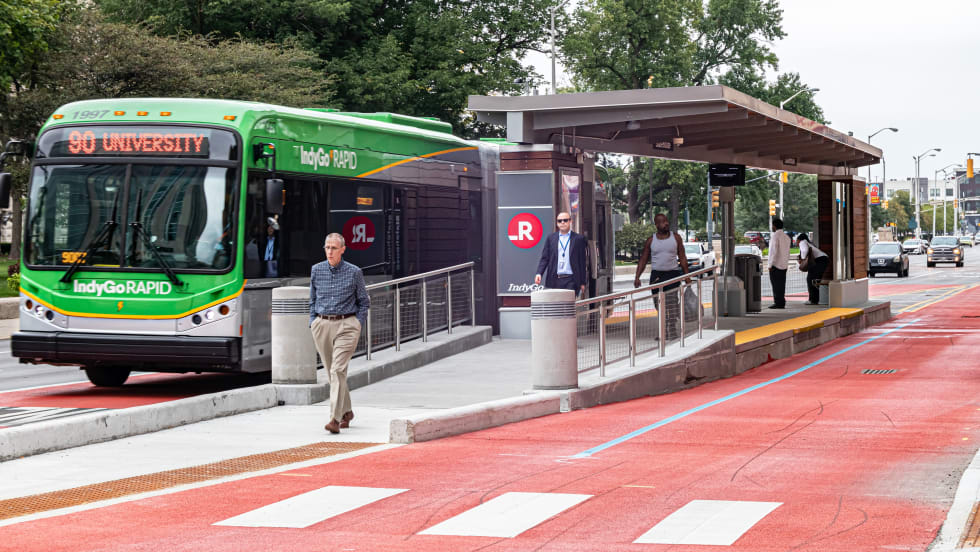
IndyGo, Cleveland RTA Expand Digital Fare Payment Options with Masabi
The new systems combine mobile apps, smart cards, and automatic fare capping to simplify payments, expand flexibility, and help riders access the lowest available fares.
Read More →