



D.C. Metro to retrofit vending machines to dispense smartcards
Will upgrade more than 500 fare vending machines over the next two years at stations throughout the system to dispense SmarTrip cards instead of paper fare cards.

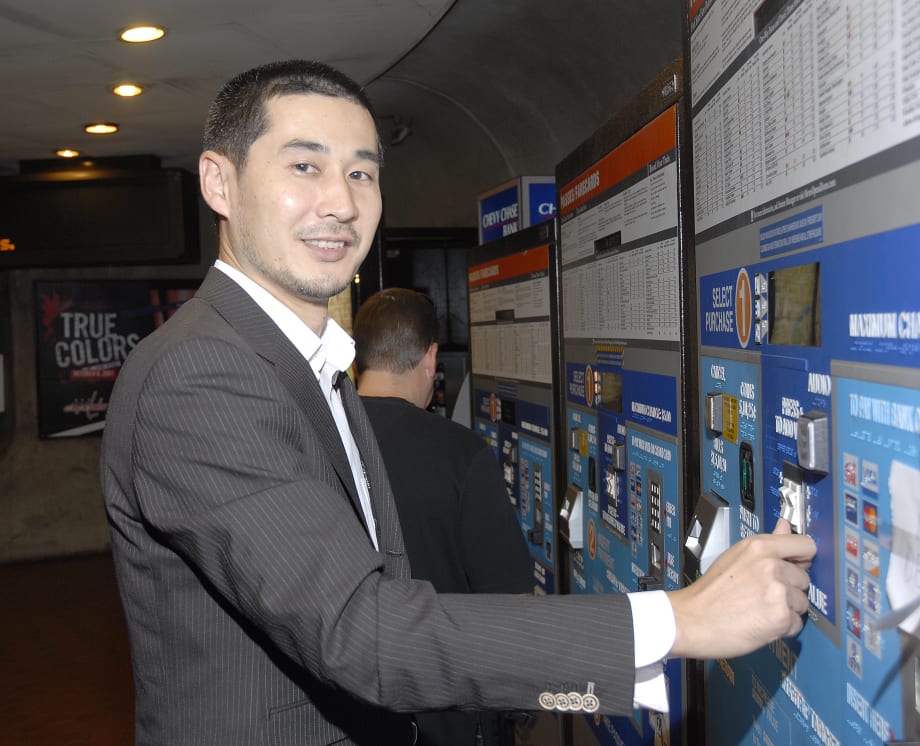
A Metro rider purchases a fare card at the Foggy Bottom Metrorail station. Courtesy WMATA, Larry Levine.
A Metro rider purchases a fare card at the Foggy Bottom Metrorail station. Courtesy WMATA, Larry Levine.
Washington Metropolitan Area Transit Authority (Metro) plans to retrofit more than 500 fare vending machines at stations throughout the system to dispense SmarTrip cards, rather than paper fare cards.
The contract for the ticket vending machines has not yet been awarded, according to Metro.
Metro is steadily transitioning away from the use of 1970s-era magnetic paper farecard technology. The machinery used to process paper fare cards is outmoded and includes an intricate system of rollers, printers, sensors, and wiring that is difficult and time-consuming to maintain when compared to the contactless SmarTrip technology.
Today, more than 90% of all Metrorail riders already use a SmarTrip card to pay for their trip.
According to Metro, SmarTrip is faster, safer and more convenient than using a paper farecard in several ways, including:
Lower cost. On Metrorail, each trip taken with a SmarTrip card costs $1 less than those taken with a paper farecard.
Added security. SmarTrip cards can be registered online. If the card is lost or stolen, the unused value can be transferred to a new card.
More durability. Moisture or demagnitization can easily destroy a paper farecard, resulting in a loss of value.
Transfer benefits. SmarTrip is also the only way to take advantage of cost-saving transfer options between Metrobus and Metrorail.
Auto Reload. Gives users the convenience of having value automatically loaded to their cards anytime their balance drops below $10.
Even after all upgrades are completed, paper fare cards will continue to be accepted for a period of time to allow riders ample time to deplete their value.
Eliminating paper fare cards has several benefits for riders and for Metro, including faster entry/exit for riders; more reliable fare gates; and the reduction of paper waste.
Customers can expect to start seeing upgraded fare vending machines in Metrorail stations late next year.
Metro is currently advancing a project that will eventually allow riders to pay for Metro travel using contactless debit or credit cards, mobile phones or federal ID cards.
More Bus

New York MTA Plans Largest Bus Fleet Upgrade in More Than a Decade
The agency is seeking manufacturers for 650 new CNG buses to replace aging vehicles, improve reliability, and advance its broader fleet modernization strategy.
Read More →
Building a Flexible Path to Transit Electrification
John Hroncich discusses BAE Systems’ modular and scalable approach, lessons learned from decades of real-world operations, and how agencies can identify electrification strategies that fit their fleets.
Read More →
Bus Tech Talk: Keeping Transit Technicians Ahead of the Technology Curve
LA Metro’s Obed Mejia discusses technician training, evolving maintenance technology, fleet replacement, and strategies for getting the most out of today’s transit fleets.
Read More →
Biz Briefs: RIPTA Unveils New Frontrunners, Clevland RTA Adds New Siemens, and More
In METRO's latest installment, we take a look at recent news from Siemens, Prevost, Dodge, and more partnerships making headlines across the transportation sector.
Read More →
People Movement: Holly Arnold Joins Transdev and More
In this edition, we also cover recent appointments and announcements at Pace, CamTran, MCI, and more, showcasing the individuals helping to shape the future of transportation.
Read More →
The High Cost of Transit Buses: Industry Leaders Look to Procurement Reform
Transit leaders and policymakers examine how standardized bus designs, streamlined procurement, and predictable funding could help agencies stretch budgets and deliver better service.
Read More →
The Business Voice Behind Public Transportation
As chair of APTA’s Business Members Board of Governors, Ray Melleady explains how more than 850 business members are partnering with transit agencies to advance funding, innovation, and industry-wide collaboration.
Read More →
From Surviving to Thriving: Building Stronger Transportation Organizations
Bus Business Consultants founder Brian Dickson shares lessons on leadership, organizational health, and creating options for long-term success in a changing transportation industry.
Read More →
Finding the ‘Happy Medium’: Optimizing Maintenance Without Sacrificing Reliability
The key to maintenance optimization isn’t doing less work—it’s doing the right work at the right time on the right assets.
Read More →
LA Metro, City of West Hollywood, and Partners Advance Smarter Bus Lane Enforcement
The award-winning partnership combines AI-powered detection with human oversight to improve bus reliability, accessibility, and enforcement efficiency.
Read More →