



Alstom’s tram factory in Brazil equipped with a test track
The test track — which is approximately a quarter-mile long — is powered via catenaries, enabling Citadis trams to run at speeds of 25 mph.

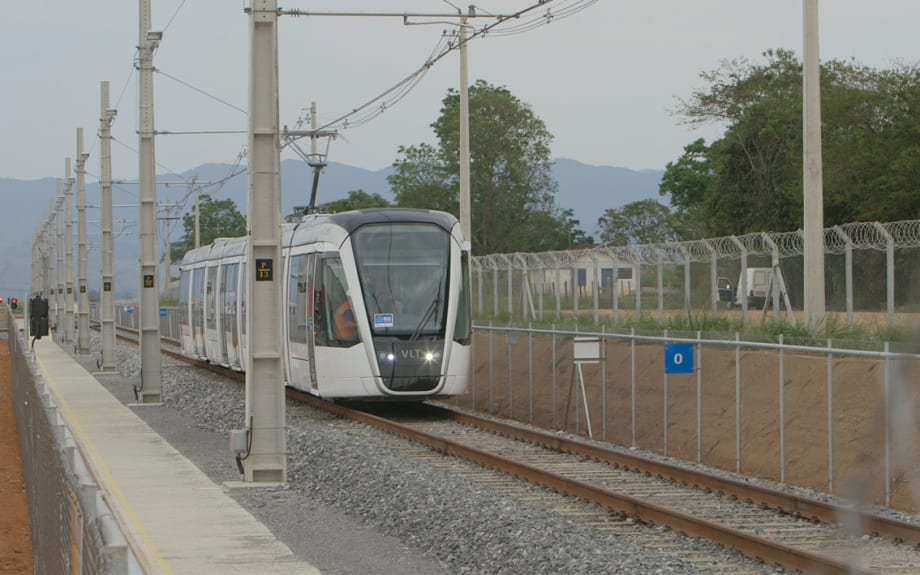
Alstom announces that its latest Citadis tram factory in Taubaté in the state of São Paulo, Brazil, is now equipped with a test track to perform static and dynamic tests on the trams before delivery to the customer for final tests.
This is Alstom’s first tramway factory in Latin America to be equipped with a testing facility. The first trams to be tested are destined for the city of Rio de Janeiro, which ordered 32 Citadis trams from Alstom in 2013 and are due to enter into commercial service beginning in 2016.
RELATED: Alstom delivers first Citadis tram to Rio de Janeiro

The test track — which is approximately a quarter-mile long — is powered via catenaries[1], enabling Citadis trams to run at speeds of 25 mph. The elements of the trams being tested are the traction and braking, eco-pack system (supercapacitors), air conditioning and acoustic comfort to guarantee that the tram is safe, reliable, efficient and capable of being inserted smoothly into the urban environment. The tested trams will run about 6 miles over a period of four days. Six Alstom employees are fully dedicated to this task.
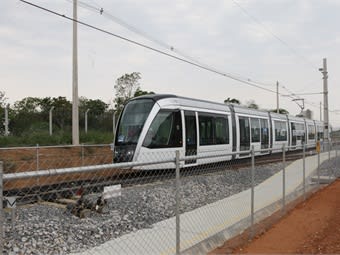
“With the tests now being carried out where the trams are produced, we can guarantee faster delivery to our customer, as well as reducing the testing phase on the customer’s tramway line,” says Michel Boccaccio, Senior VP, Alstom Transport in Latin America.
Alstom invested around $16.5 million in the Taubaté facility, which was built to better address Brazil’s mobility needs and, in the near future, those of Latin America. The tram is a relevant solution for medium-sized and large cities that face population increases, congestion and pollution. A tram uses four times less energy than a bus and 10 times less energy than a car[2], as well as smoothly interconnecting with other modes of transport.
More Rail

FTA Advances $164M Broward County Commuter Rail Project
The proposed 10.5-mile commuter rail extension would connect Fort Lauderdale and Aventura, expanding passenger rail options in South Florida.
Read More →
New York MTA Launches Historic $1.9B Signal, Track Modernization Project
Funded in part by congestion pricing revenue, the project will replace nearly century-old signals along the A and C lines in Brooklyn and Queens.
Read More →
LA Metro Breaks Ground on East San Fernando Valley Light Rail Project
The 6.7-mile line will add 11 stations along Van Nuys Boulevard, expand access to jobs and regional transit connections, and support Metro’s broader efforts to improve mobility as rail ridership grows.
Read More →
CSA Group Releases Climate Resilience Standard for Transit, Passenger Rail
Developed with support from the Standards Council of Canada, CSA D700 guides assessing climate-related risks and planning adaptation measures for transit and passenger rail systems.
Read More →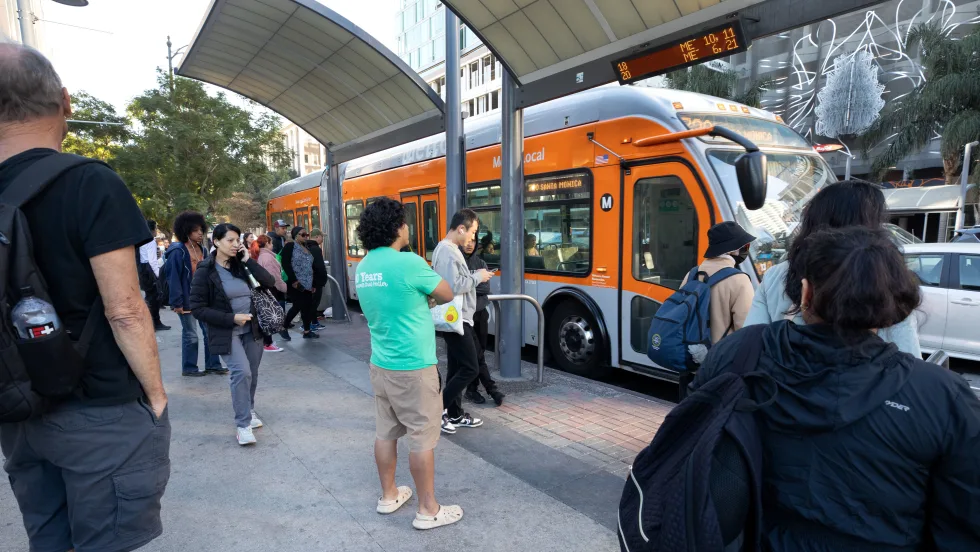
LA Metro September Ridership Climbs 3.9%, Led by Rail Growth
The agency recorded more than 27.2 million boardings, with rail ridership increasing 12.4% year over year and the D Line posting the largest gains.
Read More →
First Full MetroLink Rail Expansion Completed in 20 Years with $192M Airport Project
The project links two St. Louis-area airports by light rail while adding roadway and bike trail connections to improve regional access and mobility.
Read More →
Utilimarc Launches SmartReplace to Optimize Fleet Replacement Decisions
AI-powered SmartReplace helps fleets prioritize vehicle replacements, model budget scenarios, and build more defensible long-term strategies.
Read More →
Scenes from APTA TRANSform & EXPO 2026
Transit leaders, manufacturers, and industry professionals gathered in Chicago to explore new technologies, share ideas, and discuss the future of public transportation.
Read More →
USDOT Awards $416 Million for Florida Rail Crossing Safety Upgrades, New Brightline Station
The projects aim to reduce risks for motorists and pedestrians at rail crossings while expanding passenger rail access along Florida’s Space Coast.
Read More →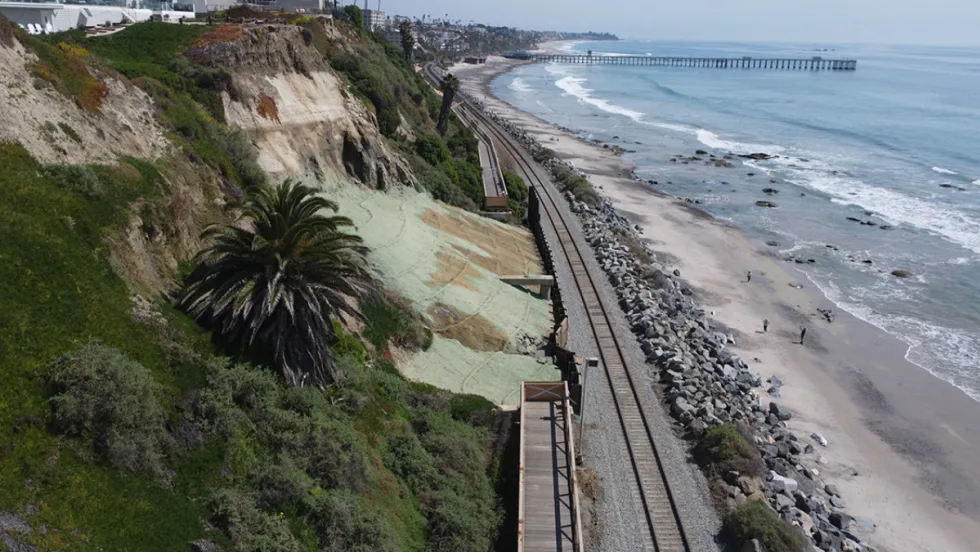
OCTA Declares Emergency to Protect Rail Corridor From Coastal Erosion
The California agency is accelerating shoreline protection and plans to place approximately 690,000 cubic yards of sand along the San Clemente coast to protect a key passenger and freight rail link.
Read More →