




RELATED: Scotland testing first autonomous full-sized bus fleet in passenger service
The Netherlands tops list of countries most ready for AV technology
The country, ranked number one for a second year, is working with neighbors to adopt autonomous vehicle technology for freight.
February 19, 2019
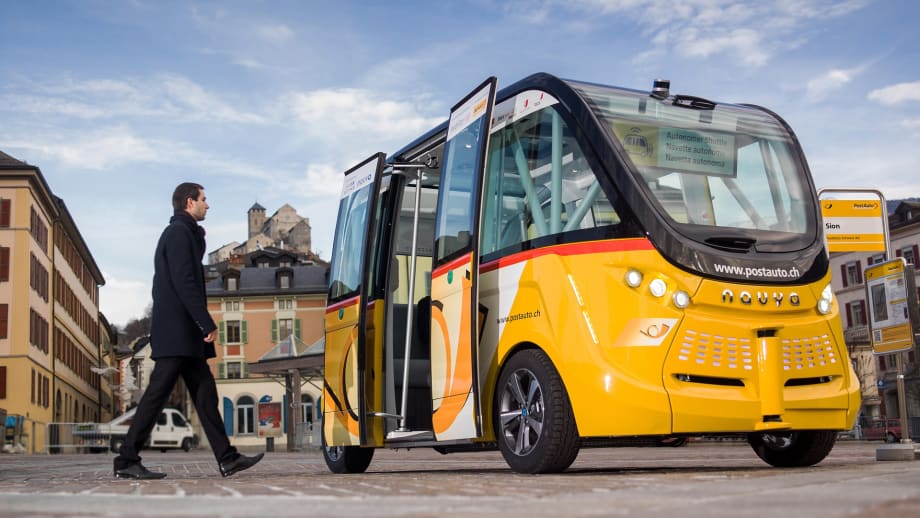
The Netherlands topped the rankings of countries most ready for autonomous vehicles, followed by Singapore, Norway, the U.S. and Sweden. Photo: Navya
3 min to read
The Netherlands topped the rankings of countries most ready for autonomous vehicles, followed by Singapore, Norway, the U.S. and Sweden. Photo: Navya
Once again, The Netherlands topped the rankings of countries most ready for autonomous vehicles, followed by Singapore, Norway, the U.S. and Sweden. Global consulting firm KPMG's 2019 Autonomous Vehicles Readiness Index (AVRI) is intended to provide an understanding of various countries’ preparedness and openness to AV technology.
According to the AVRI, the 10 countries most prepared for the future of autonomous transportation of those indexed are:
Country | 2019 Rank | 2018 Rank |
The Netherlands | #1 | #1 |
Singapore | #2 | #2 |
Norway | #3 | New |
United States | #4 | #3 |
Sweden | #5 | #4 |
Finland | #6 | New |
United Kingdom | #7 | #5 |
Germany | #8 | #6 |
United Arab Emirates | #9 | #8 |
Japan | #10 | #11 |
Highlights from the top ranked countries include:
The Netherlands, ranked number one for a second year, is working with neighbors to adopt AV technology for freight, with a plan to launch platoons of more than 100 driverless trucks on major routes from Amsterdam to Antwerp and Rotterdam to the Ruhr valley.
With a leading university, second-ranked Singapore has created a test town for driverless vehicles complete with traffic lights, bus stops, skyscrapers and a rain machine to recreate its extremely wet, tropical weather.
Based on the 2018 AVRI results, five new countries were added for 2019.
1 Norway (#3) - The country legalized AV testing on public roads and operators have started small-scale autonomous bus services. An autonomous taxi pilot is slated for 2019.
2 Finland (#6) - Finland is focusing on getting AVs to work in winter conditions and automated bus services. The country is also repainting the yellow lines on its roads to an AV-friendly white.
3 Israel (#14) - Israel's strength in AVs lies in its export-focused technology sector, which helps the country top the index's technology and innovation pillar as well as specific measures of industry partnerships, investment and headquarters.
4 Czech Republic (#19) - New AV test sites, supporting the country's top rating for AV pilots, are likely to strengthen Czech Republic's reputation as a local vehicle manufacturer.
5 Hungary (#21) - Legislative changes, commercial pilots of AVs at a new test track and an active AV startup community distinguished Hungary's debut on the list.
Consumer opinion poll finds mixed feelings on AVs globally
New this year, KPMG conducted a consumer opinion research project to better understand consumer sentiment on AVs. The findings revealed a correlation between countries lower in the rankings having the most consumer interest in AVs. These countries include India (#24) and Mexico (#23).
The Index provides an in-depth view of what it takes for countries to meet the challenges of self-driving vehicles, evaluating the preparedness of a cross-section of 25 countries — up from 20 in the inaugural year of the AVRI — globally. Each country is evaluated against four pillars: policy and legislation; technology and innovation, infrastructure, and consumer acceptance. Within the four pillars are 25 factors that reflect everything from legislation allowing AVs to operate to the condition of roads.
Full 2019 rankings reveal shifts from 2018
The 2019 AVRI rankings showed some movement from the inaugural rankings in 2018, with high-ranking newcomers among the five new entrants for 2019.
Country | 2019 Rank | 2018 Rank |
The Netherlands | #1 | #1 |
Singapore | #2 | #2 |
Norway | #3 | New |
United States | #4 | #3 |
Sweden | #5 | #4 |
Finland | #6 | New |
United Kingdom | #7 | #5 |
Germany | #8 | #6 |
United Arab Emirates | #9 | #8 |
Japan | #10 | #11 |
New Zealand | #11 | #9 |
Canada | #12 | #7 |
South Korea | #13 | #10 |
Israel | #14 | New |
Australia | #15 | #14 |
Austria | #16 | #12 |
France | #17 | #13 |
Spain | #18 | #15 |
Czech Republic | #19 | New |
China | #20 | #16 |
Hungary | #21 | New |
Russia | #22 | #18 |
Mexico | #23 | #19 |
India | #24 | #20 |
Brazil | #25 | #17 |
More Technology

From Hardware to Digital Partner: Luminator Charts Its Next Chapter
CEO Magnus Friberg discusses Luminator’s shift toward becoming a digital partner, the growing importance of software and interoperability, and how AI can help agencies improve operations and passenger experience.
Read More →
Beyond the Checklist: A Structured Approach to Transit Maintenance
Reliability-Centered Maintenance helps transit agencies move beyond routine checklists to focus limited resources on the assets and failures that have the greatest impact on safety, reliability, and service.
Read More →
NJ TRANSIT Advances Bus Technology Upgrades Across Statewide Fleet
More than 1,500 buses now feature upgraded technology designed to improve arrival predictions and provide free Wi-Fi, with deployment expected to reach nearly 2,000 buses by the end of 2026.
Read More →

Building a Flexible Path to Transit Electrification
John Hroncich discusses BAE Systems’ modular and scalable approach, lessons learned from decades of real-world operations, and how agencies can identify electrification strategies that fit their fleets.
Read More →
Biz Briefs: Alstom Lands Canadian Contract, LYT to Supply California TSP, and More
In METRO's latest installment, we take a look at recent news from Complete Coach Works, Beep, FlixBus, and more partnerships making headlines across the transportation sector.
Read More →
Sponsored•September 8, 2026
From Legacy Silos to Conversational Intelligence
What if transit leaders could ask any operational question and get a trusted answer in seconds? Conversational AI is transforming how agencies use their data.
Read More →
USDOT Announces Rail Vehicle Replacement Grants, Chattanooga AV Shuttle Funding
More than $191 million in federal funding will help three transit agencies replace aging rail vehicles and support a new autonomous shuttle service in Chattanooga.
Read More →
Bus Tech Talk: Keeping Transit Technicians Ahead of the Technology Curve
LA Metro’s Obed Mejia discusses technician training, evolving maintenance technology, fleet replacement, and strategies for getting the most out of today’s transit fleets.
Read More →
Biz Briefs: RIPTA Unveils New Frontrunners, Clevland RTA Adds New Siemens, and More
In METRO's latest installment, we take a look at recent news from Siemens, Prevost, Dodge, and more partnerships making headlines across the transportation sector.
Read More →
Why Simulating Pedestrian Movement Has Become Essential for Modern Rail Stations
Pedestrian microsimulation is helping rail planners identify bottlenecks, test station designs, and prepare complex transit hubs for growing passenger volumes.
Read More →