




RELATED: Premiere named 'Operator of Year' by Tenn. coach group
Knoxville Area Transit bolsters service, safety and outreach efforts
KAT has increased service levels on 14 of 23 regular fixed routes, along with restructuring three downtown trolley routes following extensive public input. During this same period, KAT has continued to emphasize the importance of safety throughout the organization, adding pedestrian awareness stickers to driver work stations, and limiting speeds in high-pedestrian areas, resulting in a 20% reduction in preventable accidents over three years.
October 11, 2017
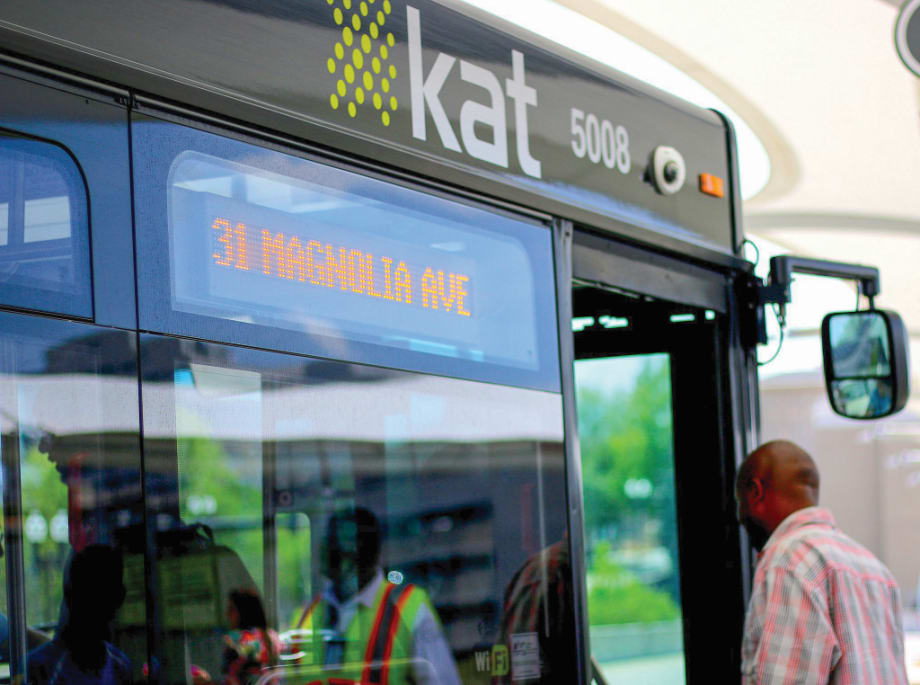
Now into year three of a Five-Year Improvement Plan, KAT has increased service levels on 14 of 23 regular fixed routes, along with restructuring three downtown trolley routes following extensive public input.
3 min to read
Now into year three of a Five-Year Improvement Plan, KAT has increased service levels on 14 of 23 regular fixed routes, along with restructuring three downtown trolley routes following extensive public input.
Currently providing three million passenger trips per year along 26 routes within the City of Knoxville, Tenn., Knoxville Area Transit (KAT) has been committed over the past three years to increasing service, improving safety and efficiency, and developing effective outreach. This is being accomplished thanks to creative leadership who think big, a dedicated workforce, and a local government committed to transit and sustainability.
Now into year three of a Five-Year Improvement Plan, KAT has increased service levels on 14 of 23 regular fixed routes, along with restructuring three downtown trolley routes following extensive public input. During this same period, KAT has continued to emphasize the importance of safety throughout the organization, adding pedestrian awareness stickers to driver work stations, and limiting speeds in high-pedestrian areas, resulting in a 20% reduction in preventable accidents over three years.

Last year, KAT’s outreach efforts reached 5,000 people and ranged from major events such as Earth Day all the way down to individual travel training.
Meanwhile, the operations and maintenance staff have been focused on efficiencies: the operations department recently combined the phone information and paratransit scheduling departments, resulting in 16 hours of extended phone coverage weekly, more employee flexibility, and better customer service. The maintenance department took the leadership role in forming a new state-wide alliance, networking all city transit systems to work together to share best practices and provide mechanic skills development through a maintenance roadeo. The alliance has also resulted in joint state-wide bus procurements, resulting in a cost savings of $70,625 per bus on one procurement alone.
As a predominately women-led organization, KAT is somewhat unique in the transit industry. Women hold most of the top leadership spots, even reporting to Knoxville’s first female mayor. As such, KAT emphasizes diversity in all its hiring practices, actively seeking out women and minorities, and participating in an annual job fair for veterans as well as a Senior Citizens Job Fair at Knoxville’s main senior center.
All of these improvements and projects have gone on behind the scenes, but KAT’s outreach and marketing efforts have been visible throughout the city. Last year, the outreach efforts reached 5,000 people and ranged from major events such as Earth Day all the way down to individual travel training. New Transit on Tap events not only spark discussions on transit, but also allow the public to try route planning and discuss their ideas in a casual and fun setting such as a coffee shop or local pub. The agency’s marketing approach is three-pronged: an active social media presence focusing on video and visual posts; leveraging marketing dollars by building partnerships; and providing a strong internal marketing element, knowing that the most effective marketing is when KAT’s frontline employees are happy in their work.
Building on KAT’s 2017 APTA Outstanding Transportation System win, upcoming plans include a new Accelerated Bus Corridor project using electric vehicles, implementation of a real time passenger app, and explorations of new fare technologies.
More Management
Utilimarc Launches SmartReplace to Optimize Fleet Replacement Decisions
AI-powered SmartReplace helps fleets prioritize vehicle replacements, model budget scenarios, and build more defensible long-term strategies.
Read More →
APTA Honors 2026 Award Winners, Hall of Fame Inductees at TRANSform & EXPO
Innovations in autonomous and zero-emission transportation, standout transit systems, and industry leadership took center stage among this year's honorees.
Read More →
7 Ways to Build a Better Transit Internship Program
Lessons from DRPA/PATCO’s approach to creating a meaningful internship experience—and developing the next generation of transportation professionals.
Read More →
Scenes from APTA TRANSform & EXPO 2026
Transit leaders, manufacturers, and industry professionals gathered in Chicago to explore new technologies, share ideas, and discuss the future of public transportation.
Read More →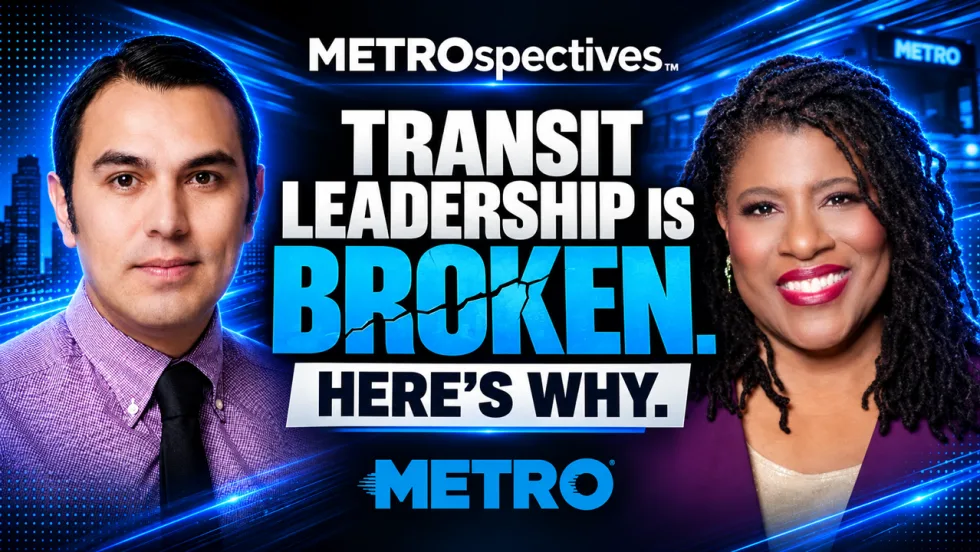
Building Stronger Leaders, More Resilient Transit Teams
Dr. Carol Parker Walsh discusses leadership development, employee retention, workplace culture, and preparing transit’s workforce for AI and automation.
Read More →
APTA 2026 TRANSform & EXPO Kicks Off in Chicago
After 45 years, APTA returns to Chicago with a focus on next-generation fleets, AI, connected transit networks, and the funding strategies shaping public transportation’s future.
Read More →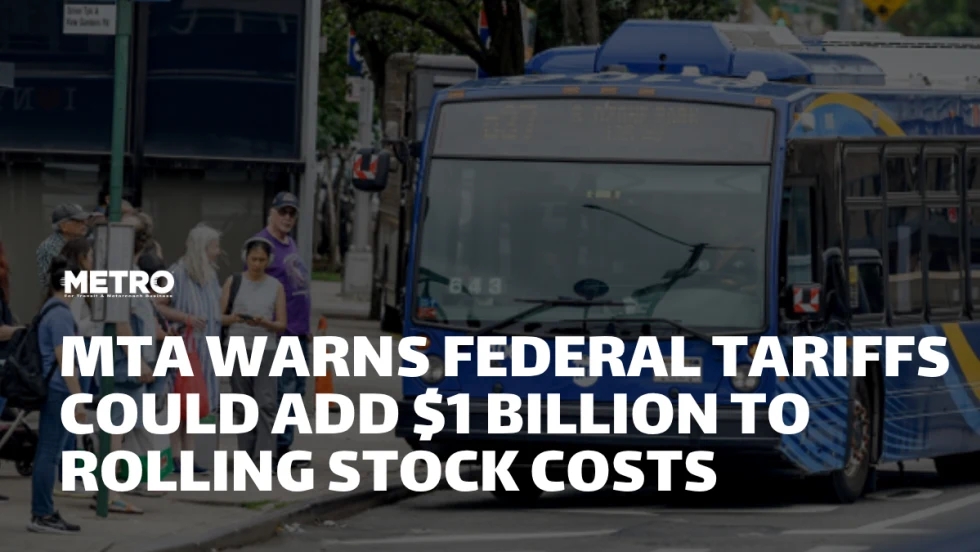
New York MTA Warns Federal Tariffs Could Add $1 Billion to Rolling Stock Costs
The agency said tariffs on specialized imported components could reduce the purchasing power of its $23 billion investment in new subway cars, railcars, and buses.
Read More →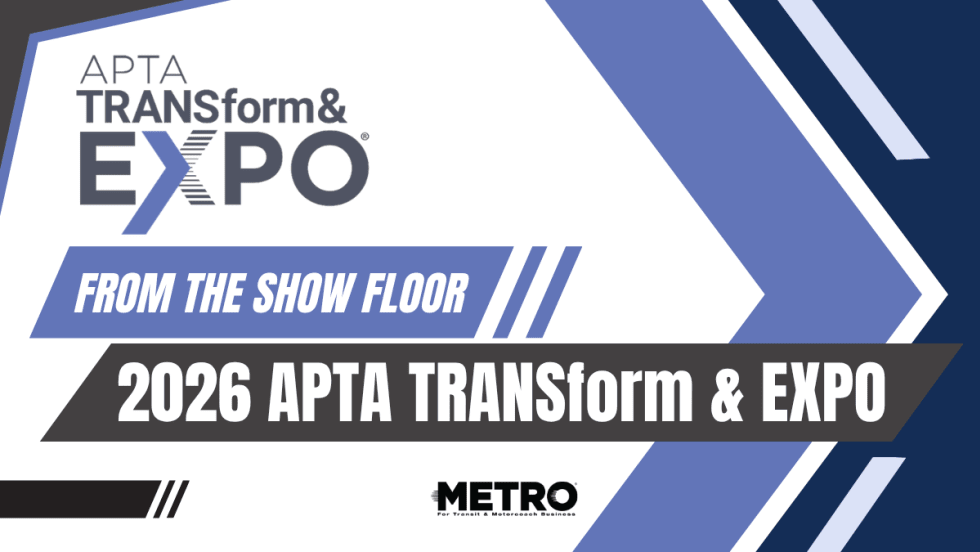
From the Show Floor: What Happened at APTA TRANSform & EXPO 2026
See the latest product launches, partnerships, technology updates, and transit industry announcements from APTA TRANSform & EXPO in Chicago.
Read More →
How Valley Metro Is Balancing Transit Growth With the Rider Experience
The APTA award-winning agency is pairing rapid system expansion with investments in workforce, safety, technology, and the fundamentals of transit service.
Read More →
Bus Tech Talk: Keeping Transit Technicians Ahead of the Technology Curve
In this episode of Bus Tech Talk, Complete Coach Works’ Business Development Manager Mark Hollenbeck and METRO’s Executive Editor Alex Roman sit down with Obed Mejia, Senior Technical Trainer for Bus Maintenance, at LA Metro to discuss how rapidly evolving bus technology is changing the maintenance shop — and the skills technicians need to keep pace.
Read More →