



How Eco-Friendly Bus Coatings Can Boost Transit Productivity
Perfect Body, a subsidiary of Coach USA, shares how switching to a more eco-friendly coating system can help limit VOC emissions while also increasing productivity and profitability.
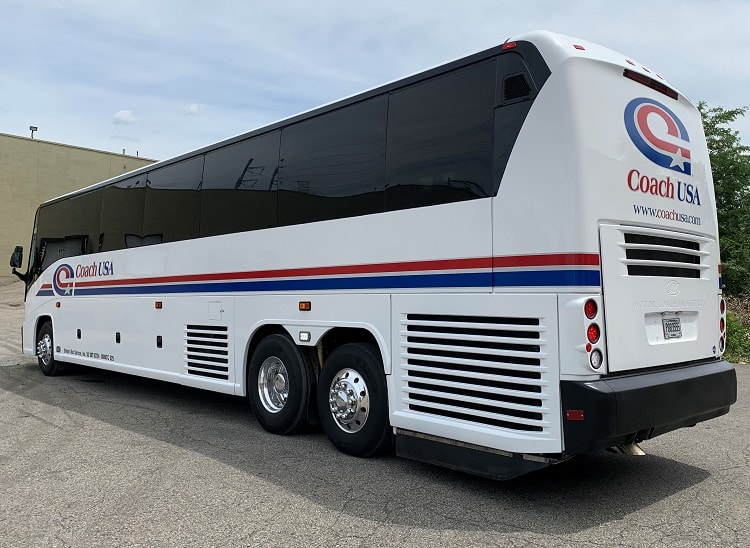
Vehicle coatings manufacturers, like PPG, have introduced an array of low VOC paint systems to help meet growing consumer concern with climate change, and stricter environmental regulations.
Coach USA
The move to environmentally-friendly coatings has become an increasingly popular choice for manufacturers and refinish operations within the commercial transportation industry. This is in response to growing consumer concern with climate change, and stricter environmental regulations imposed by the U.S. and Canada to limit the amount of volatile organic compounds (VOCs) that can be used in commercial coatings.
To help OEMs and refinish businesses meet these tough challenges, coatings manufacturers have introduced an array of low VOC paint systems to help customers meet their environmental responsibilities.
One example can be found in a commercial coatings system from PPG. The company recently introduced its next generation Delfleet One® paint line, which features a full complement of ultra-low (< 2.0 lbs./gal) VOC premium undercoats, topcoats, and clearcoats. Developed for use across a wide range of commercial applications, including OE manufacturers, commercial collision shops, and body builders, the Delfleet One system promises color matching capability and ease of application with the ability to precisely control dry times (especially helpful for painting buses and other large vehicles).
But the key differentiator of the Delfleet One system is its ultra-low VOC ratings. The coatings have been formulated to meet the VOC limits established by the California Air Resources Board (CARB) for the South Coast Air Quality Management District (SCAQMD) in California — among the most stringent VOC restrictions in North America. It delivers one of the commercial transportation industry’s lowest VOC product ratings — 1.5 lbs./gal VOC for basecoat, direct gloss, and matte finishes, and 2.0 lbs./gal VOC or less for undercoats and clearcoats. Overall, this equates to a reduction in VOC emissions by 57% compared to typical 3.5 lbs./gal VOC commercial paint systems.
This comes as great news to commercial vehicle refinishers like Perfect Body, a New Jersey-based subsidiary of Coach USA that specializes in bus body repair and painting. The company, which averages 20 repairs per month ranging from fender-benders to full-scale restorations, switched to PPG’s Delfleet One paint system in June of 2020 after searching for a low VOC paint line that could provide an OE-quality finish.
“It’s common knowledge that the refinish industry as a whole is moving toward greener, environmentally-conscious paint products,” said Bernie Obry, Perfect Body GM. “And that’s important to me simply because it’s the right thing to do. But there are other factors in play here. Specifically, the measures established by New Jersey to limit VOC emissions.”
The state of New Jersey employs a “stack permit” system designed to restrict VOC output. In short, a commercial paint operation obtains a permit from the state that outlines the maximum amount of VOCs that can be emitted annually. If the business exceeds that limit, penalties may be imposed.
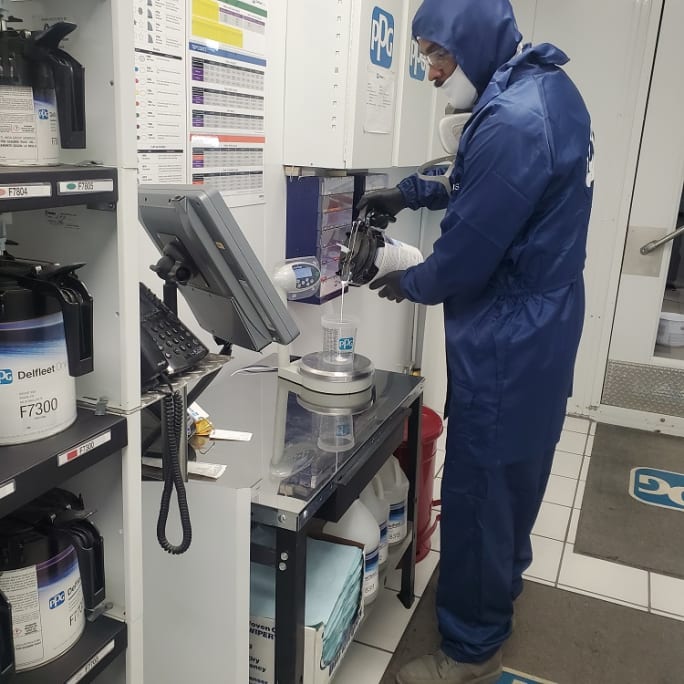
PPG's Delfleet One paint line delivers the commercial transportation industry’s lowest VOC product ratings — 1.5 lbs./gal VOC for basecoat, direct gloss, and matte finishes, and 2.0 lbs./gal VOC or less for undercoats and clearcoats.
Coach USA
“The bottom line is, spraying an ultra-low VOC product allows me to operate within a lower VOC bracket,” Obry explained. “In fact, I still have plenty of space within this bracket to grow my business. And that’s definitely part of the plan as we expand into the heavy truck and commercial vehicle market.”
Like most painters, the members of Obry’s three-man refinish crew were a bit hesitant when the idea of a new paint line was introduced. However, it wasn’t too long before each painter mastered the application of theDelfleet One system, according to George Mazzey, PPG account manager, fleet & truck, multiple shop operations.
“Whether you’re an entry-level painter, or a 30-year veteran who has painted multiple lines along the way, you’ll pick up the required techniques very quickly,” Mazzey said. “Color matching and blend repairs are especially simple to perform.”
As one might imagine, painting a 45-foot bus comes with its fair share of challenges. At the top of the list is the issue of dry times. But Obry believes the Delfleet One paint system is very accommodating in this regard.
“One of the things I enjoy most about the Delfleet One system is that you spray it the way you want it to look,” Obry said. “You don't have to worry about the coat being ‘open’ or wet to achieve a high-gloss finish. The ability to control dry times allows you to paint large vehicles considerably quicker and more efficiently than traditional paint systems while using less materials.”
Perfect Body’s transition to the Delfleet One paint system reflects a growing movement within the commercial transportation industry that champions quality and environmental responsibility on a level equal to productivity and profitability. For progressively minded manufacturers and refinish operations seeking to join this socially responsible crusade, there’s no time like the present.
John McQuillan is a senior writer for the Group-eX agency and has been covering the automotive industry for more than 20 years.
More Technology
How Rally OurBus Connects Motorcoach Operators with Event Transportation Demand
The company's crowd-powered model uses passenger reservations to shape routes, determine capacity, and create new business opportunities for independent motorcoach operators.

What Transit Maintenance Facilities Should Know About Gas-Detection Placement
Proper gas-detector placement is critical to maintaining safety in transit maintenance facilities, requiring agencies to consider fleet fuel types, ventilation, shop operations, and ongoing equipment maintenance.

People Movement: Metrolink's Kettle Announces Retirement, Feakins to CEO at UZURV, and More
In this edition, we also cover recent appointments and announcements at King County Metro, SilverRide, and more, showcasing the individuals helping to shape the future of transportation.

Imagry, Endera Partner for Automated Buses, Luminator Teams with Avail, and More in Biz Briefs
In METRO's latest installment, we also take a look at recent news from RIDE, Alstom, and more partnerships making headlines across the transportation sector.
Amtrak Expands Airo Fleet with Eight Higher-Capacity Trainsets
The new 10-car trains, expected to enter service in 2031, will provide about 34% more seating capacity to meet growing demand on the Northeast Corridor.

Improving Transit Safety and Reliability Through AI
Hayden AI’s Chief Growth Officer, Charley Territo, discusses how AI-powered camera enforcement is helping transit agencies keep bus lanes and stops clear, improve accessibility, and move from pilot programs to full-scale deployments.

STraffic Expands North American Presence with Fare Collection Technology
John Moon, Associate Director, Product Strategy at STraffic, discusses the company's growth in North America, its efforts to reduce fare evasion, and more.

Laketran Cuts Fuel Costs, Boosts Efficiency with Propane-Powered Fleet
The Ohio transit agency is using propane-powered vehicles and on-site fueling infrastructure to cut fuel and maintenance costs while meeting growing demand for paratransit services.

Right-Sizing Rural Transit: Lessons from North Grenville’s On-Demand Model
A small municipality shows how flexible service, rider needs, and public accountability can expand mobility with limited resources.

Transit Expands Agency Partnerships, Reaching 200 Official App Partners
COO Jake Sion discusses Transit’s growth, the success of its Transit Royale program, and how technology is helping agencies improve the rider experience.