



An International Case Study: When Private and Public Sectors Work Together, Great Things are Possible
Leveraging knowledge, solid experience, capacity to innovate, and proven collaboration skills are just a few of the key factors when determining whether a partnership model could improve the ability of delivering an outstanding community transportation system.
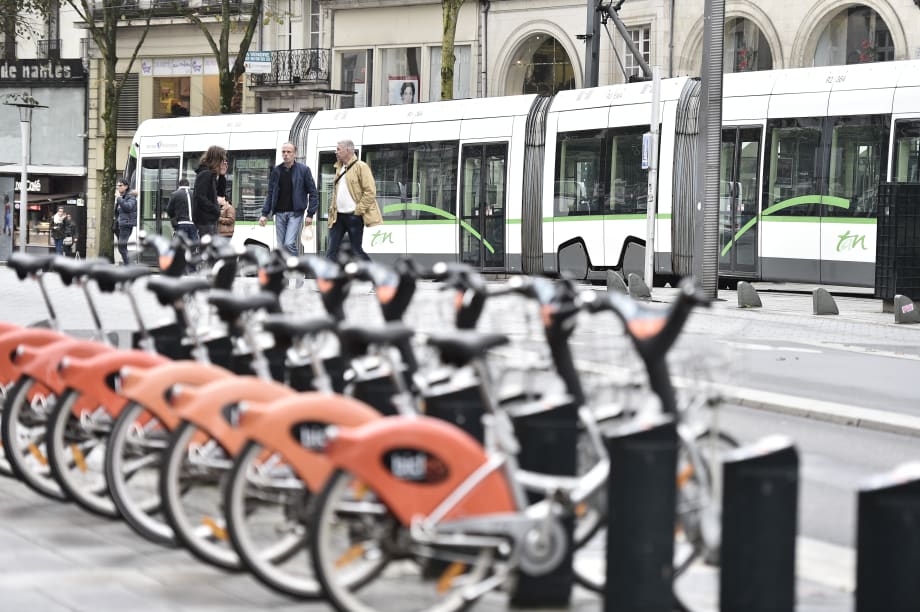
Nantes has experienced a major increase in accessibility and quantity of parks, bike paths, and waterways.
Transdev
Partnerships between the private and public sector can take many forms and have resulted in some true transit industry success stories over the years. The decision whether to explore this type of relationship requires many levels of buy-in and a shared commitment from all involved. Leveraging knowledge, solid experience, capacity to innovate, and proven collaboration skills are just a few of the key factors when determining whether a partnership model could improve the ability of delivering an outstanding community transportation system.'
Regardless of the way it is accomplished, the overall mission is the same — deliver safe, convenient, and efficient mobility solutions for our passengers. Many partnerships around the world have shown that when goals and commitment to mutual success are aligned, impressive results will be achieved. What can we learn from success stories around the globe?
Spotlight on Nantes, France
Nantes is a city in western France, on the Loire River, with 300,000 people in the city itself and 950,000 living in the surrounding metropolitan area. This city is similar in size to Austin, Texas, or San Jose, Calif., in the U.S. Over the past 20 years, it has become one of the top three cities in Europe in terms of cultural, economic, and demographic development, having attracted many companies and new jobs to the region. It has transformed itself from a struggling city that was previously losing population in the 1980s, to being named the European Green Capital in 2013 and the European Capital of Innovation in 2019. Its transportation infrastructure is a key reason for these awards among many other accolades.
A 30+ year evolving transit partnership
Transdev has been a partner to Nantes for more than 30 years, and the positive relationship continues to grow and evolve. The key differentiating factor came from the creation of a joint venture between Transdev and the public sector. This formal legal structure has allowed each party to invest and have shared ownership in the venture.
Called Semitan, or Tan for short, the entity is a mixed private and public sector company. As of 2007, its principal shareholders are Nantes Métropole (65%), the transport group Transdev (15%), banking group Caisse d'Epargne (10%), and the Nantes Chamber of Commerce and Industry (10%).
The parties are equally represented on the board of directors and over the past 30 years have built and executed a series of Sustainable Mobility Plans (each with a 10-year horizon), which has built trust, brought out the best in each partner, and been key to their many achievements.
To understand the success of this relationship, it’s important to look at its foundation. The main models for transit partnerships used in France go much beyond the standard operations and maintenance partnership agreement that is commonplace in the U.S. In France, the collaboration includes agreeing on key short- and longer-term goals for mobility and quality of life, such as: How will we create a truly sustainable city? What factors are most important? What do we want our city to look like in 10 years, 20 years, etc.? How can we structure partnerships to help achieve our livability and mobility goals?
A Well-Integrated Multimodal Network: Quick Facts on Nantes
Multimodal network built from scratch, including light rail and BRT with dedicated lanes (today electric BRT); a well-integrated bus network; microtransit; airport lines; and more.
Short waiting times in peak: Light Rail - five minutes; BRT – three minutes.
All partners work together to prioritize public transportation over individual cars, including transit, bicycles, scooters, and walking.
First and largest light rail network in France, covering 27 miles, delivers 44% of trips.
The bus network (Chronobus) feeds the light rail and BRT and is quite sophisticated: many dedicated lanes, special turnarounds, signal prioritization, and the inclusion of high-end stops and stations. Radial routes move people between suburbs.
Parking at Park & Rides is free with a transit pass.
Delivered hybrid-electric buses, with three partners: to include vehicle, charging, and infrastructure.
130% ridership growth after new electric BRTs, with rave reviews from passengers.
Major increase in accessibility and quantity of parks, bike paths, and waterways.
In 2008, the Nantes Metropole combined key quality of life factors into one organization to improve efficiency/quality of decision-making. The Metropole is responsible for housing, land use, development, public spaces, transit, roads/highways, bicycles, parking management, carpooling, and carsharing.
54 Mayors in the metro area each take the lead in one discipline, e.g. finance, education, transit, etc. This fosters collaboration in many areas and has improved livability.
What’s the takeaway?
Achieving impressive results, like in Nantes, requires vision, leadership, competence, and effective collaboration, among other factors. All parties share the same goals — and they share the same risks as well. This allows them to test, fail, improve, and achieve together for the benefit of their passengers and the community.
It would take considerable time and effort, but we believe that the same outstanding results could be achieved in the U.S. with a similar structure and commitment to building upon the respective strengths of the public and private sectors to better serve the public.
More Management

METRO Opens Submissions for 2026 Motorcoach Awards
Nominations are now being accepted for METRO Magazine’s Operator of the Year and Innovative Operator of the Year awards.
Read More →
New York MTA Advances Final Contract for Second Avenue Subway Expansion
Contract Four is the largest in the Second Avenue Subway Phase 2 project and includes construction of station infrastructure, tracks, and signals for the subway expansion, MTA officials said. Work on Contract Four will begin in 2027.
Read More →
Transit Agencies Highlight Safety Gains at National Summit
Leaders from 15 major transit systems shared crime-reduction results and safety initiatives while discussing the role of continued federal support.
Read More →

NITA Names New Leadership, Expands Reduced-Fare Program at First Board Meeting
The new regional transit authority appointed its first board chair and interim executive director while extending reduced fares across CTA, Metra, and Pace for eligible riders.
Read More →
Beyond the Checklist: A Structured Approach to Transit Maintenance
Reliability-Centered Maintenance helps transit agencies move beyond routine checklists to focus limited resources on the assets and failures that have the greatest impact on safety, reliability, and service.
Read More →
APTA 2026 Nominating Committee Selects Leadership Slate, Names Chair and Vice Chair Nominees
Leadership changes will help shape the association’s priorities and its representation of the transportation industry during the 2026–2027 term.
Read More →
DART Launches Major Security, Fare Enforcement Initiative
The 90-day demonstration will deploy coordinated security teams at five light rail stations while testing controlled access and gathering data to guide future investments.
Read More →
Advancing Fare Collection Through Technology and Innovation
Learn about delivering 1300 gates at 91 stations while managing fare evasion. Explore the large scale deployment, solution customization and real-world results that affect the region. Prepare for deployment in your region now.
Read More →
Game Day in Motion: Moving Millions During the 2026 World Cup
Between packed transit stations and team motorcoaches, see how agencies and operators across North America tackled the transportation demands of the 2026 FIFA World Cup.
Read More →
Surface Transportation Extension Averts Shutdown, Leaves Transit Funding Gap
The stopgap keeps federal transportation programs moving, but missing advance funding could complicate the transit and rail projects agencies are planning next.
Read More →