




Read More: APTA Names New CFO
APTA Announces 2023 Sustainability Commitment Awardees
The APTA Sustainability Commitment program is a voluntary initiative where public transit agencies and businesses pledge to implement processes and actions that drive continuous improvements in environmental, social, and economic sustainability.
July 25, 2023
Since its inception in 2009, 138 public transit agencies and businesses have joined the APTA Sustainability Commitment, and currently 50 signatories have earned higher-level recognition.
Photo: APTA
3 min to read
The American Public Transportation Association (APTA) today recognized the efforts of its member organizations HDR and Capital Area Transportation Authority (CATA) by awarding them with Platinum and Gold recognition, respectively, in the APTA Sustainability Commitment Program.
The APTA Sustainability Commitment program is a voluntary initiative where public transit agencies and businesses pledge to implement processes and actions that drive continuous improvements in environmental, social, and economic sustainability.
Based on measurable achievements, organizations receive recognition at Platinum, Gold, Silver, or Bronze levels.
Since its inception in 2009, 138 public transit agencies and businesses have joined the APTA Sustainability Commitment, and currently, 50 signatories have earned higher-level recognition.
“APTA is thrilled to celebrate the exceptional efforts of HDR and CATA in championing sustainability in public transit and social equity,” said APTA President/CEO Paul P. Skoutelas. “Their leadership in sustainability solutions, along with successful outcomes of their actions, is leaving a lasting positive impact on both our environment and communities.”
Platinum Level - HDR
HDR is the second business member and seventh organization overall to achieve Platinum recognition in the APTA Sustainability Commitment Program and provides clients with economic, social, and environmental value through integrated solutions.
For example, HDR’s Regenerative Design Framework is an interactive, online tool that allows HDR's multidisciplinary teams to design for a project’s connected ecosystem, looking at key performance indicators for carbon, water, air, biodiversity, nutrients, human health, and community.
This framework was honored as a Fast Company World Changing Idea.
Moreover, the employee-driven and funded HDR Foundation awarded a record $1.44 million in grants to nonprofits in the communities where HDR employees reside in 2022.
Since its establishment, the HDR Foundation has granted over $6 million to more than 250 organizations aligned with HDR's areas of expertise: education, healthy communities, and the environment.
Lastly, HDR joined over 60 international architecture, engineering, and construction firms in 2021 to issue a communiqué to government leaders attending the United Nations Climate Change Conference of the Parties (COP26).
By signing the communiqué, HDR reaffirmed its commitment to the 2030 Challenge for reducing carbon emissions in the design and building professions, and to its internal commitment to reduce environmental impact through sustainable business practices.
Gold Level – Capital Area Transportation Authority (CATA)
In fiscal year 2019, the executive employees of Capital Area Transportation Authority (CATA) formulated a strategic plan that emphasized their core values, including a dedication to sustainable solutions as responsible stewards of the community and the planet.
To achieve this, CATA committed to adopting sustainable business practices and operations.
The agency promptly appointed a sustainability champion and transitioned all three facilities to utilize 100% renewable energy sources. CATA is further committed to implementing an agency-wide environmental management system (EMS) aligned with ISO 14001.
CATA also played a pivotal role in facilitating discussions on multi-modal transportation with the tri-county Metropolitan Planning Organization, including collaboration on bike-sharing options.
The agency equipped all fixed-route buses and select small buses with bike racks accommodating up to three bicycles free of charge, while also offering bike lockers for rent at the CATA Transportation Center.
In April 2022, CATA's Board of Directors took a significant step and approved transitioning to a zero-emission fleet by 2035, aiming to decarbonize its operations and contribute to a cleaner, healthier, and more sustainable transportation future for the Capital City region and Michigan as a whole.
These initiatives are part of CATA's multifaceted approach to enhancing efficiency and implementing sustainable solutions.
More Zero Emissions
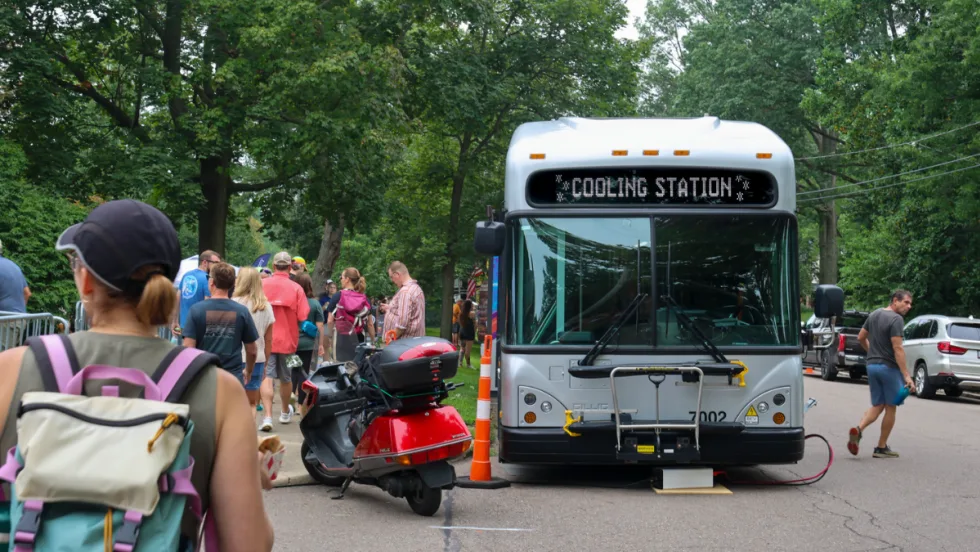
Ohio’s METRO RTA Turns Electric Buses into Mobile Power Sources at PorchROKR
See how three Gillig battery-electric buses powered festival stages while the agency’s new Park & Ride service carried approximately 1,000 attendees, demonstrating another potential use for transit agencies’ electric fleets.
Read More →
CALSTART and Forth Combine to Form Catalyst Mobility
The new name represents a renewed vision for the nonprofit focused on advancing clean, equitable, and affordable transportation solutions that move people and goods.
Read More →
Building a Flexible Path to Transit Electrification
John Hroncich discusses BAE Systems’ modular and scalable approach, lessons learned from decades of real-world operations, and how agencies can identify electrification strategies that fit their fleets.
Read More →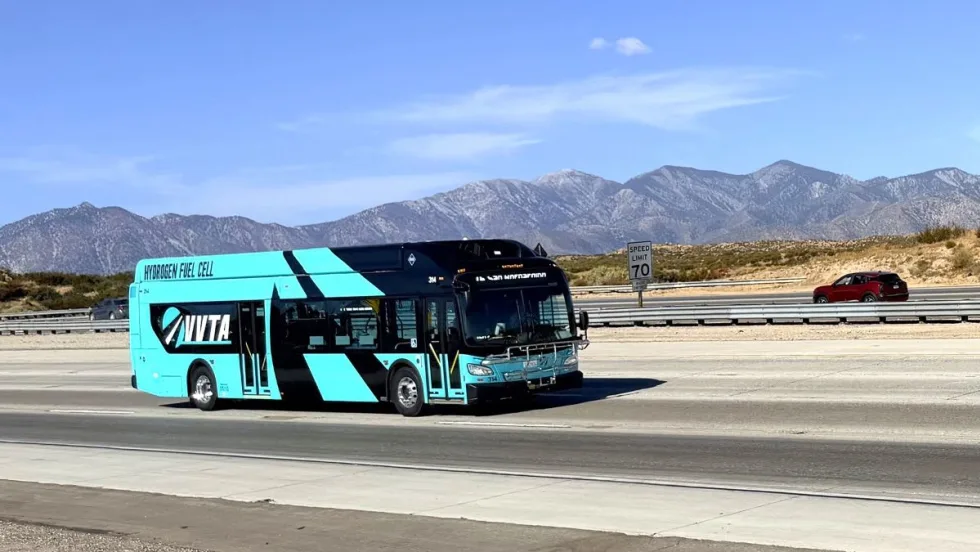
California's VVTA Begins Phased Rollout of Hydrogen Fuel Cell Buses
The agency is introducing 13 zero-emission buses into revenue service while evaluating performance across its urban, rural, and long-distance routes.
Read More →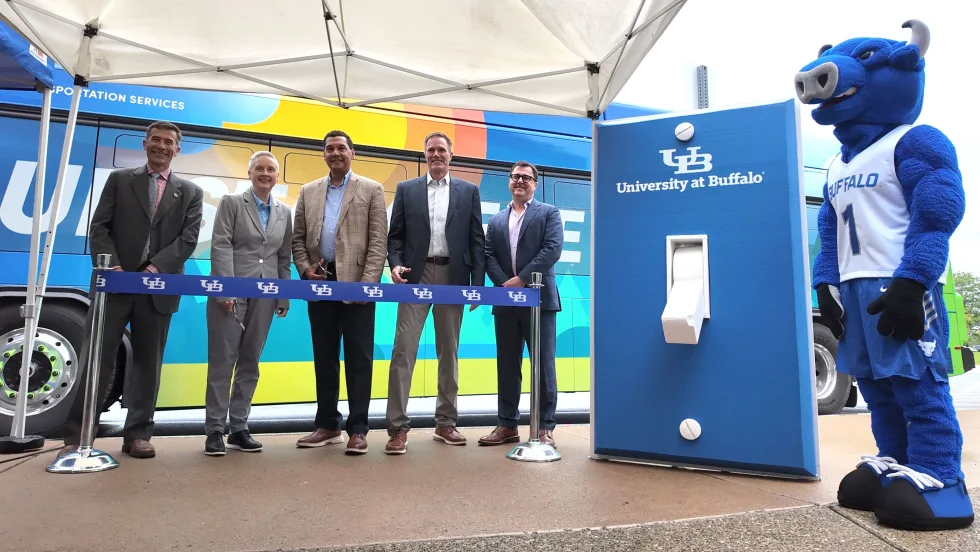
Inside Look: University at Buffalo Puts First 8 Electric Buses Into Stampede Service
UB, transportation solutions provider WeDriveU, and fleet electrification specialist Zenobē marked the deployment in the presence of students, university administrators, and local officials.
Read More →
Biz Briefs: OCTA Taps Clean Energy for Hydrogen Station, Stadler to Supply Via Rail Vehicles, and More
From manufacturers and suppliers to transit agencies and motorcoach operators, these updates offer a snapshot of the projects, partnerships and business moves driving the industry forward.
Read More →
AC Transit’s Cecil Blandon on Building the Next Generation of Transit Maintenance Leaders
The agency’s maintenance chief discusses leadership, workforce development, zero-emission technology, and preparing technicians for the future of public transportation.
Read More →
CTDOT Taps STV for Electric Bus Facility Design
The firm will work with CTDOT and RVT to define the facility layout, operational requirements, and long-term flexibility for RVT’s growing electric fleet.
Read More →
Chicago’s Pace Deploys 24 Hybrid-Electric Buses in Will County
The new buses reduce emissions and fuel consumption while advancing the agency's long-term goal of transitioning to a fully zero-emission fleet.
Read More →
DASH Breaks Ground on First On-Route Electric Bus Chargers in D.C. Region
The fast-charging infrastructure will help extend electric bus range, improve fleet utilization, and support DASH's goal of transitioning to a fully zero-emission fleet.
Read More →