




RELATED: Partnerships, Perseverance Propel Smart Cities Movement
National League of Cities unveils guide to piloting autonomous vehicles
More than 50% of America’s largest cities are preparing for AVs — up from less than 10% three years ago, according to group.
October 18, 2018
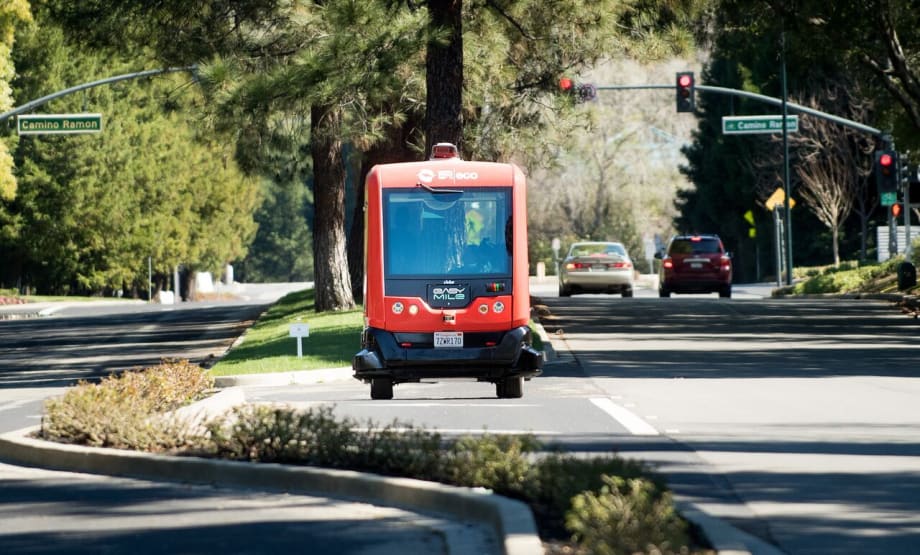
More than 50% of America’s largest cities are preparing for autonomous vehicles — up from less than 10% three years ago, according to the National League of Cities. Photo: CCTA
3 min to read

More than 50% of America’s largest cities are preparing for autonomous vehicles — up from less than 10% three years ago, according to the National League of Cities. Photo: CCTA
The National League of Cities (NLC) released its newest report, “Autonomous Vehicle Pilots Across America,” which offers an analysis of current regulations surrounding autonomous vehicles (AVs) as well as an overview of successful pilot programs and best practices from cities around the country.
“Autonomous vehicles are set to radically shift how people move through cities,” said Clarence E. Anthony, CEO and executive director of NLC. “AVs have the potential to improve equity in transportation and create opportunities for vulnerable populations. By engaging with this new technology, cities are supporting the needs of their residents and meeting them where they are, both literally and figuratively.”
Autonomous vehicle technology is an emerging issue that will be incredibly impactful for America’s cities, and policy surrounding it is rapidly moving forward, according to the report. The NLC's latest research shows that more than 50% of America’s largest cities are preparing for AVs — up from less than 10% three years ago — and many cities are already successfully piloting the technology on their streets.
The interplay between state, local and the federal government is critical to the rollout of AVs. Between 2011 and 2017, 22 states passed 46 bills related to AV usage while five governors signed executive orders encouraging their development. Most of the legislative action expressly permitted AV pilots. And this year, another boon in state action on AV policy is underway, with 28 states introducing, debating and/or passing 98 bills in this arena.
Cities throughout the country have embraced different types of AV pilots, ranging from informal agreements to structured contracts between cities and companies. Many city leaders have taken an active role in AV deployment where possible by introducing executive orders and resolutions, issuing requests for proposals, forming partnerships with companies, hosting conferences and engaging the public.
The guide profiles six U.S. cities — Arlington, Texas; Boston; Portland, Ore.; Pittsburgh; San Jose, Calif.; and Chandler, Ariz. – and their diverse approaches to piloting AVs.
The report also cites a "forthcoming pilot in Greenville, S.C., which stands out as one that demonstrates the successes that are possible through collaboration between public and private entities, the rep. Greenville’s city council coordinated funding sources for the project, winning a $4 million grant from the Federal Highway Administration, securing $2 million from the nonprofit Global Autonomous Vehicle Partnership and bringing in $1 million from the developer of the residential community to which the pilot will expand. The city further received donated technology from Robotic Research, and in-kind support for management of the initial phase by Clemson University’s International Center for Automotive Research."
"By piloting autonomous vehicle technology now, cities are able to ensure that any new policies and processes are city-centered and can be molded to the needs of people first and foremost,” said Brooks Rainwater, senior executive and director of NLC’s Center for City Solutions.
Recommendations for city leaders include:
Determining local goals;
Building a consortium by partnering with think tanks, advocacy groups, technology companies, consulting firms, developers and research universities;
Looking to join or create a regional alliance;
Scaling the pilot appropriately, taking financial, temporal, geographical and technical factors into the account;
Working with the state; and
Pursuing a “phased” plan that introduces AVs into the community gradually.
More New Mobility

From Hardware to Digital Partner: Luminator Charts Its Next Chapter
CEO Magnus Friberg discusses Luminator’s shift toward becoming a digital partner, the growing importance of software and interoperability, and how AI can help agencies improve operations and passenger experience.
Read More →
Biz Briefs: Alstom Lands Canadian Contract, LYT to Supply California TSP, and More
In METRO's latest installment, we take a look at recent news from Complete Coach Works, Beep, FlixBus, and more partnerships making headlines across the transportation sector.
Read More →
CharterUP’s Armir Harris on Technology, AI, and the Future of Group Mobility
In a recent episode of METROspectives, CharterUP Founder/CEO Armir Harris discussed the company’s evolution from an online charter bus marketplace into a technology platform supporting public- and private-sector mobility and much more.
Read More →
Jacksonville’s NAVI Project Charts a New Course for Autonomous Public Transportation
Through its NAVI program, JTA is showing how autonomous vehicles, intelligent infrastructure, and coordinated operations can work together to deliver everyday public transportation.
Read More →
Biz Briefs: Luminator Marks Milestone and More
From manufacturers and suppliers to transit agencies and motorcoach operators, these updates offer a snapshot of the projects, partnerships and business moves driving the industry forward.
Read More →
New Tricks for Old Bureaucracies: Joshua Schank on Making Transit Innovation Stick
Former LA Metro Chief Innovation Officer Joshua Schank discusses why good ideas aren't enough, how transit agencies can overcome resistance to change, and why today's challenges demand more innovation.
Read More →
How DART's GoPass Is Redefining Regional Mobility
Serving 14 transit agencies, GoPass simplifies multimodal travel by allowing riders to plan, pay for, and manage an entire trip through one app.
Read More →
Biz Briefs: OCTA Taps Clean Energy for Hydrogen Station, Stadler to Supply Via Rail Vehicles, and More
From manufacturers and suppliers to transit agencies and motorcoach operators, these updates offer a snapshot of the projects, partnerships and business moves driving the industry forward.
Read More →CharterUP Expands Into New Mobility and Autonomous Transportation
Vice President of New Mobility Stephen Joos discusses how CharterUP is leveraging its nationwide transportation network, technology platform, and autonomous vehicle partnerships to expand into workforce mobility, campus shuttles, and transit solutions.
Read More →
METRO Magazine Announces 2026 Innovative Solutions Awards Winners
Projects Recognized for Advancing Mobility Through Technology, Accessibility, Workforce Innovation, and Operational Excellence
Read More →