




RELATED: 2017 Consultant Roundtable
Report finds public-private partnerships gaining momentum
The survey asked respondents to indicate their current level of involvement with public-private partnership projects; favorability of P3 projects; and expectations for utilizing P3 in the future.
February 27, 2018

Denver RTD's commuter rail line is one example of a P3 in North America.
University of Denver
3 min to read
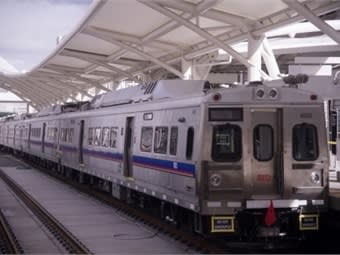
Denver RTD's commuter rail line is one example of a P3 in North America.
University of Denver
Coinciding with the Public-Private Partnership Conference & Expo (P3C) in Dallas, Husch Blackwell released its inaugural Public-Private Partnership Trends Report and the results of its fourth-annual P3C Conference survey, which measures marketplace sentiment for P3 as a project-delivery mechanism for meeting a community’s infrastructure needs.
Husch Blackwell queried conference registrants — including public sector respondents representing city, county, state, and educational officials and private organization participants from construction, consulting, design, and engineering, financial advisory and lending firms — on various factors relating to their evaluation and planned use of P3 to support future projects. Among other questions, the survey asked respondents to indicate their current level of involvement with public-private partnership projects; favorability of P3 projects; and expectations for utilizing P3 in the future.
Notable results of the survey found:
Ninety-one percent of public-side respondents — up from 85% in 2017 — and 94% of private-side respondents — up from 93% a year ago —plan to have multiple P3 projects in the works over the next three years.
Eighty percent of private-side and more than 50% of public-side respondents are currently involved in a P3 project.
Public and private respondents agreed that project efficiencies are a top reason for pursuing potential P3 projects.
Public and private respondents identified financing and risk transfer as the top two reasons that P3 is desirable.
The survey also revealed that private-side participants continue to exhibit more confidence in their understanding of P3 than their public-entity counterparts. Less than half of the survey’s private-side respondents thought that a current lack of understanding of P3 was a “strong” or “good” reason for not pursuing a P3 project; meanwhile, that number soared to nearly 70% among public-side respondents.
“There has long been a kind of information asymmetry at work in large infrastructure projects, where private-side participants tend to possess more experience and knowledge of how to price various projects or project stages,” said Charles Renner, who served as editor of the report and is the leader of Husch Blackwell’s P3 practice group. “What we are finding with P3, however, is that there is value in competition. When the public side solicits multiple bids, competition has a kind of leveling effect that compensates for a public entity’s lack of experience around various kinds of infrastructure projects.”
In addition to its survey results, the report includes an assessment of P3 projects that reached financial close since the beginning of 2016. The cohort of projects was refined to remove post-agreement transactions, such as refinancing and equity sales. In total, the report examined 16 projects across the nation in industries such as higher education, transportation, aviation, and energy.
Highlights of the project analysis include:
Fourteen of the 16 projects analyzed utilized a P3 “full model,” which includes the private partner being involved in all project phases — design/build, finance, operations, and maintenance (DBFOM).
Twelve of the 16 projects saw project debt levels exceed 70% of the overall capital stack at financial close. Government loans accounted for $2.9 billion during the report period, almost all of it on surface transportation projects utilizing Transportation Infrastructure Finance and Innovation Act, or TIFIA, loans.
Thirteen of the 16 projects employed public activity bonds, or PABs, to some extent, including much of the $2.3 billion issued to support the development of LaGuardia Airport’s Terminal B.
The Public-Private Partnership Conference & Expo is a three-day event exploring the role of P3 as it unites over 1,200 attendees from private industry and public governments and agencies to discuss infrastructure challenges faced nationwide.
For more information about the report, click here.
More Management

Building Stronger Leaders, More Resilient Transit Teams
Dr. Carol Parker Walsh discusses leadership development, employee retention, workplace culture, and preparing transit’s workforce for AI and automation.
Read More →
Roman Cornell on ABC Companies’ Evolution and the Future of Passenger Transportation
The company’s CEO discusses carrying forward a third-generation family legacy, ABC’s continued evolution in passenger transportation, support for increasingly complex fleets, and how technology and continued investment could help operators improve uptime.
Read More →
CATS Launches West Charlotte Microtransit Zone, Expands Transit Services
The new microtransit zone connects residents to key destinations as Charlotte Area Transit System rolls out the first phase of its 2055 Transit System Plan.
Read More →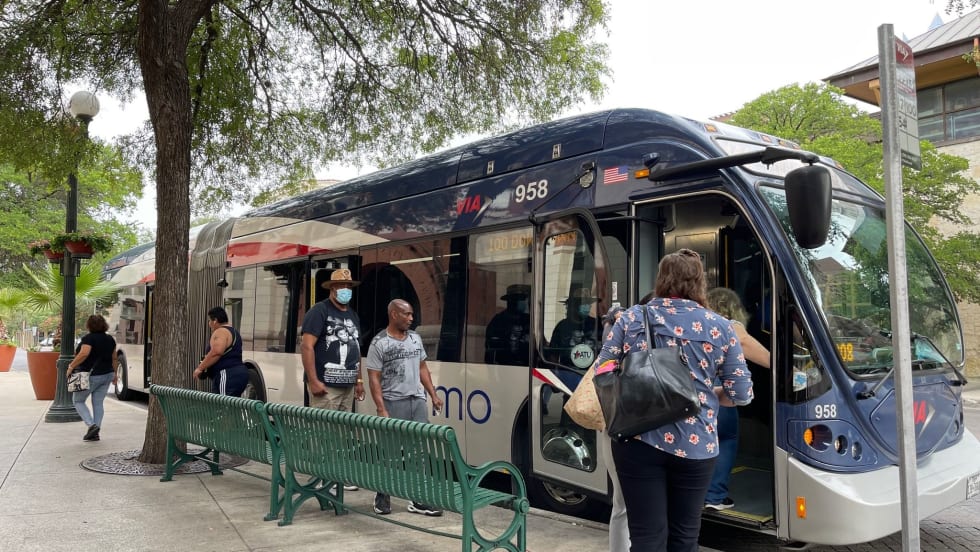
VIA Bus Ridership Grows 10.1% Through August 2026
San Antonio's VIA Metropolitan Transit reported the highest bus ridership growth among major Texas transit systems. Federal Transit Administration data ranked it second among the nation's 50 largest transit systems.
Read More →
CSA Group Releases Climate Resilience Standard for Transit, Passenger Rail
Developed with support from the Standards Council of Canada, CSA D700 guides assessing climate-related risks and planning adaptation measures for transit and passenger rail systems.
Read More →
ETA CEO John Maglio on Transit Technology, Innovation, and Building Agency Trust
ETA founder and CEO John Maglio explores the evolution of transit technology, the importance of reliable systems, and how stronger partnerships can help agencies improve operations and the passenger experience.
Read More →
COTA Launches First Customer Experience Action Plan to Improve Transit Service
The new plan outlines improvements to service reliability, accessibility, communication, and the overall rider experience across Central Ohio's transit system.
Read More →
LA Metro September Ridership Climbs 3.9%, Led by Rail Growth
The agency recorded more than 27.2 million boardings, with rail ridership increasing 12.4% year over year and the D Line posting the largest gains.
Read More →
Utilimarc Launches SmartReplace to Optimize Fleet Replacement Decisions
AI-powered SmartReplace helps fleets prioritize vehicle replacements, model budget scenarios, and build more defensible long-term strategies.
Read More →
APTA Honors 2026 Award Winners, Hall of Fame Inductees at TRANSform & EXPO
Innovations in autonomous and zero-emission transportation, standout transit systems, and industry leadership took center stage among this year's honorees.
Read More →