



Transit tech now in national security discussions
The arguments for transit as national security policy have long ranged from energy independence that come with transit investments to transit’s role in arresting climate change.

Concerns have recently culminated in bills that ban any use of federal transit funds to buy rolling stock from Chinese-owned companies.
CRRC
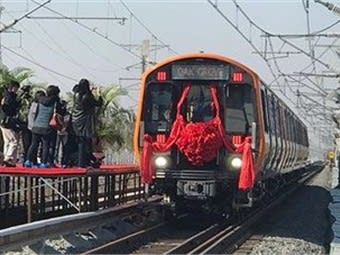
Concerns have recently culminated in bills that ban any use of federal transit funds to buy rolling stock from Chinese-owned companies.
CRRC
In the last edition I discussed how public transportation professionals, in both government agencies and private sector organizations that serve them, are engaged in furthering multiple missions, which has both challenges and opportunities for the industry. A recent twist in this trend has been the concerns about how some transit applications of information technologies can be used by foreign governments to spy on Americans. Frankly, it is only the latest reflection that what we do as an industry has national security implications, beyond the industry’s impact on economic security.
Do transit technologies threaten privacy?
The arguments for transit as national security policy have long ranged from energy independence that come with transit investments to transit’s role in arresting climate change, which the Pentagon sees as a security issue. Two other arguments are a little more direct, however. The first of these relates to effects on international trade and our growing economic competition with our trading partners, especially the challenges posed by Chinese competition of late. But the second concern, however dubious, is one mentioned above: that Chinese technologies in these buses and trainsets can be used to spy on American riders.
These concerns have recently culminated in bills that ban any use of federal transit funds to buy rolling stock from Chinese-owned companies. The bills’ proponents say the ban is needed to address both issues — to protect an American industry from unfairly subsidized Chinese competition as well as guard against foreign surveillance. In fact, the most recent House version of this ban showed up in this year’s defense authorization bill, and the House Transportation & Infrastructure Chairman waived his jurisdictional prerogative, allowing it to go forward.
As with last year’s attempt, the Senate version remains in its transportation appropriations bill and still only applies to future funding from the formula programs; the only discretionary program covered is the competitive grant piece of the bus and bus facility program. And the Senate’s ban only applies to rolling stock (railcars and buses), ironically leaving out other equipment such as communications systems. It also applies only to new contracts, while the House language appears to be retroactive.
Transit-national security history is not new
Such considerations have had a long history. What is new is its focus on a single country, China. While the politics of this bill seem to give it greater likelihood of passage this year, it takes its place in a long history of involving transit in defense and national security. That relationship will likely only get more involved in the future.
More Technology

From Hardware to Digital Partner: Luminator Charts Its Next Chapter
CEO Magnus Friberg discusses Luminator’s shift toward becoming a digital partner, the growing importance of software and interoperability, and how AI can help agencies improve operations and passenger experience.
Read More →
Beyond the Checklist: A Structured Approach to Transit Maintenance
Reliability-Centered Maintenance helps transit agencies move beyond routine checklists to focus limited resources on the assets and failures that have the greatest impact on safety, reliability, and service.
Read More →
NJ TRANSIT Advances Bus Technology Upgrades Across Statewide Fleet
More than 1,500 buses now feature upgraded technology designed to improve arrival predictions and provide free Wi-Fi, with deployment expected to reach nearly 2,000 buses by the end of 2026.
Read More →

Building a Flexible Path to Transit Electrification
John Hroncich discusses BAE Systems’ modular and scalable approach, lessons learned from decades of real-world operations, and how agencies can identify electrification strategies that fit their fleets.
Read More →
Biz Briefs: Alstom Lands Canadian Contract, LYT to Supply California TSP, and More
In METRO's latest installment, we take a look at recent news from Complete Coach Works, Beep, FlixBus, and more partnerships making headlines across the transportation sector.
Read More →
From Legacy Silos to Conversational Intelligence
What if transit leaders could ask any operational question and get a trusted answer in seconds? Conversational AI is transforming how agencies use their data.
Read More →
USDOT Announces Rail Vehicle Replacement Grants, Chattanooga AV Shuttle Funding
More than $191 million in federal funding will help three transit agencies replace aging rail vehicles and support a new autonomous shuttle service in Chattanooga.
Read More →
Bus Tech Talk: Keeping Transit Technicians Ahead of the Technology Curve
LA Metro’s Obed Mejia discusses technician training, evolving maintenance technology, fleet replacement, and strategies for getting the most out of today’s transit fleets.
Read More →
Biz Briefs: RIPTA Unveils New Frontrunners, Clevland RTA Adds New Siemens, and More
In METRO's latest installment, we take a look at recent news from Siemens, Prevost, Dodge, and more partnerships making headlines across the transportation sector.
Read More →
Why Simulating Pedestrian Movement Has Become Essential for Modern Rail Stations
Pedestrian microsimulation is helping rail planners identify bottlenecks, test station designs, and prepare complex transit hubs for growing passenger volumes.
Read More →