



RELATED: Consultants Talk Key Transportation Industry Issues
SoCal Extension Breathes New Life Into Congested Corridor
The 91/Perris Valley Line is expected to replace thousands of vehicle trips along I-215 as well as I-15 and connecting State Route 91 and SR 60.
by By Richard Quirk, AIA
September 20, 2016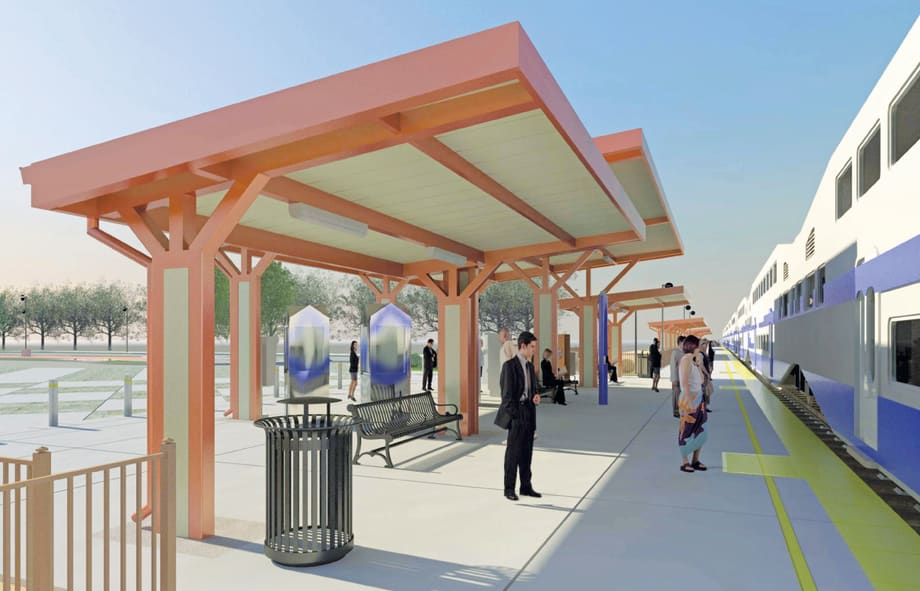
Images courtesy STV Inc.
4 min to read
Images courtesy STV Inc.
For the first time in more than 20 years, Southern California’s Metrolink commuter rail launched a new line into Riverside County, providing drivers in the heavily congested corridor a long-awaited alternative.
The new 91/Perris Valley Line began regular service in June — about 15 years after it was first proposed.
The new line, which parallels Interstate 215 along a 24-mile route from Riverside to Perris, features four new commuter stations, expanding access for thousands of new Metrolink riders along the I-215 corridor. The extension expands Metrolink service across 536 miles of the region and connects to three of its existing rail lines providing access to San Bernardino, Orange County and Los Angeles. This was accomplished by linking the Burlington Northern Santa Fe (BNSF) main line and the Riverside Downtown Station to the 21-mile San Jacinto Branch Line running south to Perris through a new 1,900-foot rail segment known as the Citrus Connection.
The 91/Perris Valley Line is expected to replace thousands of vehicle trips along I-215 as well as I-15 and connecting State Route 91 and SR 60.
In announcing the new service, Metrolink board Vice Chairman and Riverside County Transportation Commission (RCTC) member Daryl R. Busch, who also serves as mayor of Perris, hailed the extension as not only a way to ease congestion in the area, but as a means to spur economic growth. “There couldn’t be a better place for new train service,” said Busch. “This is a prime area for business and economic development and Metrolink will make it an even more attractive place to create jobs and transit-friendly housing.”
Projected growth
Current ridership on the line is projected to grow to more than 4,000 daily riders. Direct service between Union Station and South Perris takes a little over two hours to make the approximately 75-mile trip. Metrolink is currently offering discounted fares to help promote the service.
STV has been a partner with the RCTC since the 91/Perris Valley Line extension was first proposed in 2001, and was contracted by the commission to perform planning, environmental studies and reports, as well as the necessary engineering and construction support since the project broke ground in late 2013.
The extension was funded through federal, state and a special sales tax in Riverside County. It was one of the first projects to win funding under the Federal Transit Administration’s Small Starts program. STV helped prepare the documents, many of which have been used as templates for other Small Starts projects throughout the country.
“This extension will make a big difference in the quality of life for residents who want an alternative to sitting in traffic, and it also lays a strong foundation for economic development along the corridor,” said Therese McMillan, the acting administrator of the FTA at the time, who now serves as chief planning officer for the Los Angeles Metropolitan Transportation Agency.
Extensive Improvements
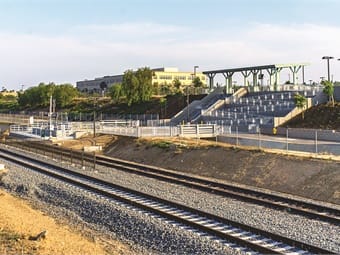
In addition to the four stations at Riverside-Hunter Park, Moreno Valley/March Field, Downtown Perris and South Perris, the new line required extensive improvements at existing grade crossings and culverts, installation of new traffic signals, the replacement of two bridges along the SJBL along the San Jacinto River, and the construction of communication towers and landscape and sound attenuation walls.
The new line was also praised by the American Planning Association’s Inland Empire Section, which recognized it with its Hard Won Victories Award. The award was given to the RCTC for its planning efforts in demonstrating how a plan can be developed and endorsed amid varying viewpoints.
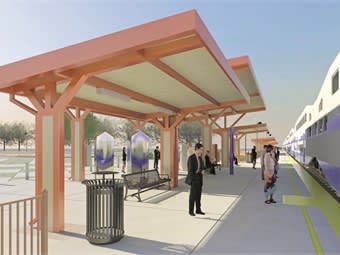
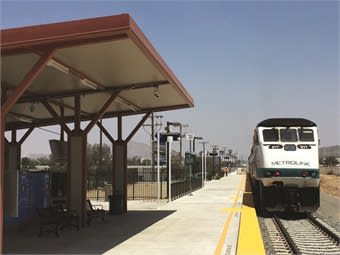
The STV team designed the rail line’s four new stations in close collaboration with RCTC and Metrolink. Stations feature 510-foot-long platforms with canopies, ADA and safety amenities, including level boarding, ticket kiosks, scheduling information and parking ranging from about 450 to 900 cars. Built with flexibility and future expansion in mind, the stations accommodate platforms up to 850 feet long as well as double-tracking and second platforms in certain areas.
Safety Standards
In addition, STV worked with the RCTC and Metrolink to uphold stringent safety standards by replacing miles of worn track, upgrading multiple grade crossings and improving the line’s signal system, including design considerations for the implementation of Positive Train Control (PTC). Work also included designing a new layover facility for locomotive maintenance and inspection areas in South Perris.
The 91/Perris Valley Line extension is Metrolink’s first new expansion project since construction of the Antelope Valley Line in 1994. Since that time, STV has served as the general engineering consultant for the rail service, performing planning, engineering design, and program and construction management for various key assignments throughout the system’s development. Metrolink currently serves more than 44,000 daily riders, with more than 75% switching from cars to transit.
Richard Quirk, AIA is senior architect/project manager with STV Inc. (www.stvinc.com)
Subscribe to Our Newsletter
More Rail
LA Metro Breaks Ground on East San Fernando Valley Light Rail Project
The 6.7-mile line will add 11 stations along Van Nuys Boulevard, expand access to jobs and regional transit connections, and support Metro’s broader efforts to improve mobility as rail ridership grows.
Read More →
CSA Group Releases Climate Resilience Standard for Transit, Passenger Rail
Developed with support from the Standards Council of Canada, CSA D700 guides assessing climate-related risks and planning adaptation measures for transit and passenger rail systems.
Read More →
LA Metro September Ridership Climbs 3.9%, Led by Rail Growth
The agency recorded more than 27.2 million boardings, with rail ridership increasing 12.4% year over year and the D Line posting the largest gains.
Read More →
First Full MetroLink Rail Expansion Completed in 20 Years with $192M Airport Project
The project links two St. Louis-area airports by light rail while adding roadway and bike trail connections to improve regional access and mobility.
Read More →
Utilimarc Launches SmartReplace to Optimize Fleet Replacement Decisions
AI-powered SmartReplace helps fleets prioritize vehicle replacements, model budget scenarios, and build more defensible long-term strategies.
Read More →
Scenes from APTA TRANSform & EXPO 2026
Transit leaders, manufacturers, and industry professionals gathered in Chicago to explore new technologies, share ideas, and discuss the future of public transportation.
Read More →
USDOT Awards $416 Million for Florida Rail Crossing Safety Upgrades, New Brightline Station
The projects aim to reduce risks for motorists and pedestrians at rail crossings while expanding passenger rail access along Florida’s Space Coast.
Read More →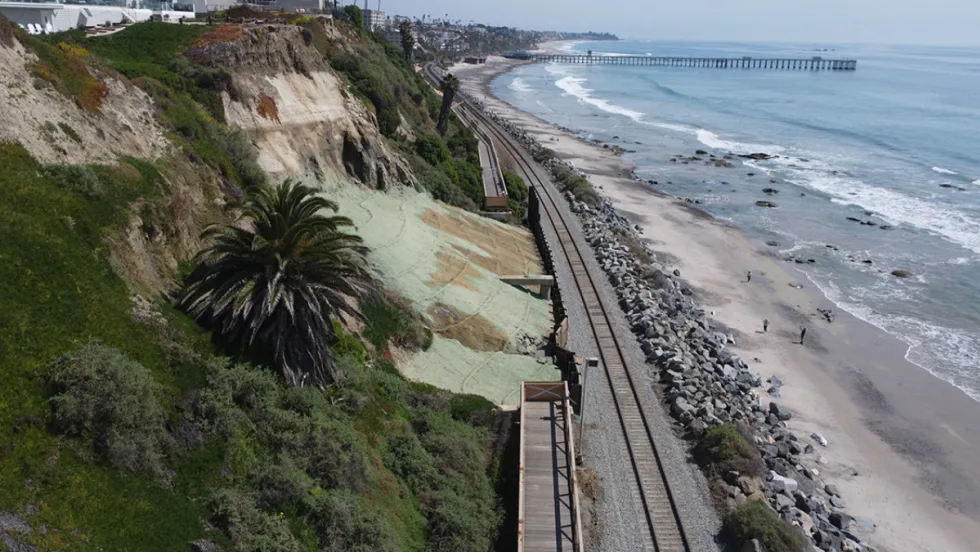
OCTA Declares Emergency to Protect Rail Corridor From Coastal Erosion
The California agency is accelerating shoreline protection and plans to place approximately 690,000 cubic yards of sand along the San Clemente coast to protect a key passenger and freight rail link.
Read More →
More Than a Summer Job: Building the Next Generation of Transit Talent
The Delaware River Port Authority and PATCO have transformed their internship program into a hands-on professional development experience that introduces students to the breadth of transportation careers — and creates a pipeline for future employees.
Read More →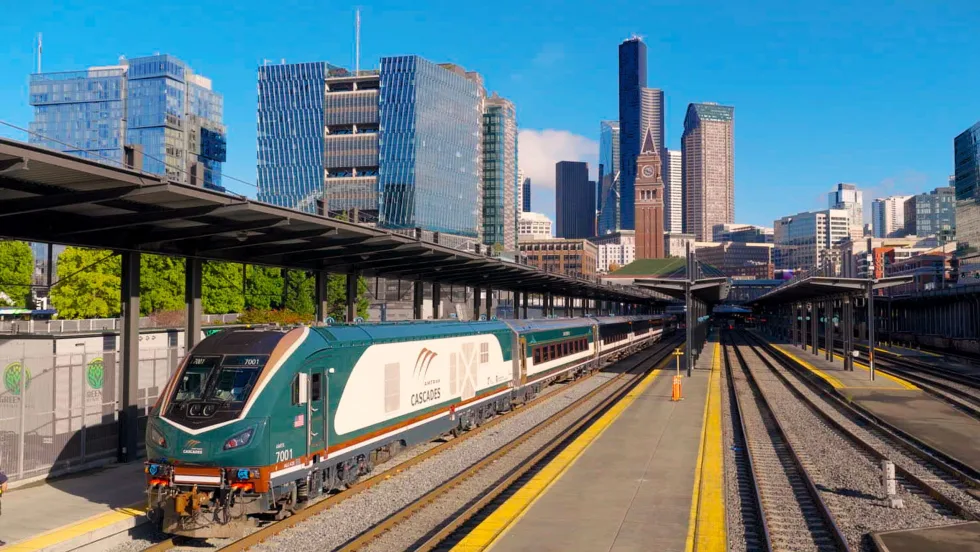
Airo Trains Make Their Amtrak Cascades Debut in the Pacific Northwest
Effective immediately, two cutting-edge Airo trainsets will join the Amtrak Cascades route, operating four daily trips between Vancouver, B.C., Seattle, Portland, and Eugene, Oregon, marking the first introduction of Airo trains into passenger service anywhere in the country.
Read More →