



Oahu Transit: Delivering Friendly Customer Service on the Island
Charged with perpetuating the spirit of the island, the agency known as TheBus, promotes 'the feeling of Aloha' to grow and maintain its ridership, while instituting programs to protect the environment. Two buses in its fleet recently hit the million-mile mark.
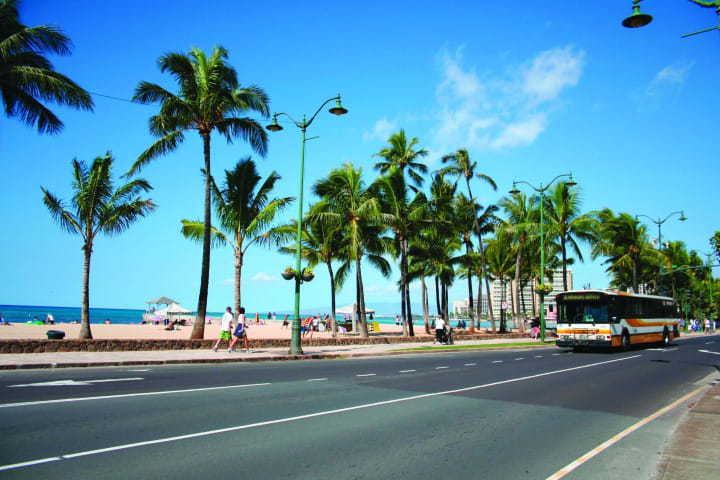
Courtesy Oahu Transit
[IMAGE]TheBus.jpg[/IMAGE]Oahu Transit Services Inc. (TheBus) is just as unique as the island of Oahu it serves. Its success begins with its customer service. "We're fortunate in that we live in the 'Aloha State,' and one of our prime policies is that we will perpetuate and promote the feeling of 'Aloha,'" says TheBus' GM/President Roger Morton. "Many, many people call us and say that it's the friendliest service they have ever been on."
Making its services even friendlier, TheBus has recently added a new real-time arrival system called Honolulu Estimated Arrival or "HEA," — Hawaiian for "where" — which is now accessible by smart phone. TheBus expects HEA to be available for cell phone soon, enabling passengers at bus stops to simply enter a route number and find out how long it will take for the next bus to arrive.
With a steady ridership and the eventual introduction of a grade-separated rail system, TheBus is bracing to continue stepping forward and meeting the growing demand for its services.
Unique ownership model
Founded the same year Hawaii was annexed by the U.S. — 1898 — TheBus' origins trace back to its days as Honolulu Rapid Transit and Land Co., which operated buses and trolley lines mostly in the Honolulu district, with the majority of the outlying areas serviced by competing bus companies.
In 1970, MTL Inc., a management firm and forerunner to Oahu Transit Services, was established by the City of Honolulu, under former Honolulu Mayor Frank Fasi, to oversee operations.
Today, TheBus is privately managed by Oahu Transit Services Inc., operating the system under a public-private partnership with the City and County of Honolulu Department of Transportation Services.
"It's an interesting hybrid-type of thing. The City of Honolulu's staff in the Department of Transportation concentrates on policy and doesn't get mired in operations," explains Morton. "On the other hand, we focus on operations, and we don't get caught up in the policy or even the politics of transit."
The "divorcing" of policy and operations has been successful at TheBus. As GM/president, Morton says he can focus on the nuts and bolts of keeping buses running and making sure the agency provides an excellent service for its customers, while somebody else handles the policy debates, such as how much service TheBus provides or where those services should be provided.
"One of the reasons that we are successful is that our city administration and the city council have always been so supportive of public transit, both with policies that they have put into place and with the capital programs and operational support that they have for this large system," says Morton, who has been with the agency since 1992 and served as its GM/president for the last five years.
Morton also credits surrounding himself with right people for TheBus' success.
"I don't credit myself with running a great agency. I credit our employees and our managers who run it," he says. "I've been fortunate that I've got such a great team, but the credit goes to those people."
[PAGEBREAK]
Fleet Facts
With a fleet size of 531 buses at two facilities — Pearl City and Kalihi — a Handi-Van paratransit fleet of 166 vehicles and approximately 1,850 employees, The Bus serves a population just above 900,000 and boasts the sixth highest ridership per capita in the nation — approximately 77 million riders last fiscal year. TheBus is now the 20th most utilized transit system in the country, the 13th most utilized bus fleet, and has the lowest cost per passenger mile of any system.
"Although we are medium-sized, we are a very well-utilized system," Morton explains. "One of the things that set us apart is the extent of our service; we provide a bus route within one half-mile to more than 95 percent of our population."
TheBus is both an urban system, serving the metro area of Honolulu and a rural system that provides service around the island.
Although there are 660 square miles in the island of Oahu, much of the interior is rainforest, serving as the island's water supply, and mountainous, making it unsuitable for development. These factors create interesting obstacles for TheBus to overcome simply so it can offer citizens service day-in and day-out.
"By and large, Honolulu is a linear city," explains Morton. "The major corridor is about three miles wide and about 30 miles long. Along that route, the mountain ridges that come down create strategic chokepoints when they get close to the coast."
Well-known for automobile congestion along this major corridor, TheBus' services have areas where there are as many as 35 routes on one street, with bus volumes of about 120 trips during the peak hour presenting even more of a challenge. On many of those streets, the agency has as much service available as the road can handle without buses backing up.
"Traffic congestion and soaring gas prices enabled TheBus to grow its ridership higher than it has ever been in the last 50 years," Morton explains. Even as gas prices have leveled off, TheBus's friendly and convenient services have been major factors in its ability to maintain that ridership.
"Our ridership is down about two percent from where it was a year ago, but it's up nine percent from where it was the previous year," says Morton. "We are pleased that we've been able to hold on to our ridership, even as the island, like everywhere else, has been hit by the recession."
Million Mile Bus
Recently, two of the agency's 1995 40-foot Gillig Phantom buses reached one million miles - an almost unheard of milestone. Equipped with Cummins M11 engines coupled to Allison B400 transmissions, buses #767 and #771 became the first transit buses ever inducted to Cummins' "Million Mile Club."
"First off, spec'ing the right components on the right vehicle obviously gives you an excellent shot at having buses that perform well," says Herb Barboza, vice president, maintenance at TheBus, of the million mile traveling vehicles. "We started out with a good solid vehicle and a well thought out preventive maintenance compliance."
Solidifying his point, Barboza explains that no major work was done to either bus's engine outside the typical preventive maintenance and on-time adherence.
"The cylinder heads have never been removed. The engines were never kitted," says Barboza, adding that a few more vehicles will also reach the million mile mark soon. "These are the original engines that received the proper level of preventive maintenance over their 15-year lifecycle."
The two buses operate out of the agency's Pearl City Division, which runs over one million miles per month. "The daily mileage on the around-the-island bus route is the equivalent of going from Honolulu to Cleveland and back," explains Morton.
"I'm so proud of our maintenance team; they have a great preventive maintenance program that enables us to be successful," he adds. "It's just lucky that we have such a skilled workforce, and both our operators and maintenance departments also work well together."
Barboza adds that having a talented staff that works well together and having the support of those that run the agency are important aspects to the maintenance department's ability to keep its vehicles running in top form.
"Another important aspect to remember about this milestone is that we did it on an island. A big component of getting good service out of your vehicles is the people who operate them. So, I believe some recognition really is deserved by our operators," he says. "We also have great support from everyone from within the agency and the city. Without them, we could not be successful."
[PAGEBREAK]
Going Green
TheBus has taken many positive steps toward being greener over the past few years. Making environmentally-friendly decisions has found its way to the top of its business agenda. Responsible actions include the development of a wide-range recycling program and a clear plan to better manage their natural resources.
In its fleet, TheBus is currently running 80 diesel-electric hybrids. The bulk of the diesel-electric fleet is 40-feet in length, but TheBus does operate about 100 articulated 60-foot buses as well. It has also recently placed an order with Nova Bus for 24 of its LFS buses, with options on additional vehicles, which feature clean diesel engines that meet strict EPA 2010 emissions regulations.
Barboza adds that the maintenance department has spearheaded several green-friendly initiatives, including a fuel management program that brought many changes to the way the maintenance department does business. Shortened maintenance test routes and in-shop engine idle times all contribute to minimizing the unnecessary consumption of fuel.
TheBus has also recently switched to a waterborne refinish basecoat to help minimize volatile organic compounds (VOC). "The maintenance department teamed up with PPG Industries and trained each person in our body shop," explains Barboza. "All future complete repainting projects will incorporate water-based refinishing. By making this switch, we will save an estimated 11 gallons of solvent per bus refinish."
Several years ago, TheBus also became the first agency in North America to switch to nitrogen inflation for its tire maintenance program.
"We are very conscious of our environment, especially being located in the beautiful Hawaiian Islands," Barboza says. "We have an obligation to keep our environment green and take care of it. After all, we want our children and grandchildren to enjoy the Islands just as we did when we were growing up."
Looking Ahead
With Honolulu aggressively moving forward on a $5.3 billion rail system, the way TheBus will provide its services is expected to change once that system opens.
"In areas the rail system will serve, what we will end up doing much more so than now is provide services to and from rail stations rather than provide long-haul services," says Morton. "In light of the City of Honolulu's plan, TheBus will actually become larger and more important, because we will provide a finer grain and a better level of service to all of the communities with more frequency, access and coverage."
Like almost any agency in the U.S., TheBus is also dealing with an economic recession that has decreased both jobs and visitors; however, Morton is hopeful that the agency can stay on top.
"We continue to look for efficiencies in operations and maintenance and have yet to make any service cutbacks," he explains. "It is going to be a tight budget next year, and I'm hoping that we can continue to say that."
More Bus

Brian Dickson on Building Stronger, More Resilient Transportation Organizations
Bus Business Consultants Founder Brian Dickson discusses the leadership principles, operational discipline, and strategic planning that separate transportation companies positioned for long-term success from those stuck in survival mode.
Read More →
LA Metro Breaks Ground on Vermont BRT Project
The 12.4-mile corridor is projected to serve 66,200 daily riders, reduce travel times by up to 24%, and create the nation's busiest bus rapid transit corridor.
Read More →
Roman Cornell on ABC Companies’ Evolution and the Future of Passenger Transportation
The company’s CEO discusses carrying forward a third-generation family legacy, ABC’s continued evolution in passenger transportation, support for increasingly complex fleets, and how technology and continued investment could help operators improve uptime.
Read More →
VIA Bus Ridership Grows 10.1% Through August 2026
San Antonio's VIA Metropolitan Transit reported the highest bus ridership growth among major Texas transit systems. Federal Transit Administration data ranked it second among the nation's 50 largest transit systems.
Read More →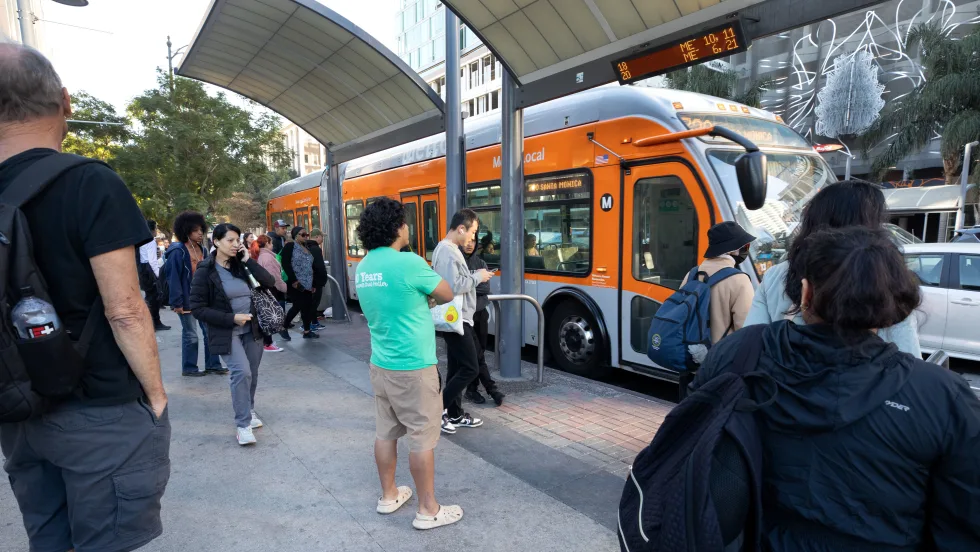
LA Metro September Ridership Climbs 3.9%, Led by Rail Growth
The agency recorded more than 27.2 million boardings, with rail ridership increasing 12.4% year over year and the D Line posting the largest gains.
Read More →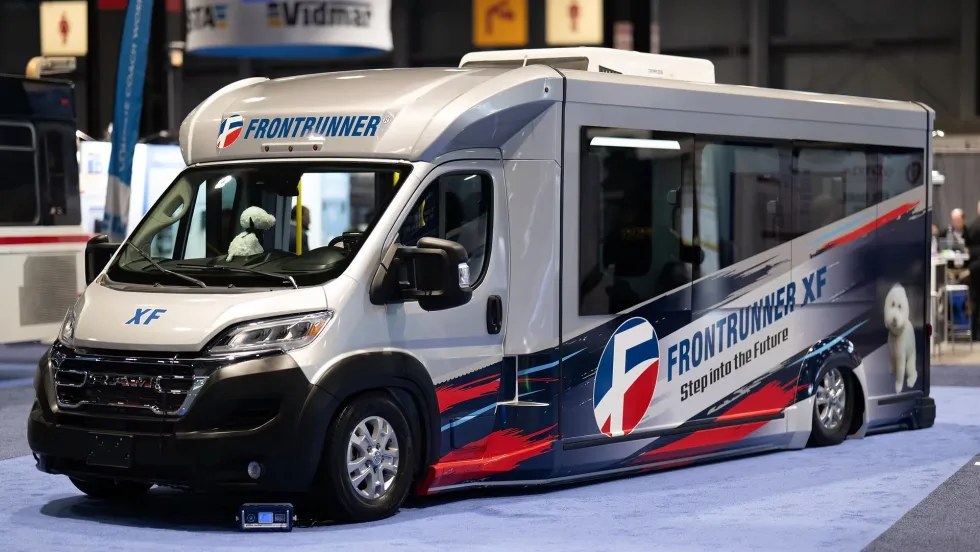
Frontrunner Bus Group Introduces XF Low-Floor Bus with Enhanced Accessibility
The new mid-sized bus features a full flat-floor design, eight-inch curbside step-in height, and zero-entry rear ramp to improve passenger access and operational flexibility.
Read More →
Scenes from APTA TRANSform & EXPO 2026
Transit leaders, manufacturers, and industry professionals gathered in Chicago to explore new technologies, share ideas, and discuss the future of public transportation.
Read More →
More Than a Summer Job: Building the Next Generation of Transit Talent
The Delaware River Port Authority and PATCO have transformed their internship program into a hands-on professional development experience that introduces students to the breadth of transportation careers — and creates a pipeline for future employees.
Read More →
LA Metro Board Awards 220 Battery-Electric Bus Contract to ENC
The contract, which is the largest base award of battery-electric buses by a U.S. transit agency, will be built in Southern California, sustaining good jobs as LA prepares to welcome the world in 2028
Read More →
Public Transit Conference Returning to GFX in 2027, Call for Papers Now Open
The Call for Papers is now open, allowing transit agency professionals and industry experts to help shape the PTC educational program by submitting session ideas for consideration.
Read More →