has worked with Pace for over 20 years, providing 665 vehicles to their fleet, including ENC’s diesel E-Z Rider II BRT and diesel and CNG Axess BRT models.
ENC
2 min to read
RMA’s motor coach fleet goes to work for large events, corporate charters, and university clients.
MCI
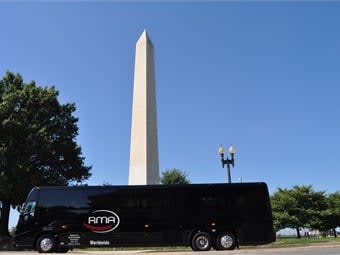
MCI delivers 2 'Livery Edition' J4500s to RMA Worldwide
Motor Coach Industries (MCI) delivered two new MCI J4500 Livery Edition coaches to expand RMA Worldwide Chauffeured Transportation.
Starting with the roomy 56-seat J4500 configuration, RMA’s new MCIs include Amaya 220 seating with leather diamond stitching and cup holders on the back of each seat. Additionally, each coach features an enhanced sound system, and the RGB lighting package that allows for customize interior color lighting options, and exterior custom paint and decaling.
Ad Loading...
RMA’s motor coach fleet goes to work for large events, corporate charters, and university clients.
has worked with Pace for over 20 years, providing 665 vehicles to their fleet, including ENC’s diesel E-Z Rider II BRT and diesel and CNG Axess BRT models.
ENC
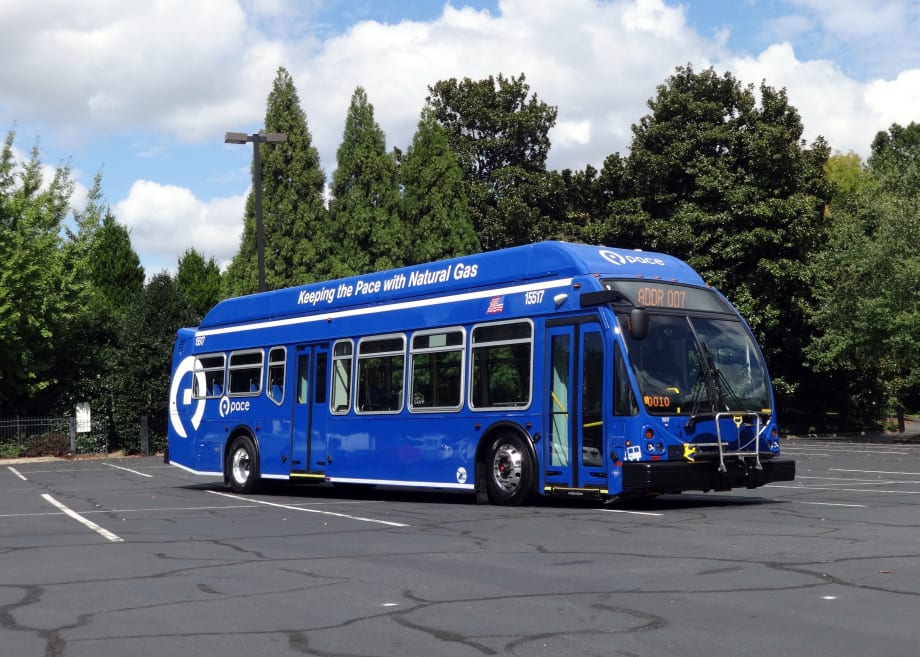
ENC to deliver 23 Axess buses to Pace
ElDorado National-California (ENC) received a contract to supply 23 diesel Axess 30-foot buses to Chicago’s Pace. The award is the first release of a five-year, up to $80 million contract with a provision for 164 to Axess buses, as well as optional vehicle features, spare parts, and training.
ENC has worked with Pace for over 20 years, providing 665 vehicles to their fleet, including ENC’s diesel E-Z Rider II BRT and diesel and CNG Axess BRT models. The Axess is the first transit bus in the industry that was certified for three-point seat belts. The heavy-duty bus also features a curb-level low-floor that can be adapted for any application and also offers ADA-compliant wheelchair ramps at the front and center doors.
The CS team is building a real-time predictions solution for Metro Transit using the open-source software, TheTransitClock.
Metro Transit
Cambridge Systematics, Minn. Metro Transit partner to improve next bus arrival time predictions
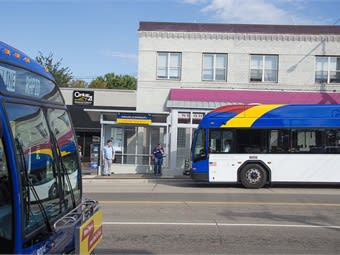
Cambridge Systematics (CS) was selected by Minneapolis’ Metro Transit to participate in a pilot program to evaluate approaches and technologies to improve the agency’s bus arrival time predictions based on current information about vehicle location, traffic conditions, weather, and other relevant factors.
The CS team is building a real-time predictions solution for Metro Transit using the open-source software, TheTransitClock. To improve the accuracy of predicted arrival times, the CS team’s solution employs a Kalman Filter, an adaptive algorithm that recognizes unusual conditions, like abnormal traffic congestion and weather events, and draws on the most relevant historical and real-time data to improve the quality of its arrival time predictions by more accurately estimating vehicle travel times and dwell times (periods when the bus is at a stop, loading and unloading passengers).
CEO Magnus Friberg discusses Luminator’s shift toward becoming a digital partner, the growing importance of software and interoperability, and how AI can help agencies improve operations and passenger experience.
Reliability-Centered Maintenance helps transit agencies move beyond routine checklists to focus limited resources on the assets and failures that have the greatest impact on safety, reliability, and service.
More than 1,500 buses now feature upgraded technology designed to improve arrival predictions and provide free Wi-Fi, with deployment expected to reach nearly 2,000 buses by the end of 2026.
John Hroncich discusses BAE Systems’ modular and scalable approach, lessons learned from decades of real-world operations, and how agencies can identify electrification strategies that fit their fleets.
In METRO's latest installment, we take a look at recent news from Complete Coach Works, Beep, FlixBus, and more partnerships making headlines across the transportation sector.
What if transit leaders could ask any operational question and get a trusted answer in seconds? Conversational AI is transforming how agencies use their data.
More than $191 million in federal funding will help three transit agencies replace aging rail vehicles and support a new autonomous shuttle service in Chattanooga.
LA Metro’s Obed Mejia discusses technician training, evolving maintenance technology, fleet replacement, and strategies for getting the most out of today’s transit fleets.
In METRO's latest installment, we take a look at recent news from Siemens, Prevost, Dodge, and more partnerships making headlines across the transportation sector.
Pedestrian microsimulation is helping rail planners identify bottlenecks, test station designs, and prepare complex transit hubs for growing passenger volumes.