



RIPTA Unveils New High-Frequency Bus Corridor
The Downtown Transit Connector runs from Rhode Island Hospital to the Providence Train Station with five-minute frequency. It also features bus-only travel lanes and custom shelters with real-time digital information signage.
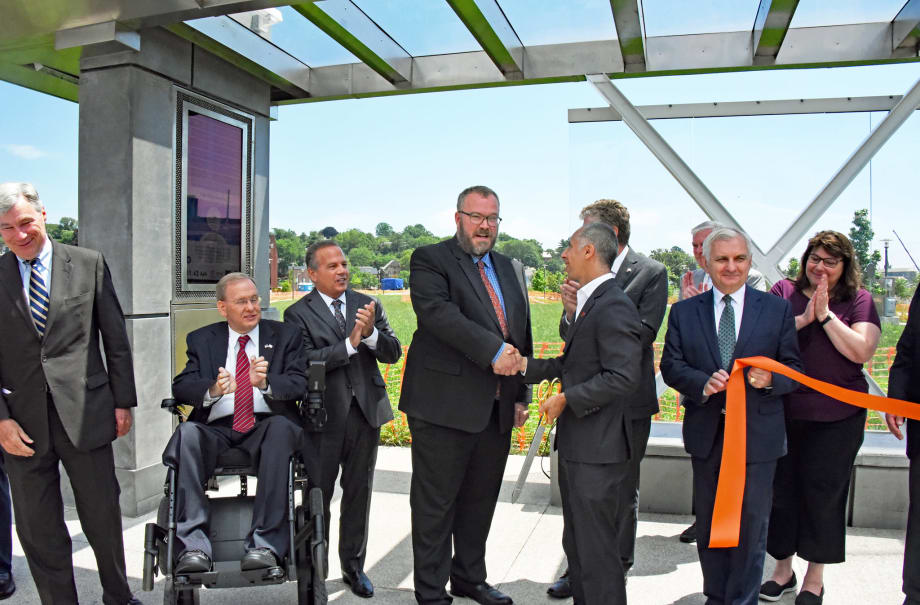
State and local officials joined RIPTA staff on Monday for a ribbon-cutting ceremony for the new Downtown Transit Connector.
RIPTA, Facebook
The Rhode Island Public Transit Authority (RIPTA) unveiled its new high-frequency bus corridor serving the city of Providence.
Members of the state’s Congressional delegation, Governor Dan McKee, and Providence Mayor Jorge Elorza joined RIPTA officials on Monday for a ribbon-cutting ceremony.
The Downtown Transit Connector (DTC) runs from Rhode Island Hospital to the Providence Train Station with five-minute frequency. It features several key transit infrastructure improvements such as bus-only travel lanes, traffic signals that give priority to buses, and custom shelters with real-time digital information signage. There are also designated bike lanes along portions of the 1.4-mile corridor that also create a direct bus-rail connection in the city.
RIPTA is able to provide the frequent service by funneling seven bus routes through the corridor which traverses the city’s growing Innovation and Design District. The frequent service began running last year, as construction continued on the bus lanes and other features.
“Although this past year was a difficult one for everyone, we are happy to be able to gather together to celebrate this project,” said RIPTA CEO Scott Avedisian. “The DTC is an important transit improvement for our capital city, and it is also example of public partners working together on a project that uses federal funds to support economic growth and enhance people’s quality of life.”
The roughly $17-million project is funded largely by a $13 million U.S. Department of Transportation TIGER grant initially awarded to Providence in 2015 for a streetcar project. The remaining funds are coming from the state.
“Safe. Convenient. Comfortable. Frequent. Reliable. Affordable. Accessible. That’s what riders want and what RIPTA is delivering with this new downtown connector service,” said U.S. Senator Jack Reed, a senior member of the appropriations committee. “This streamlined service will help get people where they need to go, whether it’s work, school, medical care, shopping, or entertainment.”
The seven RIPTA routes running through the DTC — Routes 3, 4, 51, 54, 58, 62 and 72 — travel primarily along Dorrance and Eddy Streets. The five-minute frequency they provide more than doubles past service levels in the Innovation District and surrounding Jewelry District neighborhood. The DTC also directly connects nearby colleges and universities to new medical and innovation centers.
“In Providence, we invest in transportation innovation by prioritizing equity and ease," said Providence Mayor Jorge O. Elorza. "The Downtown Transit Connector expands our city's high-quality, affordable transit options while simultaneously improving accessibility to allow for growth and development. I am confident that the DTC will move us even closer to becoming a city that works for everyone."
More Bus

New York MTA Plans Largest Bus Fleet Upgrade in More Than a Decade
The agency is seeking manufacturers for 650 new CNG buses to replace aging vehicles, improve reliability, and advance its broader fleet modernization strategy.
Read More →
Building a Flexible Path to Transit Electrification
John Hroncich discusses BAE Systems’ modular and scalable approach, lessons learned from decades of real-world operations, and how agencies can identify electrification strategies that fit their fleets.
Read More →
Bus Tech Talk: Keeping Transit Technicians Ahead of the Technology Curve
LA Metro’s Obed Mejia discusses technician training, evolving maintenance technology, fleet replacement, and strategies for getting the most out of today’s transit fleets.
Read More →
Biz Briefs: RIPTA Unveils New Frontrunners, Clevland RTA Adds New Siemens, and More
In METRO's latest installment, we take a look at recent news from Siemens, Prevost, Dodge, and more partnerships making headlines across the transportation sector.
Read More →
People Movement: Holly Arnold Joins Transdev and More
In this edition, we also cover recent appointments and announcements at Pace, CamTran, MCI, and more, showcasing the individuals helping to shape the future of transportation.
Read More →
The High Cost of Transit Buses: Industry Leaders Look to Procurement Reform
Transit leaders and policymakers examine how standardized bus designs, streamlined procurement, and predictable funding could help agencies stretch budgets and deliver better service.
Read More →
The Business Voice Behind Public Transportation
As chair of APTA’s Business Members Board of Governors, Ray Melleady explains how more than 850 business members are partnering with transit agencies to advance funding, innovation, and industry-wide collaboration.
Read More →
From Surviving to Thriving: Building Stronger Transportation Organizations
Bus Business Consultants founder Brian Dickson shares lessons on leadership, organizational health, and creating options for long-term success in a changing transportation industry.
Read More →
Finding the ‘Happy Medium’: Optimizing Maintenance Without Sacrificing Reliability
The key to maintenance optimization isn’t doing less work—it’s doing the right work at the right time on the right assets.
Read More →
LA Metro, City of West Hollywood, and Partners Advance Smarter Bus Lane Enforcement
The award-winning partnership combines AI-powered detection with human oversight to improve bus reliability, accessibility, and enforcement efficiency.
Read More →