




In the Micro: ZEVs, Service Expansions Power SacRT’s Microtransit
Jersey City's Via Hits 1 Million Rides
Via is a form of transit for around 50,000 Jersey City residents and visitors per month, most of whom are lower-income and people of color.
August 30, 2022
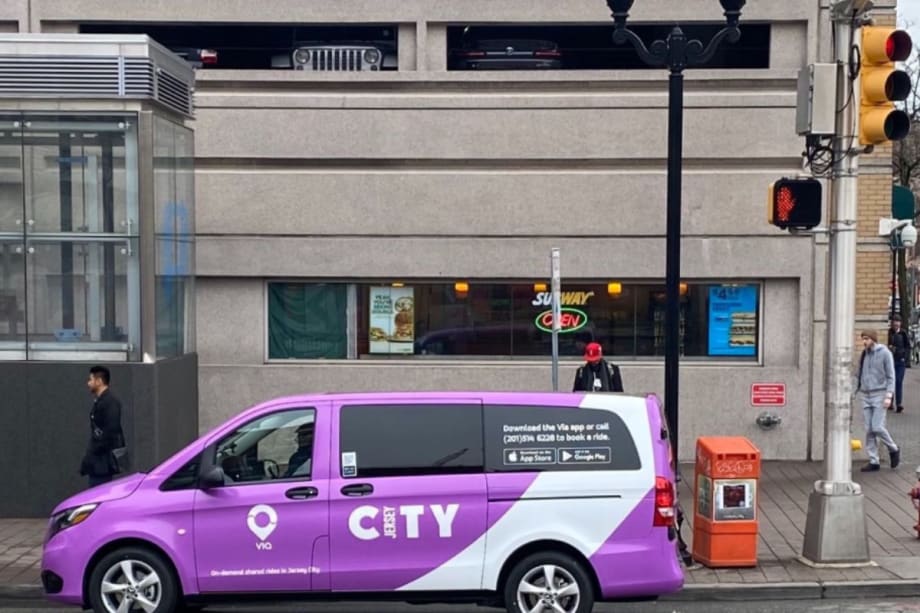
Mayor Fulop launched Via with the goal of extending the reach of existing public transportation by providing on-demand shared rides to serve areas formerly considered “transit deserts.”
Photo: Via
2 min to read
Mayor Steven M. Fulop announced Jersey City’s on-demand microtransit service, Via, just surpassed one million rides since it was introduced in February 2020 as part of the city’s public transit system.
Mayor Fulop launched Via with the goal of extending the reach of existing public transportation by providing on-demand shared rides to serve areas formerly considered “transit deserts.” Via is a form of transit for around 50,000 Jersey City residents and visitors per month, most of whom are lower-income and people of color.
“The record ridership for our Via microtransit service is just one measure of its incredible success. The service continues to provide vital transportation for exactly the communities that it was intended to uplift. A recent survey of riders showed that 51% of riders reported an annual household income below $50,000, 88% of riders identified as non-white, and 58% of riders identified as women,” said Mayor Fulop. “In addition, over 70% of the rides are shared, with each vehicle completing an average of 4.2 trips per hour, and more electric vehicles are being added to the fleet, which supports our city’s climate and sustainability goals.”
Any rider in the city’s designated service zones can book a ride at a moment’s notice through the Via app. Via’s algorithms match riders headed in the same direction into one vehicle. Riders without smartphones can also book by calling a phone number, and wheelchair-accessible vehicles are available upon request.
Recent data has proven that most Jersey City Via trips are considered “essential” — 61% of riders reporting they primarily use the service to get to work, school, or for doctor appointments and healthcare. Additionally, the most common pickup and dropoff points include Jersey City’s public transit hubs that connect with nearby New York City and neighboring Hudson County cities. As a result of the service, low-to-moderate income residents have access to 35% more jobs, schools, and hospitals within 30 minutes’ travel than they did before it existed.
More New Mobility

From Hardware to Digital Partner: Luminator Charts Its Next Chapter
CEO Magnus Friberg discusses Luminator’s shift toward becoming a digital partner, the growing importance of software and interoperability, and how AI can help agencies improve operations and passenger experience.
Read More →
Biz Briefs: Alstom Lands Canadian Contract, LYT to Supply California TSP, and More
In METRO's latest installment, we take a look at recent news from Complete Coach Works, Beep, FlixBus, and more partnerships making headlines across the transportation sector.
Read More →
CharterUP’s Armir Harris on Technology, AI, and the Future of Group Mobility
In a recent episode of METROspectives, CharterUP Founder/CEO Armir Harris discussed the company’s evolution from an online charter bus marketplace into a technology platform supporting public- and private-sector mobility and much more.
Read More →
Jacksonville’s NAVI Project Charts a New Course for Autonomous Public Transportation
Through its NAVI program, JTA is showing how autonomous vehicles, intelligent infrastructure, and coordinated operations can work together to deliver everyday public transportation.
Read More →
Biz Briefs: Luminator Marks Milestone and More
From manufacturers and suppliers to transit agencies and motorcoach operators, these updates offer a snapshot of the projects, partnerships and business moves driving the industry forward.
Read More →
New Tricks for Old Bureaucracies: Joshua Schank on Making Transit Innovation Stick
Former LA Metro Chief Innovation Officer Joshua Schank discusses why good ideas aren't enough, how transit agencies can overcome resistance to change, and why today's challenges demand more innovation.
Read More →
How DART's GoPass Is Redefining Regional Mobility
Serving 14 transit agencies, GoPass simplifies multimodal travel by allowing riders to plan, pay for, and manage an entire trip through one app.
Read More →
Biz Briefs: OCTA Taps Clean Energy for Hydrogen Station, Stadler to Supply Via Rail Vehicles, and More
From manufacturers and suppliers to transit agencies and motorcoach operators, these updates offer a snapshot of the projects, partnerships and business moves driving the industry forward.
Read More →CharterUP Expands Into New Mobility and Autonomous Transportation
Vice President of New Mobility Stephen Joos discusses how CharterUP is leveraging its nationwide transportation network, technology platform, and autonomous vehicle partnerships to expand into workforce mobility, campus shuttles, and transit solutions.
Read More →
METRO Magazine Announces 2026 Innovative Solutions Awards Winners
Projects Recognized for Advancing Mobility Through Technology, Accessibility, Workforce Innovation, and Operational Excellence
Read More →