




Read More: MARTA Awards Contract for New Automated Fare Collection System
MARTA Board Advances Safe Routes to Transit Project
The Safe Routes to Transit Project will allow MARTA to provide accessible connections to existing MARTA service at multiple locations across three U.S. Congressional Districts.
November 10, 2023
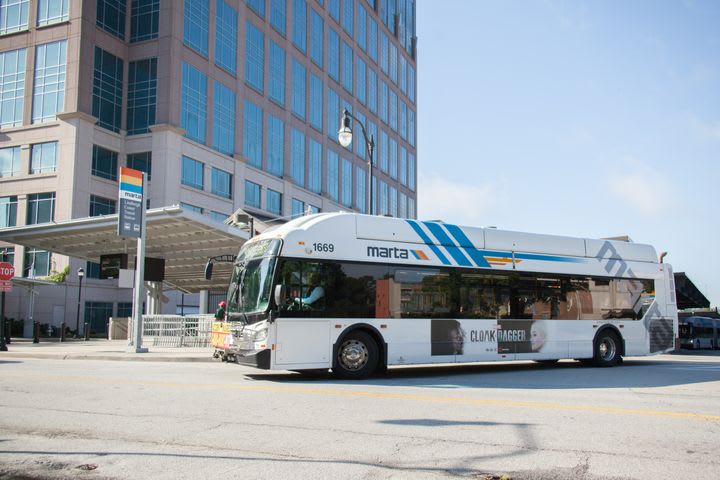
The Safe Routes to Transit Project will allow MARTA to provide accessible connections to existing MARTA service at multiple locations across three U.S. Congressional Districts.
Photo: MARTA
2 min to read
The Metropolitan Atlanta Rapid Transit Authority (MARTA) announced that its Board of Directors advanced the Safe Routes to Transit Project.
“Nearly every passenger trip begins or ends on the roadside at one of MARTA’s 9,000 bus stops, and missing sidewalks or unsafe crossings can create real barriers to mobility for our customers,” said MARTA General Manager and CEO Collie Greenwood. “Safe Routes to Transit helps us remove, repair, and replace crumbling infrastructure so riders can get to and from the bus and other MARTA services safely.”
What's Next for MARTA
After site selection and preliminary permitting coordination phases, MARTA will address pedestrian safety at high ridership bus stops, providing high visibility crosswalks, Americans with Disabilities Act (ADA) ramps, curb extensions, medians, refuge islands, and pedestrian beacons, among other improvements.
The Safe Routes to Transit Project will allow MARTA to provide accessible connections to existing MARTA service at multiple locations across three U.S. Congressional Districts.
“MARTA is an essential organ of the Metro Atlanta Area, that’s why I am proud to support them in their efforts to make traveling safer and more accessible. The people of the 13th District of Georgia deserve safe transportation on their way to their destination and I will continue to support MARTA in their efforts to accomplish that,” said Congressman David Scott (GA-13).
Additionally, Safe Routes to Transit will support pedestrian infrastructure needs coming from MARTA’s Bus Network Redesign.
The redesign has moved through discovery and engagement processes and is currently in the design phase, where planners are working to ensure MARTA’s future bus service will serve the greatest number of customers efficiently, and that includes connecting people to transit service.
The fiscal year 2024 budget for this project is $6.7 million, with 80 percent or $1 million each secured by Representatives David Scott, Hank Johnson, and Nikema Williams. Twenty percent will come from MARTA’s Capital Programs budget and the remainder from the Transportation Improvement Program Surface Transportation Block Grant.
More Management

METRO Opens Submissions for 2026 Motorcoach Awards
Nominations are now being accepted for METRO Magazine’s Operator of the Year and Innovative Operator of the Year awards.
Read More →
New York MTA Advances Final Contract for Second Avenue Subway Expansion
Contract Four is the largest in the Second Avenue Subway Phase 2 project and includes construction of station infrastructure, tracks, and signals for the subway expansion, MTA officials said. Work on Contract Four will begin in 2027.
Read More →
Transit Agencies Highlight Safety Gains at National Summit
Leaders from 15 major transit systems shared crime-reduction results and safety initiatives while discussing the role of continued federal support.
Read More →

NITA Names New Leadership, Expands Reduced-Fare Program at First Board Meeting
The new regional transit authority appointed its first board chair and interim executive director while extending reduced fares across CTA, Metra, and Pace for eligible riders.
Read More →
Beyond the Checklist: A Structured Approach to Transit Maintenance
Reliability-Centered Maintenance helps transit agencies move beyond routine checklists to focus limited resources on the assets and failures that have the greatest impact on safety, reliability, and service.
Read More →
APTA 2026 Nominating Committee Selects Leadership Slate, Names Chair and Vice Chair Nominees
Leadership changes will help shape the association’s priorities and its representation of the transportation industry during the 2026–2027 term.
Read More →
DART Launches Major Security, Fare Enforcement Initiative
The 90-day demonstration will deploy coordinated security teams at five light rail stations while testing controlled access and gathering data to guide future investments.
Read More →
Sponsored•September 9, 2026
Advancing Fare Collection Through Technology and Innovation
Learn about delivering 1300 gates at 91 stations while managing fare evasion. Explore the large scale deployment, solution customization and real-world results that affect the region. Prepare for deployment in your region now.
Read More →
Game Day in Motion: Moving Millions During the 2026 World Cup
Between packed transit stations and team motorcoaches, see how agencies and operators across North America tackled the transportation demands of the 2026 FIFA World Cup.
Read More →
Surface Transportation Extension Averts Shutdown, Leaves Transit Funding Gap
The stopgap keeps federal transportation programs moving, but missing advance funding could complicate the transit and rail projects agencies are planning next.
Read More →