



Los Angeles Opens 5.6 Miles of Bus Priority Lanes
The new lanes will move 50,000 weekly bus riders through the congested Sepulveda Blvd. corridor while improving bus speeds by 15% or more and increasing service frequency.

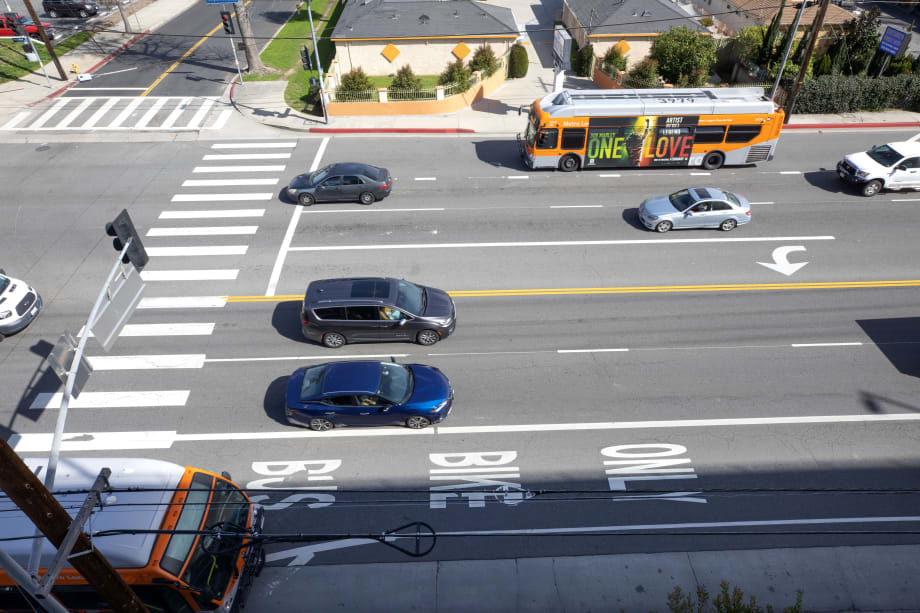
With the new bus priority lanes serving riders in the San Fernando Valley, Los Angeles will have approximately 51 miles of bus priority lanes across the city, with another 46 miles of bus lanes to be implemented over the next year.
Photo: LA Metro
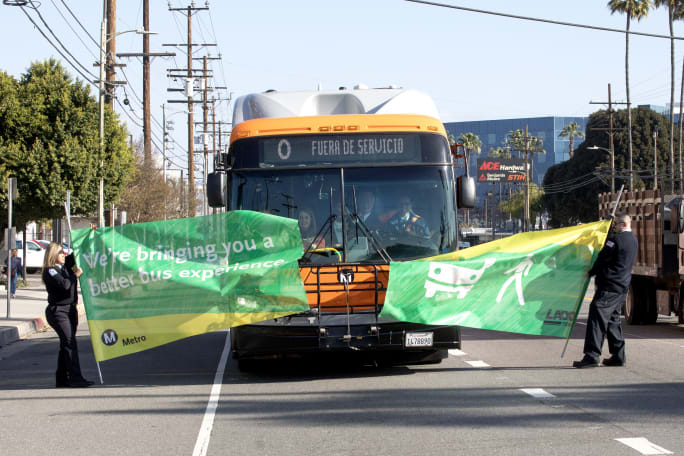
The enhanced mobility moves more people and provides quick and easy access to nearly 40,000 jobs.
Photo: LA Metro
As part of ongoing citywide efforts to save transit customers time and increase the reliability of bus service, the Los Angeles County Metropolitan Transportation Authority (Metro), Los Angeles Department of Transportation (LADOT), and City of Los Angeles celebrated the opening of 5.6 miles of new bus priority lanes.
The new lanes will move 50,000 weekly bus riders through the congested Sepulveda Blvd. corridor while improving bus speeds by 15% or more and increasing service frequency.
The enhanced mobility moves more people and provides quick and easy access to nearly 40,000 jobs, over 88,000 residents, neighborhoods, businesses, and other key locations, including Sherman Oaks Galleria, Valley Presbyterian Hospital, and the Sepulveda G Line (Orange) Station, without widening streets or adding more infrastructure.
Benefits of the New Bus Priority Lanes
With the new bus priority lanes serving riders in the San Fernando Valley, Los Angeles will have approximately 51 miles of bus priority lanes across the city, with another 46 miles of bus lanes to be implemented over the next year.
The project also provides a faster and more reliable multimodal transit network, benefiting over 9,000 daily riders who typically ride Metro Bus Line 234.
In the Sherman Oaks/Van Nuys area, the bus-only segment runs along Sepulveda Boulevard between Ventura Boulevard and Rayen Street. Also included is a 0.9-mile bus lane that runs along westbound Ventura Boulevard from Vesper Avenue to Sepulveda Boulevard.
Full-Time Bus Lanes Added
In creating the bus lanes, the project converted the rightmost traffic lane in each direction into a full-time bus lane. It also converted the rightmost traffic lane on northbound Sepulveda Boulevard into a full-time bus lane.
Conversion of Curbside Lanes
Converts the curbside lane on westbound Ventura Boulevard between Vesper Avenue and Sepulveda Boulevard into a peak hour bus lane from 7 a.m. to 9 a.m. on weekdays only and maintains virtually all curbside parking as it exists today.
Repurposes 60 underutilized parking spaces along northbound Sepulveda Boulevard between Raymer Street and Lanark Street to serve as a full-time bus lane.
Maintains two general traffic lanes and left turn lanes in each direction. Drivers can use the bus lanes to make right turns at intersections and driveways.
"Metro bus service along this busy corridor is nearly at pre-pandemic levels averaging 50,000 boardings a week in 2023," said Metro CEO Stephanie Wiggins. "With the addition of bus priority lanes on Sepulveda Boulevard, riders will enjoy a faster and more reliable transit service that will save them valuable time. Metro thanks the City of LA for their partnership on this project, and we look forward to installing even more of these bus priority lanes in the year ahead."
More Bus

New York MTA Plans Largest Bus Fleet Upgrade in More Than a Decade
The agency is seeking manufacturers for 650 new CNG buses to replace aging vehicles, improve reliability, and advance its broader fleet modernization strategy.
Read More →
Building a Flexible Path to Transit Electrification
John Hroncich discusses BAE Systems’ modular and scalable approach, lessons learned from decades of real-world operations, and how agencies can identify electrification strategies that fit their fleets.
Read More →
Bus Tech Talk: Keeping Transit Technicians Ahead of the Technology Curve
LA Metro’s Obed Mejia discusses technician training, evolving maintenance technology, fleet replacement, and strategies for getting the most out of today’s transit fleets.
Read More →
Biz Briefs: RIPTA Unveils New Frontrunners, Clevland RTA Adds New Siemens, and More
In METRO's latest installment, we take a look at recent news from Siemens, Prevost, Dodge, and more partnerships making headlines across the transportation sector.
Read More →
People Movement: Holly Arnold Joins Transdev and More
In this edition, we also cover recent appointments and announcements at Pace, CamTran, MCI, and more, showcasing the individuals helping to shape the future of transportation.
Read More →
The High Cost of Transit Buses: Industry Leaders Look to Procurement Reform
Transit leaders and policymakers examine how standardized bus designs, streamlined procurement, and predictable funding could help agencies stretch budgets and deliver better service.
Read More →
The Business Voice Behind Public Transportation
As chair of APTA’s Business Members Board of Governors, Ray Melleady explains how more than 850 business members are partnering with transit agencies to advance funding, innovation, and industry-wide collaboration.
Read More →
From Surviving to Thriving: Building Stronger Transportation Organizations
Bus Business Consultants founder Brian Dickson shares lessons on leadership, organizational health, and creating options for long-term success in a changing transportation industry.
Read More →
Finding the ‘Happy Medium’: Optimizing Maintenance Without Sacrificing Reliability
The key to maintenance optimization isn’t doing less work—it’s doing the right work at the right time on the right assets.
Read More →
LA Metro, City of West Hollywood, and Partners Advance Smarter Bus Lane Enforcement
The award-winning partnership combines AI-powered detection with human oversight to improve bus reliability, accessibility, and enforcement efficiency.
Read More →