




RELATED: Proterra to power Alexander Dennis double deckers for Foothill Transit
Omniride to test double-decker bus on commuter route
Manufactured by Alexander Dennis Inc., the bus features 81 seats, including 53 seats on the second deck.
April 8, 2019

OmniRide, the commuter bus service of the Woodbridge, Virginia-based Potomac and Rappahannock Transportation Commission.
PRTC
2 min to read
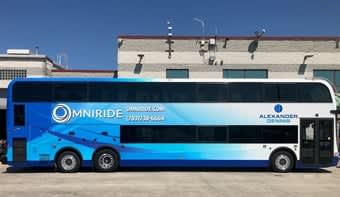
OmniRide, the commuter bus service of the Woodbridge, Virginia-based Potomac and Rappahannock Transportation Commission.
PRTC
OmniRide, the commuter bus service of the Woodbridge, Virginia-based Potomac and Rappahannock Transportation Commission, will test a double-deck commuter bus for the next few weeks, and passengers who climb aboard will be asked to fill out a survey instead of paying a fare.
The bus has a staircase toward the front interior and a video monitor at the staircase so passengers can get an indication of how full the second deck is before climbing the stairs.
The seating configuration on double-deck buses varies but this model, which is manufactured by Alexander Dennis Inc., has 81 seats, including 53 seats on the second deck. The low-floor bus can accommodate up to two passengers in wheelchairs at a time on the lower deck. OmniRide’s current commuter bus fleet is comprised of 57-seat buses manufactured by Motor Coach Industries.
“OmniRide’s staff is constantly looking for ways to better utilize resources,” said PRTC Chair Ruth Anderson. “While no decision has been made about whether or not to add double deck buses to OmniRide’s fleet, it’s clear that operating higher-capacity vehicles would reduce the number of buses needed and the amount of fuel used every day.”
OmniRide staff currently are examining all Express routes to ensure the bus can operate safely within the existing infrastructure, i.e. passing under bridges, making tight turns, and other maneuvers required when serving top destinations including the Pentagon, Metro Stations and downtown Washington, D.C.
While routes are selected for testing, a handful of operators will be trained to drive the 42-foot vehicle, which is 12 feet, 10 inches tall. Then, starting the week of April 8, the double-deck bus will be placed into service for about eight days, said OmniRide Executive Director Bob Schneider.
Passengers who have the opportunity to ride the bus won’t have to pay a fare; instead they’ll be asked to fill out a survey to help OmniRide evaluate the vehicle. OmniRide bus operators and mechanics also will provide input to help determine if double deck buses should be added to OmniRide’s fleet.
More Motorcoach

METRO Opens Submissions for 2026 Motorcoach Awards
Nominations are now being accepted for METRO Magazine’s Operator of the Year and Innovative Operator of the Year awards.
Read More →
Biz Briefs: Alstom Lands Canadian Contract, LYT to Supply California TSP, and More
In METRO's latest installment, we take a look at recent news from Complete Coach Works, Beep, FlixBus, and more partnerships making headlines across the transportation sector.
Read More →
Biz Briefs: RIPTA Unveils New Frontrunners, Clevland RTA Adds New Siemens, and More
In METRO's latest installment, we take a look at recent news from Siemens, Prevost, Dodge, and more partnerships making headlines across the transportation sector.
Read More →
People Movement: Holly Arnold Joins Transdev and More
In this edition, we also cover recent appointments and announcements at Pace, CamTran, MCI, and more, showcasing the individuals helping to shape the future of transportation.
Read More →
ABA Report: Motorcoach Travel Generates $161.6B Economic Impact
The 2025 analysis finds motorcoach travel supported nearly 900,000 jobs and generated $28 billion in federal, state, and local taxes.
Read More →
CharterUP’s Armir Harris on Technology, AI, and the Future of Group Mobility
In a recent episode of METROspectives, CharterUP Founder/CEO Armir Harris discussed the company’s evolution from an online charter bus marketplace into a technology platform supporting public- and private-sector mobility and much more.
Read More →
People Movement: ABC Names John Walsh as Chief Commercial Officer
In this edition, METRO also covers recent appointments and announcements at the DART, STV, and more, showcasing the individuals helping to shape the future of transportation.
Read More →
From Surviving to Thriving: Building Stronger Transportation Organizations
Bus Business Consultants founder Brian Dickson shares lessons on leadership, organizational health, and creating options for long-term success in a changing transportation industry.
Read More →
Biz Briefs: Luminator Marks Milestone and More
From manufacturers and suppliers to transit agencies and motorcoach operators, these updates offer a snapshot of the projects, partnerships and business moves driving the industry forward.
Read More →
ABAF Study Reveals Growing Insurance Crisis for Motorcoach Operators
Preliminary findings show 98% of operators faced premium increases over the past five years, while shrinking insurer participation is putting added pressure on businesses and customers.
Read More →