



A Look Inside C-TRAN’s Eco-Friendly Transit Hub
As cities across the U.S. work toward carbon neutrality and smarter infrastructure, C-TRAN’s new campus expansion in Vancouver, Washington, offers a compelling model for what sustainable public transit facilities can look like. At the heart of the design is mass timber — a renewable, low-carbon material that enhances energy efficiency, reduces construction time and cost, and promotes a healthier, more inviting environment for employees.
Designed by Ankrom Moisan, the facility prioritizes operator well-being and environmental responsibility. From its locally sourced mass plywood panels (MPP) to its biophilic benefits and modular construction, the project represents a thoughtful intersection of innovation and long-term sustainability while helping C-TRAN support the City of Vancouver’s broader green goals.
Check out our photo gallery to see the new campus come to life. Learn more about the project here.
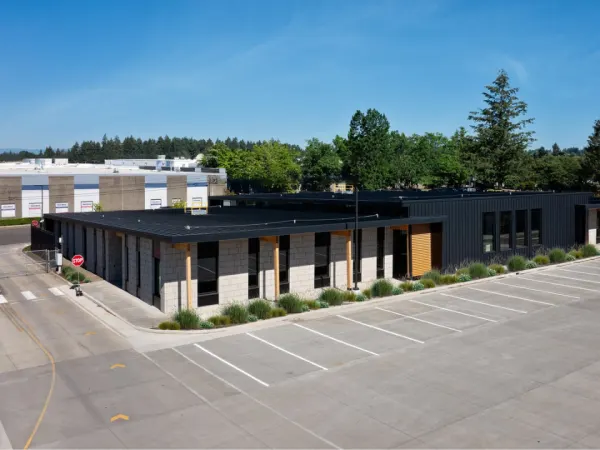
C-TRAN's investment in mass timber for its campus expansion is not just about sustainability — it's about enhancing its workforce's long-term functionality, efficiency, and well-being.
Photo: Shelsi Lindquist
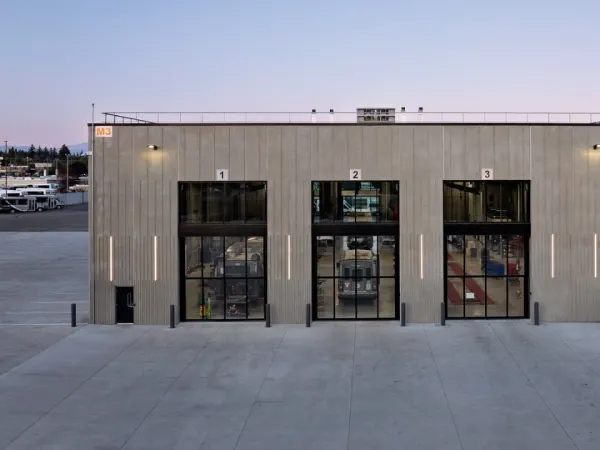
Three of the maintenance bays at C-TRAN’s updated campus, designed for fleet servicing and operator convenience.
Photo: Shelsi Lindquist
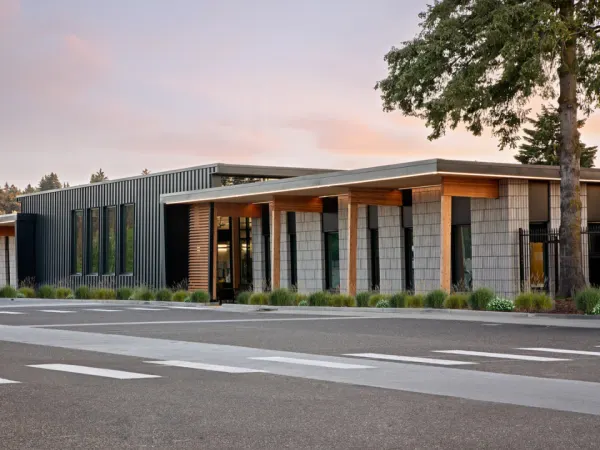
Designed by Portland-based architecture and design firm Ankrom Moisan, the C-TRAN operations building is the firm's first completed mass timber project.
Photo: Shelsi Lindquist
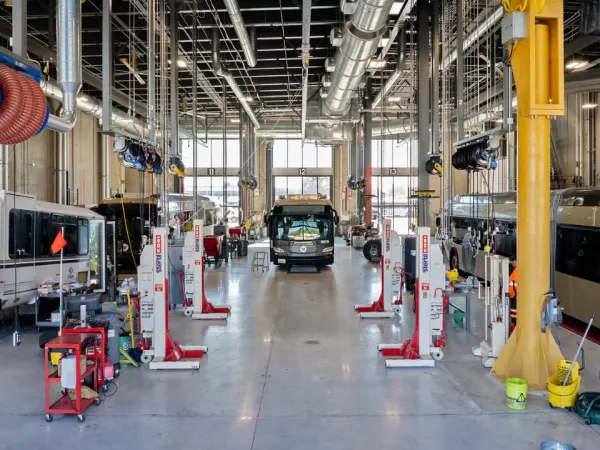
"This was constructed on an active campus, so the faster it went up, the better," said Mariah Kiersey, office, retail, and community studio co-leader/sr. principal at Ankrom Moisan.
Photo: Shelsi Lindquist
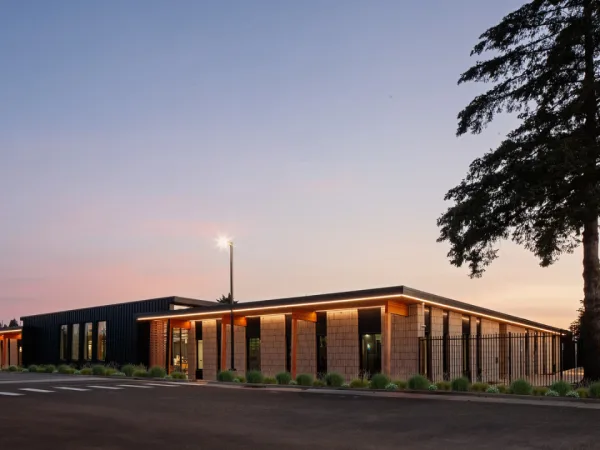
Mass timber enhances energy efficiency, as its natural insulating properties contribute to better thermal performance and reduced energy consumption.
Photo: Shelsi Lindquist
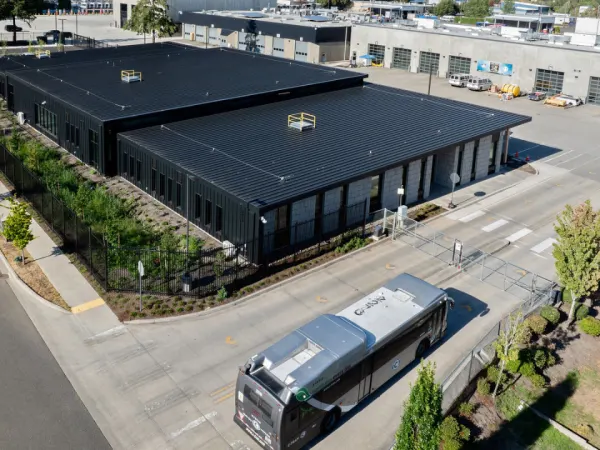
The project's construction was tailored to skirt around daily operations, like fleet maintenance, bus circulation, and staff workspace.
Photo: Shelsi Lindquist
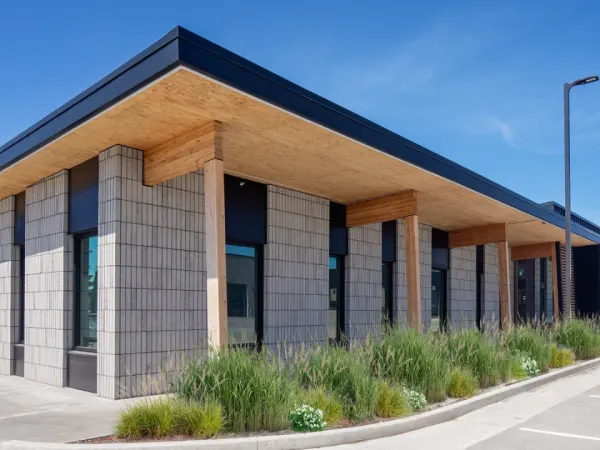
Kiersey reports that mass timber construction can be seen in the airport entry, operator areas, and administrative areas in regions like the Pacific Northwest.
Photo: Shelsi Lindquist
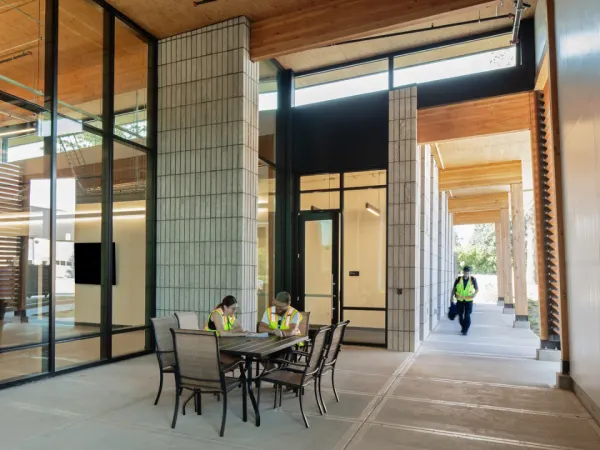
"Freres Engineered Wood provides locally manufactured mass plywood panels (MPP), which utilize efficient wood fiber use and sustainable forestry practices, further strengthening the regional economy," Kiersey said.
Photo: Shelsi Lindquist
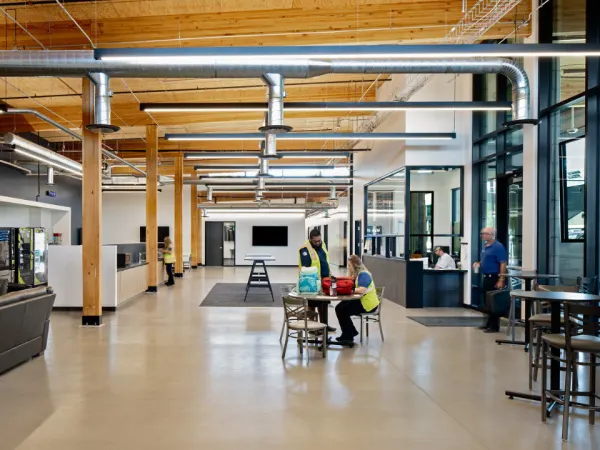
Mass timber construction can be ideal for transit environments. Its properties can support operators' well-being while improving air quality, reducing noise, and lowering carbon emissions.
Photo: Shelsi Lindquist
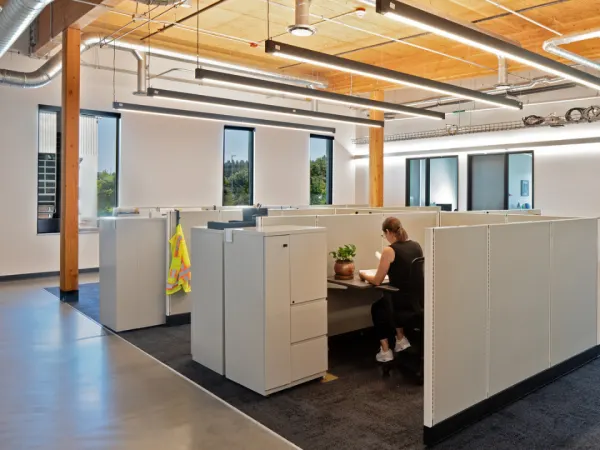
"Wood has been shown to reduce stress and promote relaxation, making it an excellent material for operator break areas, where employees need a calming retreat from the high-pressure demands of public interaction," Kiersey said.
Photo: Shelsi Lindquist
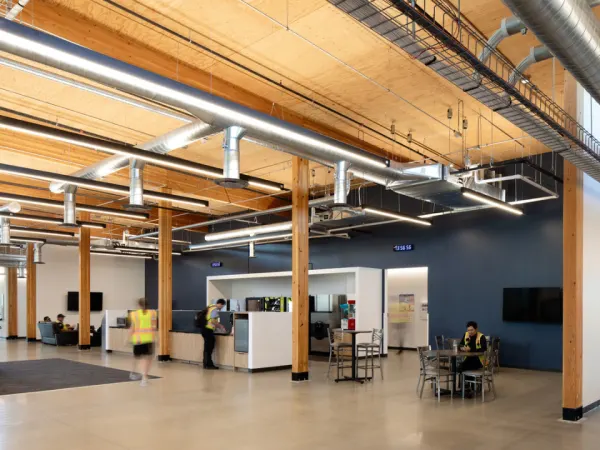
The expansion offers a space for transit operators to lounge in and host training sessions.
Photo: Shelsi Lindquist
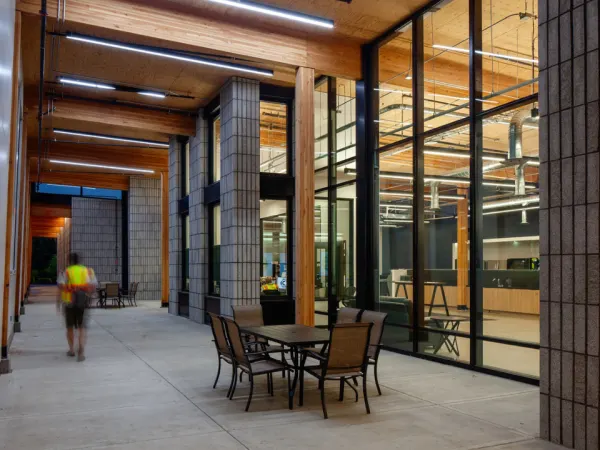
Mass timber is often used for roof structures, canopies, and interior finishes, creating "inviting" and "durable" public spaces while reducing embodied carbon.
Photo: Shelsi Lindquist
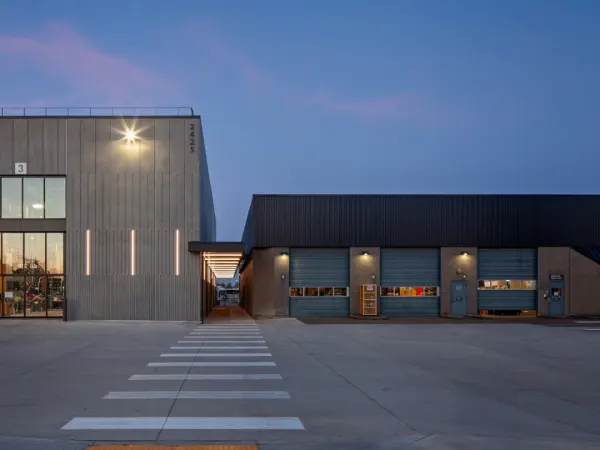
Mass timber offered an optimal cost, availability, and sustainability balance for C-TRAN compared to traditional materials.
Photo: Shelsi Lindquist
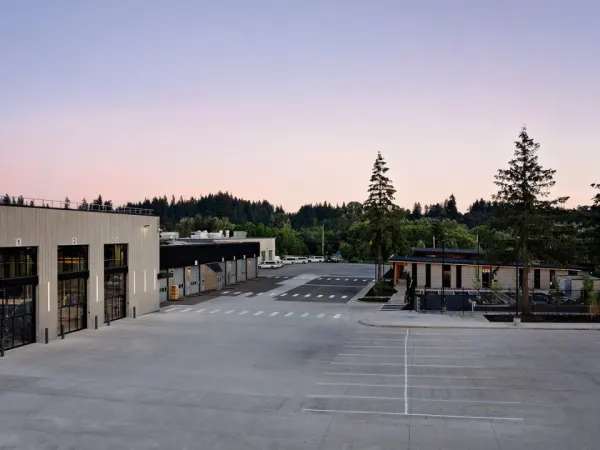
C-TRAN’s new facility combines sleek design and practical upgrades, supporting sustainability, operational flow, and workforce comfort in a single, modern transit hub.
Photo: Shelsi Lindquist
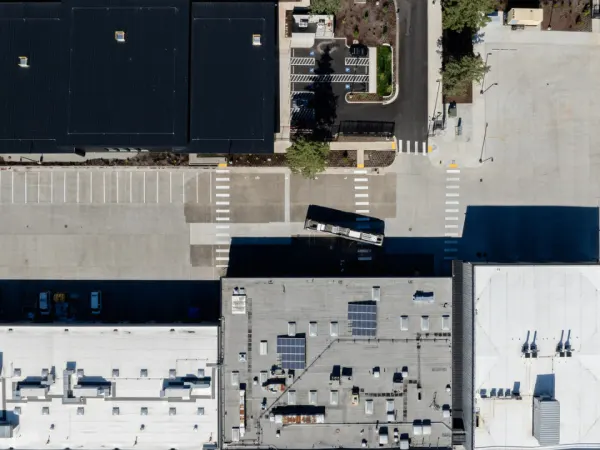
An overhead look at C-TRAN’s expanded campus in Vancouver, Wash., showcases the facility’s efficient layout, designed to support zero-emission fleet operations and future-ready transit infrastructure.
Photo: Shelsi Lindquist
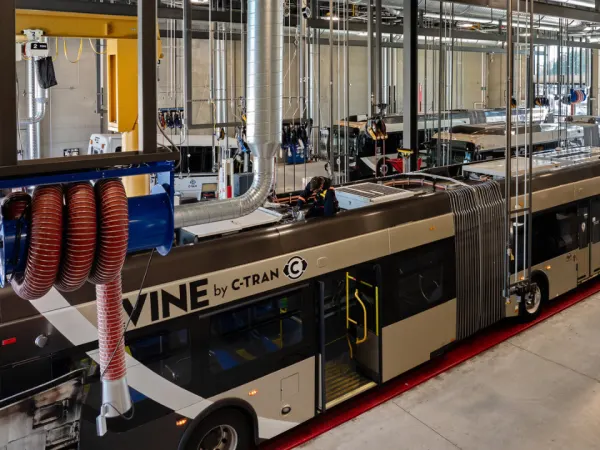
Used in a way that is strategically placed, mass timber could be used in a maintenance facility, depending on the desired bay sizes for small vehicles. Still, this doesn't work well for articulated buses.
Photo: Shelsi Lindquist