



ABA Releases 2020 Motorcoach Industry Closure Data
The data collected by FMCSA shows a surge in losses of authority for motorcoach operators in 2020, which means these companies are no longer providing transportation, in some cases forever.
IMG
The American Bus Association (ABA) has released motorcoach industry closure data gathered from the Federal Motor Carrier Safety Administration (FMCSA).
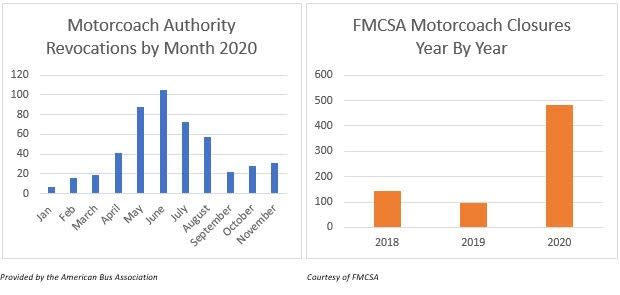
According to FMCSA, in a typical year such as 2018 or 2019, the motorcoach industry would expect to see an average of 100-120 passenger companies lose operating authority.
The data collected by FMCSA shows a surge in losses of authority for motorcoach operators in 2020, which means these companies are no longer providing transportation, in some cases forever. There have been nearly 500 companies who have lost their operating authority, whether voluntarily or involuntarily, so far this year (482 through Nov. 30), a 400% increase over 2019. Nearly 72% of these losses of authority occurred between April and August, during the height of the pandemic.
ABA
According to FMCSA records, only 26 (5%) of the closures in 2020 appear planned in advance, with an “Out of Business” form filed with FMCSA. It is unknown how many other companies remain open in “name” only or on the brink of formal closure.
"2020 has been an extraordinary year in terms of companies no longer operating buses," said Peter Pantuso, ABA president and CEO. "Between April and August 2020, we saw the equivalent of nearly three years of closures in just four months. I do not know of any other transportation industry impacted as severely by this pandemic as the motorcoach industry. Our industry is unique, and we need a bridge to a time of recovery, which is at least 12 to 24 months away."
It is important to note that the motorcoach industry is a capital-intensive industry, where the largest cost are the costs of equipment and insurance with payments at the mercy of deferments by lenders and vendors. With the reduced demand for transportation services because of the pandemic these numbers could significantly increase in the future.
More Motorcoach

METRO Opens Submissions for 2026 Motorcoach Awards
Nominations are now being accepted for METRO Magazine’s Operator of the Year and Innovative Operator of the Year awards.
Read More →
Biz Briefs: Alstom Lands Canadian Contract, LYT to Supply California TSP, and More
In METRO's latest installment, we take a look at recent news from Complete Coach Works, Beep, FlixBus, and more partnerships making headlines across the transportation sector.
Read More →
Biz Briefs: RIPTA Unveils New Frontrunners, Clevland RTA Adds New Siemens, and More
In METRO's latest installment, we take a look at recent news from Siemens, Prevost, Dodge, and more partnerships making headlines across the transportation sector.
Read More →
People Movement: Holly Arnold Joins Transdev and More
In this edition, we also cover recent appointments and announcements at Pace, CamTran, MCI, and more, showcasing the individuals helping to shape the future of transportation.
Read More →
ABA Report: Motorcoach Travel Generates $161.6B Economic Impact
The 2025 analysis finds motorcoach travel supported nearly 900,000 jobs and generated $28 billion in federal, state, and local taxes.
Read More →
CharterUP’s Armir Harris on Technology, AI, and the Future of Group Mobility
In a recent episode of METROspectives, CharterUP Founder/CEO Armir Harris discussed the company’s evolution from an online charter bus marketplace into a technology platform supporting public- and private-sector mobility and much more.
Read More →
People Movement: ABC Names John Walsh as Chief Commercial Officer
In this edition, METRO also covers recent appointments and announcements at the DART, STV, and more, showcasing the individuals helping to shape the future of transportation.
Read More →
From Surviving to Thriving: Building Stronger Transportation Organizations
Bus Business Consultants founder Brian Dickson shares lessons on leadership, organizational health, and creating options for long-term success in a changing transportation industry.
Read More →
Biz Briefs: Luminator Marks Milestone and More
From manufacturers and suppliers to transit agencies and motorcoach operators, these updates offer a snapshot of the projects, partnerships and business moves driving the industry forward.
Read More →
ABAF Study Reveals Growing Insurance Crisis for Motorcoach Operators
Preliminary findings show 98% of operators faced premium increases over the past five years, while shrinking insurer participation is putting added pressure on businesses and customers.
Read More →