



Pittsburgh Regional Transit Executes $150M FTA Grant Agreement for BRT Line
The $150 million grant means the project has all funding in-hand to construct the $291 million system, which will provide more reliable, convenient, and faster service.

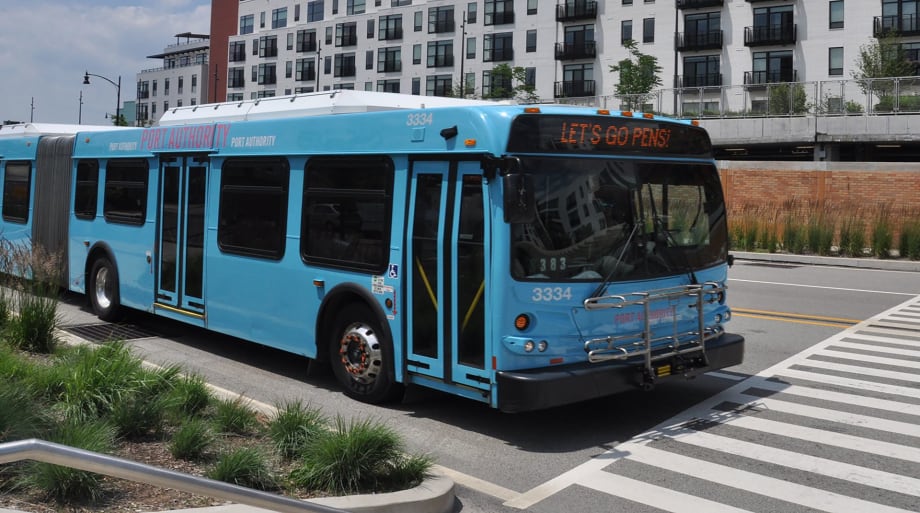
PRT's BRT line — dubbed The University Line — will include 23 new stations, exclusive transit-only and bicycle lanes, intersection improvements, accessible ramps, and more.
Photo: PRT
Pittsburgh Regional Transit executed a grant agreement with the Federal Transit Administration (FTA), the final step of securing all federal funding for the Downtown-Uptown-Oakland Bus Rapid Transit (BRT) project.
The FTA announced in 2020 it would allocate the funding for the project, and has since then developed, reviewed, and approved the grant that was awarded today.
The $150 million grant means the project has all funding in-hand to construct the $291 million system, which will provide more reliable, convenient, and faster service with improved amenities, safety features, and transit connections in downtown Pittsburgh, Uptown, and Oakland.
“The Downtown-Uptown-Oakland BRT line will improve transit speed and reliability on one of the highest transit ridership corridors in Pittsburgh,” said FTA Deputy Administrator Veronica Vanterpool, who joined PRT and local officials at the David L. Lawrence Convention Center to announce the grant award. “We are pleased to support this project that will better connect communities to jobs and education.”
Pittsburgh Regional Transit’s BRT Line
The BRT line — dubbed The University Line — will include 23 new stations, exclusive transit-only and bicycle lanes, intersection improvements, accessible ramps, and more.
PRT serves more than 30,000 people a day in the Downtown-Uptown-Oakland corridor, connecting the second- and third-largest job centers in Pennsylvania, and five universities — University of Pittsburgh, Carnegie Mellon University, Duquesne University, Point Park University, and Carlow University.
The infrastructure upgrades will improve safety, speed, and efficiency of the buses that operate within the corridor and provide riders with more amenities at each station, like benches, ticket vending machines, increased lighting, and security.
The University Line will improve transit service reliability, reduce bus bunching, and will allow PRT to redeploy the hours saved elsewhere in the county. The University Line is also expected to help spur development and create additional residential and business opportunities.
“I want to thank all of our partners who for years have worked to ensure this project remained a priority,” said PRT CEO Katharine Kelleman. “This project represents a tremendous investment in our neighborhoods, one that will serve to improve the lives of thousands of riders who travel within this corridor every day. Modern cities demand world-class transit systems that move people, connect communities, and drive vitality, and I’m proud to have helped make this project a reality.”
Funding the University Line
In addition to the $150 million grant from the FTA, The University Line is being funded through the American Rescue Plan ($19.3 million), the Congestion Mitigation Air Quality Program ($9.3 million), Allegheny County ($30 million), the City of Pittsburgh ($8.8 million), and PRT ($73.6 million).
“We are thankful to have the PRT direct meaningful regional investments in our neighborhoods. Their work to provide accessibility and connectivity within our community’s bridges gaps that exist between our core needs of housing, jobs, culture and the arts. When we collectively enable access to affordable and quality housing and jobs, we create environments where people can thrive,” said Susheela Nemani-Stanger, executive director of Pittsburgh’s Urban Redevelopment Authority. “This project removes obstacles, and we are pleased to play a role in its completion.”
In March, PRT’s board approved a $28 million contract with Independence Excavating Inc. for the first phase of construction in downtown Pittsburgh. Construction is expected to begin this fall.
More Bus

Report: Transit Bus Manufacturing Supports 34,100 Jobs, $5.1B in GDP
The “Buses Mean Business” report examines the transit bus manufacturing industry’s economic footprint, supply chain, and rising demand for vehicle replacements.
Read More →
Biz Briefs: New Flyer Delivers in Columbus, Houston, Beep and Freebee Merge, and More
In this edition of Biz Briefs, we spotlight the latest developments shaping the future of mobility.
Read More →
People Movement: Dan Dipert Coaches Adds Third-Generation Leader, Keolis Names New Valley Metro VP/GM, and More
In this edition, we also cover recent appointments and announcements at the Wabtec, SilverRide, HNTB, and more, showcasing the individuals helping to shape the future of transportation.
Read More →
New York MTA Plans Largest Bus Fleet Upgrade in More Than a Decade
The agency is seeking manufacturers for 650 new CNG buses to replace aging vehicles, improve reliability, and advance its broader fleet modernization strategy.
Read More →
Building a Flexible Path to Transit Electrification
John Hroncich discusses BAE Systems’ modular and scalable approach, lessons learned from decades of real-world operations, and how agencies can identify electrification strategies that fit their fleets.
Read More →
Bus Tech Talk: Keeping Transit Technicians Ahead of the Technology Curve
LA Metro’s Obed Mejia discusses technician training, evolving maintenance technology, fleet replacement, and strategies for getting the most out of today’s transit fleets.
Read More →
Biz Briefs: RIPTA Unveils New Frontrunners, Clevland RTA Adds New Siemens, and More
In METRO's latest installment, we take a look at recent news from Siemens, Prevost, Dodge, and more partnerships making headlines across the transportation sector.
Read More →
People Movement: Holly Arnold Joins Transdev and More
In this edition, we also cover recent appointments and announcements at Pace, CamTran, MCI, and more, showcasing the individuals helping to shape the future of transportation.
Read More →
The High Cost of Transit Buses: Industry Leaders Look to Procurement Reform
Transit leaders and policymakers examine how standardized bus designs, streamlined procurement, and predictable funding could help agencies stretch budgets and deliver better service.
Read More →
The Business Voice Behind Public Transportation
As chair of APTA’s Business Members Board of Governors, Ray Melleady explains how more than 850 business members are partnering with transit agencies to advance funding, innovation, and industry-wide collaboration.
Read More →