



MTI Report: 71% of Americans Would Pay Higher Gas Taxes for Safer Roads
The survey series also assesses public support for raising transportation revenue through higher federal gas taxes or a new mileage fee.

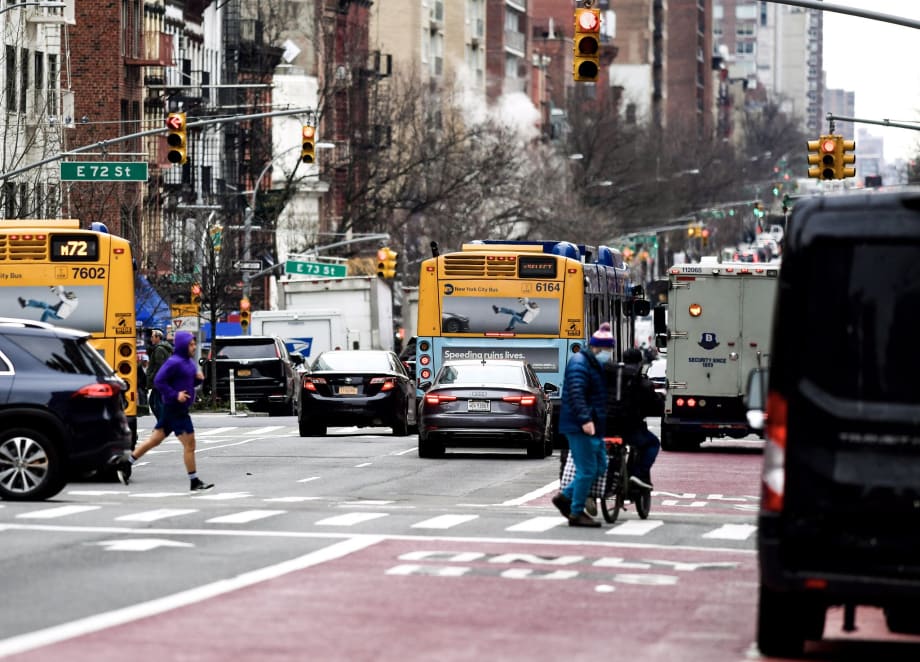
In the 2023 survey, 92% of respondents rated improving road and highway maintenance as a somewhat or very important priority for spending federal transportation dollars.
Photo: Marc A. Hermann
The Mineta Transportation Institute (MTI) released the results from its 14th annual survey in a series that explores public priorities for the federal transportation program. The survey series also assesses public support for raising transportation revenue through higher federal gas taxes or a new mileage fee.
“A supermajority of the survey respondents, 70%, said they would support raising the federal gas tax rate to make roads and highways safer,” says study co-author Asha Weinstein Agrawal. “Perhaps that is because, sadly, so many have experienced collisions.”
The survey found that one in six respondents had experienced a motor vehicle collision in just the previous year, whether as a vehicle occupant, cyclist, or pedestrian. Also, one in nine of all respondents had suffered an injury from a collision during the previous year.
A Call for Better Road Maintenance
Along with safety, respondents wanted to see better road maintenance.
As co-author Hilary Nixon, PhD, explains: “When we ask respondents about their overall goals for the transportation system, maintenance has always been a top priority, year after year.”
In the 2023 survey, 92% of respondents rated improving road and highway maintenance as a somewhat or very important priority for spending federal transportation dollars. Also, 71% of respondents said they would support raising the federal gas tax rate if the money were dedicated to projects for maintaining streets, roads, and highways.
New Federal Mileage Scheme
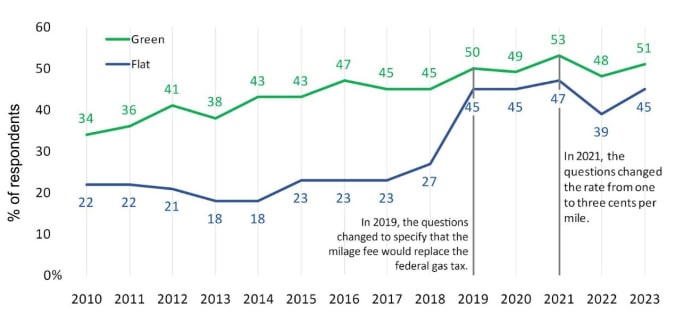
Trends in Support for Adopting the Flat and Green Mileage Fee Options.
Photo: MTI
The survey also assessed public support for the idea of adopting a new federal mileage fee. Key findings include:
51% of respondents supported the idea of replacing the gas tax with a “green” mileage fee. The rate for this fee per mile driven would vary depending upon how much the vehicle pollutes. On average, vehicles would be charged 3 cents per mile, but vehicles that pollute less would be charged less, and vehicles that pollute more would be charged more.
53% thought that electric vehicles should pay a lower mileage-fee rate than gas and diesel vehicles.
59% of respondents thought low-income drivers should pay a lower mileage fee rate than higher-income drivers.
The survey data for this study was collected from a nationally representative sample of 2,531 adults living in the U.S. Respondents completed the online survey in February and March of 2023.
More Security and Safety

San Diego MTS Approves New Fare Evasion Penalty Program
The new administrative process will move eligible violations out of the criminal court system, cap penalties at $125, and provide flexible payment options for riders.
Read More →
RTC of Southern Nevada Reports 29% Drop in Transit Operator Assaults
The agency credits expanded security measures, employee training, and technology investments for improvements in transit safety, while security officers have responded to 19 suspected overdoses since July.
Read More →
Public Transit Conference Returning to GFX in 2027, Call for Papers Now Open
The Call for Papers is now open, allowing transit agency professionals and industry experts to help shape the PTC educational program by submitting session ideas for consideration.
Read More →
Safe Transit Act Proposes New Security Requirements for Federal Transit Funding
Proposed legislation would link federal transit dollars to safety measures while requiring security investments, onboard cameras, and new fare collection standards.
Read More →
FTA Ends Direct Oversight of MBTA Safety Actions
The federal agency closed its remaining special directive to the Massachusetts Department of Public Utilities following a safety review that began in 2022.
Read More →
Transit Agencies Highlight Safety Gains at National Summit
Leaders from 15 major transit systems shared crime-reduction results and safety initiatives while discussing the role of continued federal support.
Read More →
DART Launches Major Security, Fare Enforcement Initiative
The 90-day demonstration will deploy coordinated security teams at five light rail stations while testing controlled access and gathering data to guide future investments.
Read More →
RTD Launches NextRide App to Consolidate Trip Planning, Fares, Security Reporting
The app expands on RTD’s existing NextRide web application and allows customers to view real-time vehicle locations and service alerts, purchase and store digital fares, and access customer support.
Read More →
TAPTCO Updates OSHA Compliance Training for Transit Maintenance Operations
The revamped program addresses 26 OSHA standards for maintenance facilities, with TAPTCO pointing to training, documentation, and everyday shop hazards as continuing challenges for transit operations.
Read More →
FRA Announces $5.3B in Rail Investments, Including $2B for Amtrak
Funding will support grade-crossing improvements, infrastructure upgrades, and new Amtrak equipment in 23 states.
Read More →