Report Confirms Public Transit is Good for Northern Virginia’s Environment
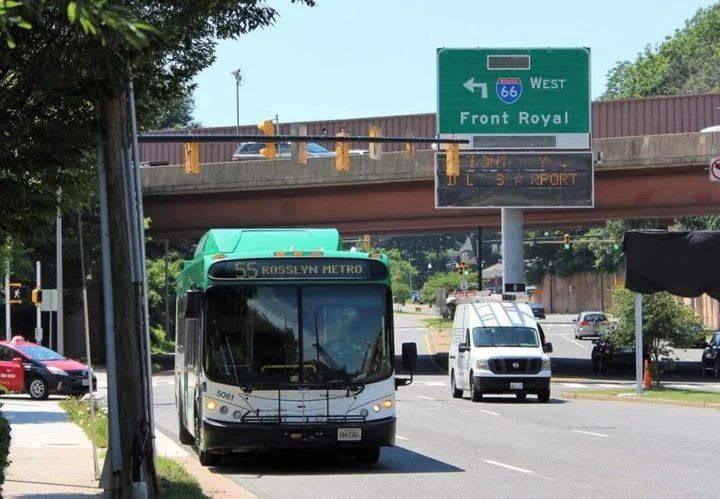
The "Climate Benefits of Transit in Northern Virginia" report concludes that while personal vehicles are a major cause of pollution, riding trains and buses can mitigate these emissions.
The "Climate Benefits of Transit in Northern Virginia" report concludes that while personal vehicles are a major cause of pollution, riding trains and buses can mitigate these emissions.
Photo: NVTC
2 min to read
A new report from the Northern Virginia Transportation Commission (NVTC) finds the use of public transit in Northern Virginia reduces up to 160,000 metric tons of carbon dioxide emissions each year and that even diesel-fueled buses provide greater benefits to the environment than people driving in cars, SUVs, and light trucks.
The use of public transit in Northern Virginia reduces 120,000 to 160,000 metric tons of CO2 annually.
All bus fuel types, even diesel buses, are a much greater climate option than using cars.
While electric cars might eventually produce fewer emissions per mile than fossil fuel buses, electric cars need to make up a much larger proportion of on-road vehicles before other bus fuel types become better options.
There are opportunities for the region’s jurisdictions and transit agencies to learn from each other when it comes to developing policies that consider how transit could benefit the environment.
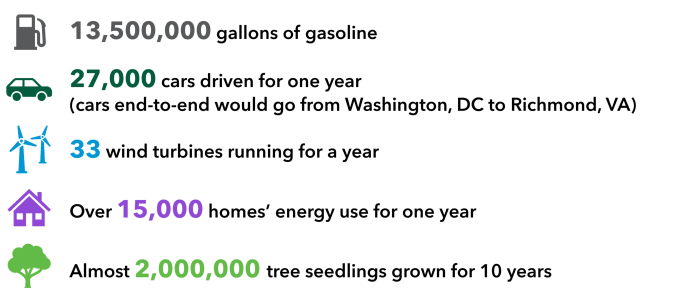
What does 120,000 to 160,000 metric tons of carbon dioxide mean?
Photo: NVTC
Northern Virginia Recommendations
"Transportation is the number one source of greenhouse gas emissions in the United States, with over half of those emissions generated by cars, SUVs and pickup trucks," said NVTC Sr. Program Manager Xavier Harmony, who co-authored the report with Senior Program Analyst Sophie Spiliotopoulos. “Despite improvements in vehicle fuel efficiency, transportation emissions have been creeping steadily upward for decades."
"As Northern Virginia continues to attract new residents and businesses, we need to think about ways to make it a healthy region for our children and grandchildren. This report bolsters what we already know," said NVTC Chair Matt de Ferranti, "Encouraging as many people as possible in our region to ride public transit is good for the environment. It reduces greenhouse gas emissions and traffic congestion, helping save our climate for generations to come."
See how three Gillig battery-electric buses powered festival stages while the agency’s new Park & Ride service carried approximately 1,000 attendees, demonstrating another potential use for transit agencies’ electric fleets.
The new name represents a renewed vision for the nonprofit focused on advancing clean, equitable, and affordable transportation solutions that move people and goods.
John Hroncich discusses BAE Systems’ modular and scalable approach, lessons learned from decades of real-world operations, and how agencies can identify electrification strategies that fit their fleets.
UB, transportation solutions provider WeDriveU, and fleet electrification specialist Zenobē marked the deployment in the presence of students, university administrators, and local officials.
From manufacturers and suppliers to transit agencies and motorcoach operators, these updates offer a snapshot of the projects, partnerships and business moves driving the industry forward.
The agency’s maintenance chief discusses leadership, workforce development, zero-emission technology, and preparing technicians for the future of public transportation.
The firm will work with CTDOT and RVT to define the facility layout, operational requirements, and long-term flexibility for RVT’s growing electric fleet.
The fast-charging infrastructure will help extend electric bus range, improve fleet utilization, and support DASH's goal of transitioning to a fully zero-emission fleet.