



Events That Shaped Public Transportation
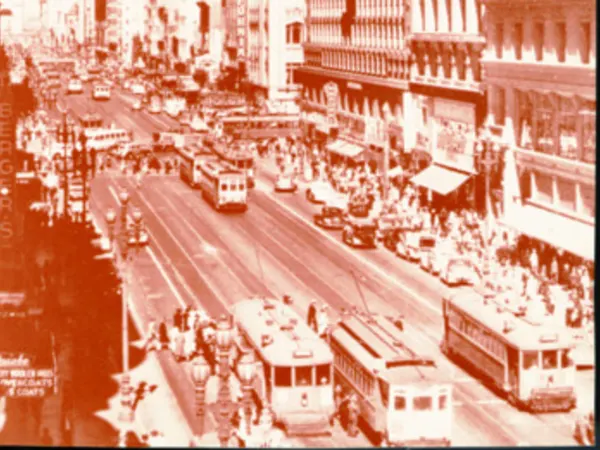
In 1912, San Francisco becomes the first U.S. metropolis to publicly operate a street railway with the opening of the San Francisco Municipal Railway. A year later, the last horse-drawn street railway closed, beginning a trend in big cities throughout the country. In 1917, New York closes it's final horse-drawn street rail system. Meanwhile, in New York and Pittsburgh double-deck street cars are introduced.
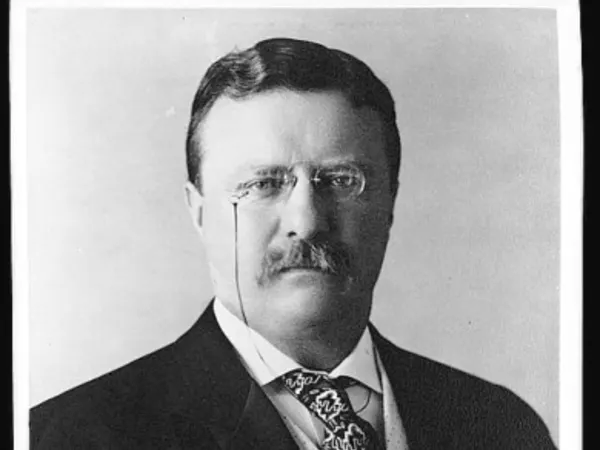
In August 1914, the Panama Canal opens, culminating a series of extensive transportation-related initiatives completed by Theodore Roosevelt. In his two terms as president from 1901 to 1909, Roosevelt uses a series of antitrust lawsuits to successfully disolve the nation's railroad monopolies, opening the door for alternate modes of transport. In 1905, Roosevelt founds the National Forest Service, which leads to the protection of national parks and the creation of a vast network of low-volume, federally subsidized roads. National forest areas also create opportunities for extensive sightseeing bus business.
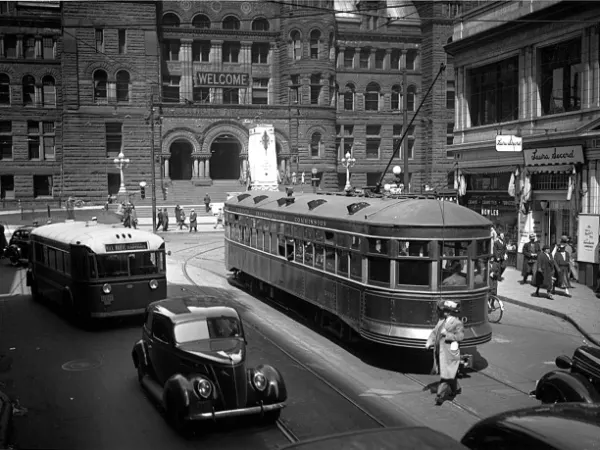
In 1921, following an Ontario Provincial Act in 1920, the Toronto Transit Commission (TTC) is created, assuming responsibility for nine separate public transit systems within the limits of Canada's largest city. Primarily a streetcar operation at the time, the TTC begins running its first buses. Today, the TTC runs 1,600 buses and more than 1,000 railcars, making it one of the five largest public transit properties in North America.
Also in 1921, New York begins what is considered to be America's first successful trackless trolley bus operation. L.A.'s earlier version only lasted from 1910 to 1915.
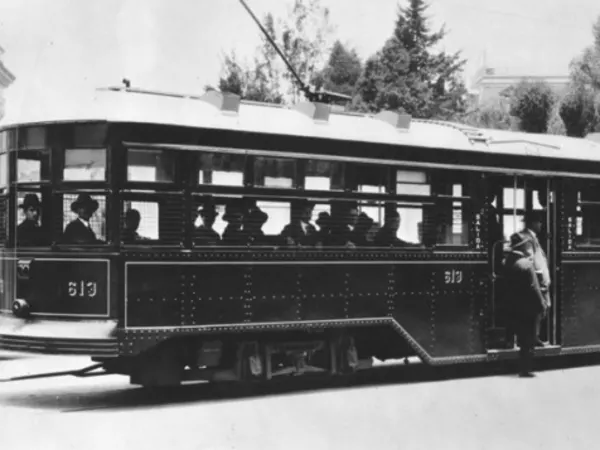
In 1926, Urban transit ridership in the U.S. reaches 17.2 billion, with more than three-fourths, or about 12.9 billion, of these passengers riding streetcars. Approximately 2.4 billion ride subways.
According to statistics provided by the American Public Transportation Association (APTA), ridership in 1926 was almost twice as high as in 2000, despite the much larger population of the country today. The rise of the automobile has contributed significantly to this discrepancy.
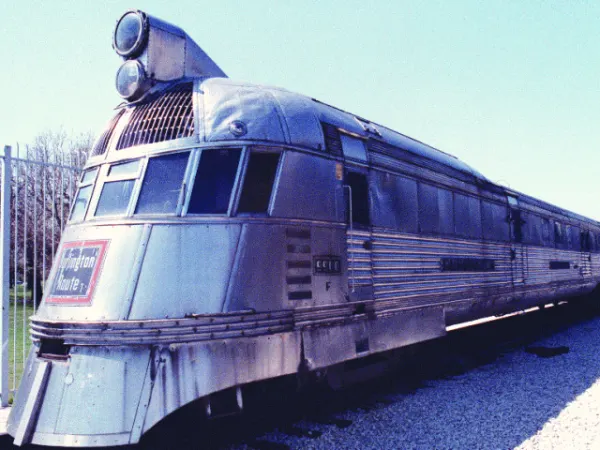
1934 marks the introduction of the Pioneer Zephyr, America's first diesel-powered, streamlined passenger train. On May 26, the Chicago Burlington & Quincy Railroad Co. staged a milestone transportation event - a 1,000 mile record breaking, non-stop run of the Pioneer Zephyr from Denver to the Century of Progess World's Fair in Chicago. Reaching speeds of more than 100 mph and averaging about 70 mph, the train makes the trip in 14 hours. The Zephyr represents a precursor to thousands of diesels, which, after World War II, replaces steam locomotives on virtually every railroad in the country.
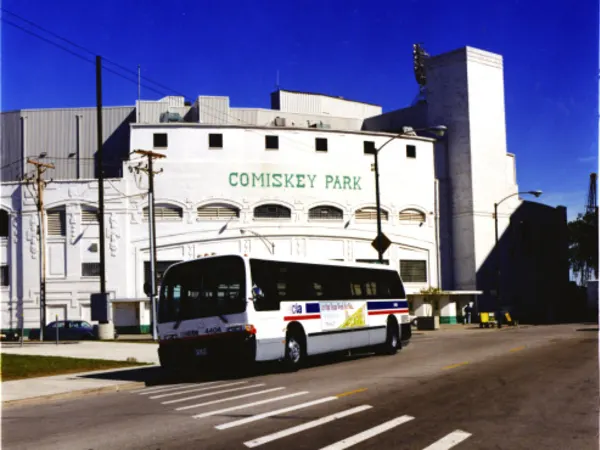
In 1945, the Chicago Transit Authority (CTA) is created on April 12 and given the right to own and operate a local unified transit system. The same year, CTA purchases the Chicago Rapid Transit and Chicago Surface Lines systems, and in 1947, takes over all "L" and streetcar operations in the city. Today, CTA operates approximately 2,000 buses and 1,190 rapid transit cars that combined provide nearly 1.5 million passenger trips a day.
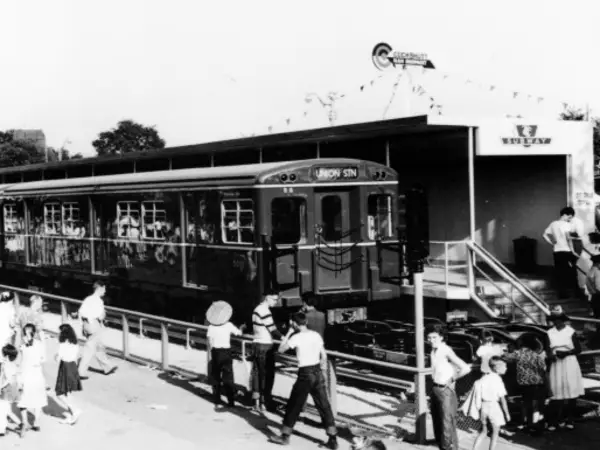
In 1949, to help alleviate traffic on its narrow streets, work begins on Toronto's Yonge Street subway - the first subway line in Canada. The subway's cost is an estimated $50.5 million.
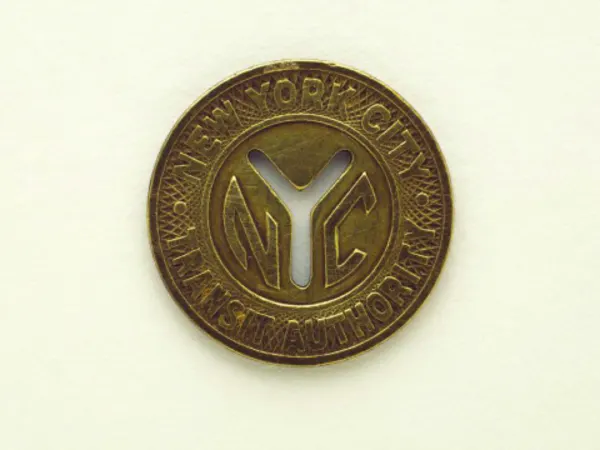
On June 15, 1953, the New York City Tranit Authority, now MTA New York City Transit, becomes responsible for overseeing the operation of the subway system. The same year, the transit authority introduces brass subway tokens.
GM makes news this year by introducing air suspension as a standard feature on its diesel buses, both intercity and transit models.
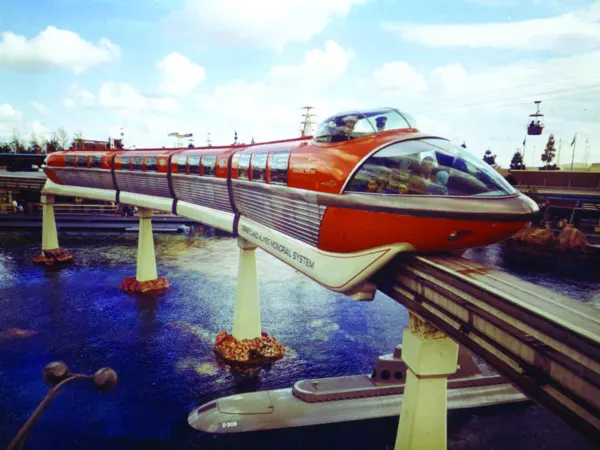
In 1959, the completion of Disneyland's (Anaheim, Calif.) monorail system represents the first time a U.S. operation brings an Alweg monorail overhead railway system into daily use. The one-mile line, which runs through Tomorrowland, is able to negotiate gradients of up to 9.5%. Swedish industrial Dr. Axel Lennart Wenner-Gren develops the system, for which the technology is named.
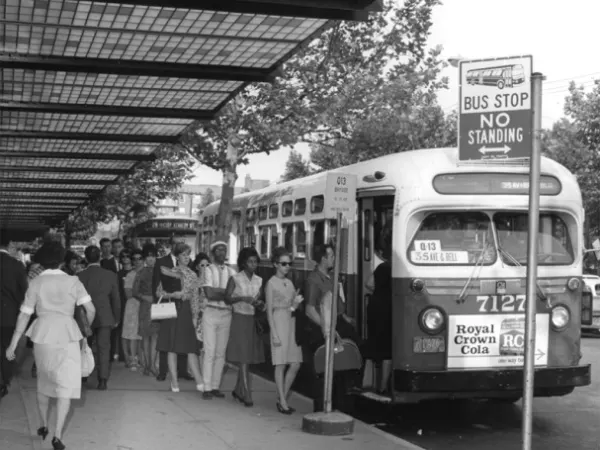
In 1959, the first bus ads for New York City debut. The first advertiser for the new medium is the Saturday Evening Post. Others include Seven-Up, Coca Cola and L&M cigarettes. Although outside bus advertiseing has been an accepted medium for many years in major cities throughout the world, 1959 is the first year New York City authorities allow it.
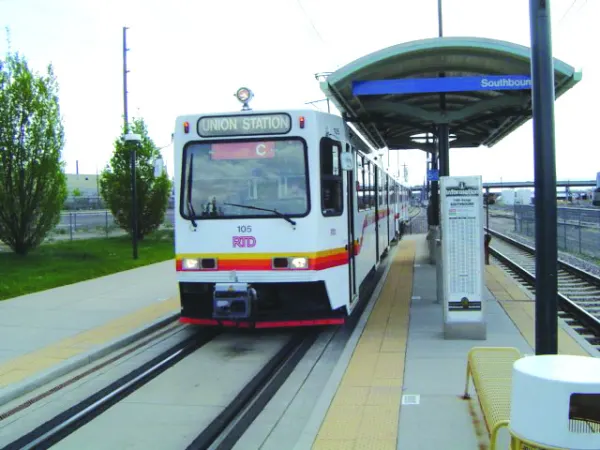
In 1975, the first national conference on light rail is held June 22-25 in Philadelphia, drawing about 550 transit professionals. Speakers from the U.S., Canada and West Germany expound on the topic of light rail transit, emphasizing advantages such as the costs of construction and operation. Conferees ride a local light rail line and take a trip to an assembly plant where light rail vehicles are being built.
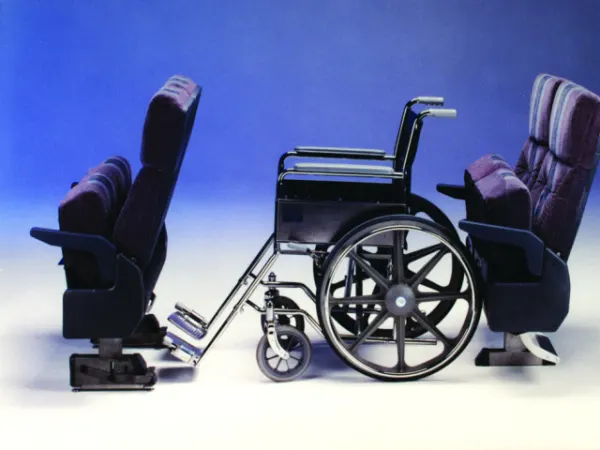
In 1990, the Americans with Disabilities Act (ADA) is signed into law by President George Bush, requiring accessibility for mobility-impaired riders to virtually all forms of transit.
The act represents a paradigm shift in how transit agencies provide service, with new minimum accessibility standards set for vehicles, stations, paratransit plans, equipment and more. The ADA also results in higher equipment costs for transit services and a slew of complicated compliance questions.
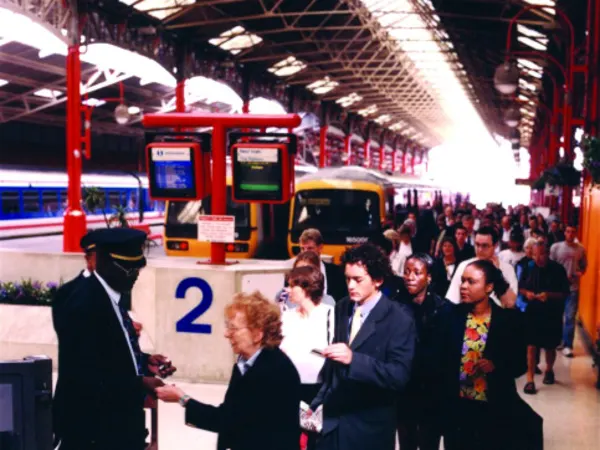
In 1995, passenger trips on U.S. transit total 8.5 billion, up almost a quarter from 1994, according to APTA. Light rail shows the most impressive increase, up nearly 4% at 243 million total trips. Motorcoaches and transit buses provide 5.4 billion rides, followed by heavy rail, which has 2.18 billions trips. This year represents the largest one-year ridership increase in the U.S. since World War II. Unfortunately, of agencies reporting, Canadian rides total 1.74 billion, down 35% from the previous year.
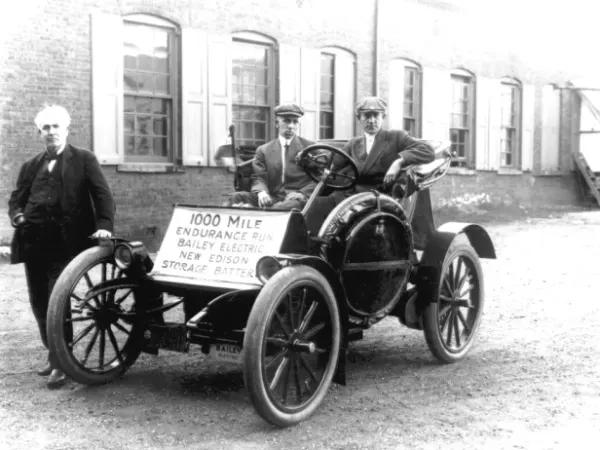
In 1909, after eight years of research and more than $1 million spent, Thomas Edison completes a storage battery for use in electric streetcars and railways. The concept for Edison's battery, which uses an alkaline solution in place of an acid, is still used today in many transit applications. In the same year, Edison also predicts that overhead trolley systems will never be an effective means of transportation.
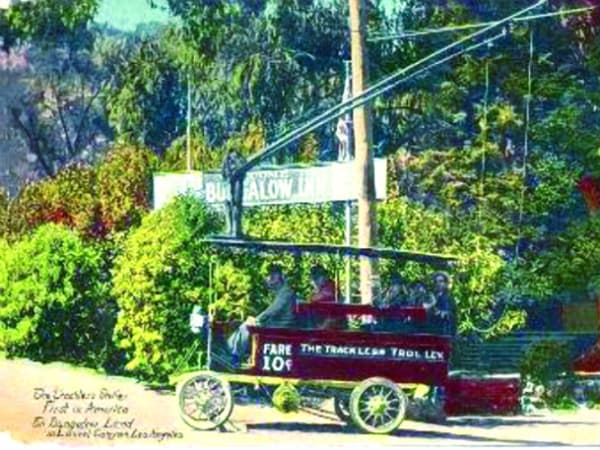
In 1910, Revenue service begins on the nation's first trackless trolley bus line in the Los Angeles area. Laurel Canyon Utilities Co. operates the Bungalow-town Line in Hollywood, which at the time is not in the L.A. city limits. Largely unsuccessful, the line lasts only five years, but it serves as the nation's first experiment with trackless trolley technology during an era of interurban and streetcar preeminence.
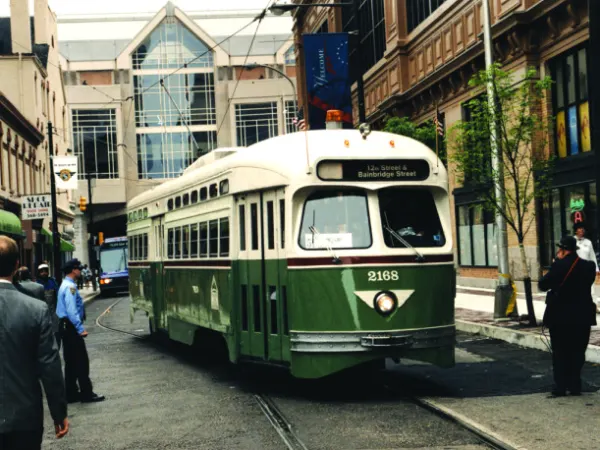
In 1930, the Electric Railways Presidents' Conference Committee (PCC) is set up to examine ways in which streetcars can match the comfort, image and performance of their primary competition - buses, trolleys and private automobiles.
The committee decides to develope a modern streetcar using the most advanced technology of the time.
After one of the most expensive research and development campaigns in the history of the American transit, the PCC car is created. With their first application in Brooklyn in 1935, PCC cars instantly enhance the competitive position of public transit against other modes of transportation. They are still manufactured today.
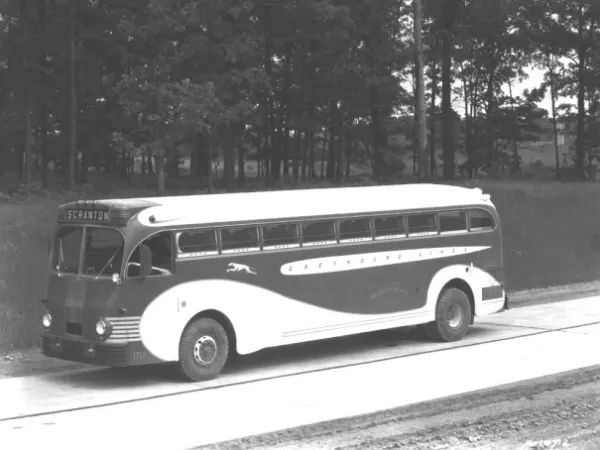
Founded in 1914 as the Mesaba Transportation Co. and then renamed twice- the Motor Transit Corp. in 1922 and the Northland Transportation Co. in 1926- North America's largest coach operation incorporates under the name Greyhound Lines in 1930.
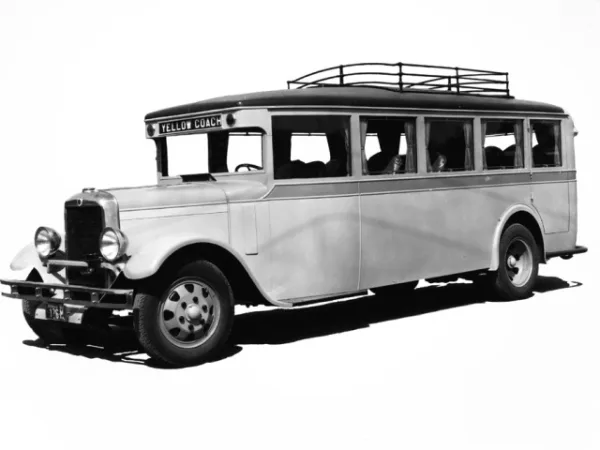
In 1939, the first American buses equipped with hydraulic transmissions are introduced in New York City. Up to this point, transmission technology in other parts of the world failed to achieve interlock at high speeds. However, developers at Yellow Coach Factory are able to overcome this technical problem on American hydraulic transmissions, ushering in a new phase of bus dominance tah is solidified in the post-war era. Coincidentally, 1939 also sees the first dedicated bus lane constructed in Chicago. Later, 1940 becomes the first year that bus ridership exceeds railway ridership in the U.S.
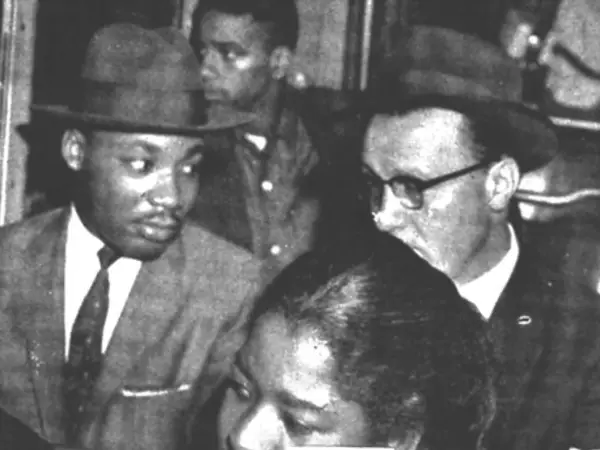
In 1961, a group of civil rights workers known as the "Freedom Riders" ride Greyhound buses into the South to protest state-sponsored segregation on bus service. Later in the year, the Interstate Commerce Commission outlaws all segregation on buses.
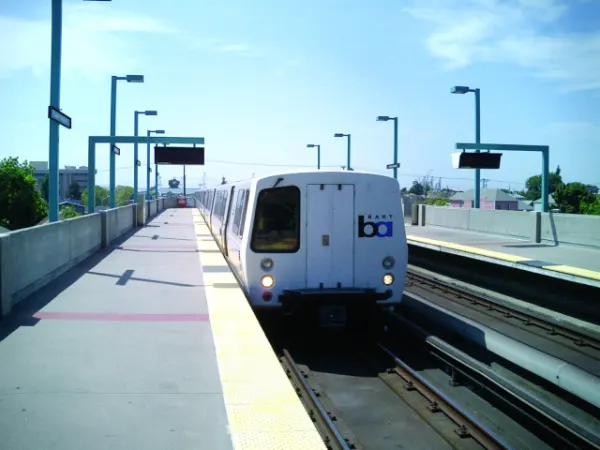
In 1964, President Lyndon Johnson officiates the groundbreaking ceremonies for the Bay Area Rapid Transit's (BART) Diablo Test Track. The 4.4 mile track in the San Francisco area is used to develope new designs for BART's transit car and automatic train control system. It is the first phase of a billion-dollar transit network.
In the same year, the Urban Mass Transportation Assistance Act of 1964 authorizes $375 million in matching funds for urban transit projeccts.
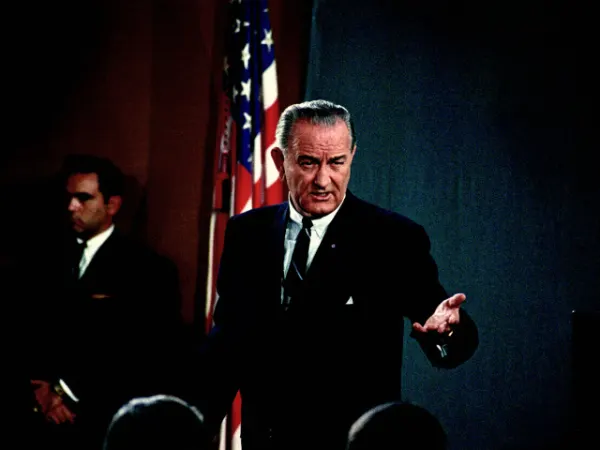
In 1966, President Johnson signs the Department of Transportation (DOT) Act on Oct. 15, calling it "the most important transportation legislation of our time." The department begins operations on April1 of the following year as a cabinet-level agency of the U.S. government, with Alan Boyd serving as its first secretary. The DOT seeks to administer policies for enhancing the safety and efficiency of the national transportation system.
Meanwhile, the Rhode Island Public Transit Authority becomes the first statewide transit agency.
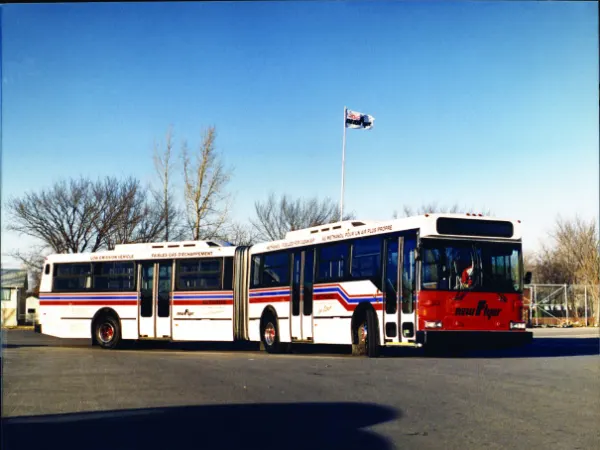
In 1976, transit authorities across the country begin buying articulated buses, which are significantly longer than standard buses and use accordion-like sections to allow easier turning.
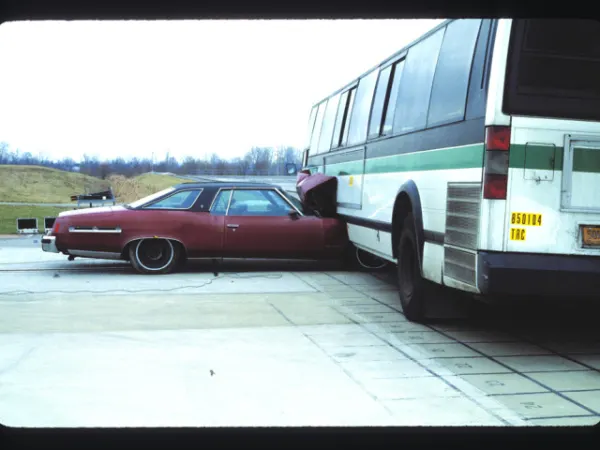
In 1986, the ABA and the UMA (still known as the United Bus Owners of America) announce new liability insurane programs for their members. Members of both organizations are more easily able to obtain the $5 million minimum in liability insurance.
In 1987, Sen. Orrin Hatch (R-Utah) introduces legislation that bans smoking on all regularly scheduled modes of passenger transportation, inlcuding airplanes, passenger trains, buses and rapid transit. The proposed legislation comes in the wake of the U.S. Surgeon General's report that second-hand smoke can cause lung cancer and other diseases.