
Management
How World Cup Mobility Put Transit and Motorcoaches to the Test
Behind the seamless trips were months of planning, multimodal partnerships, and lessons agencies and operators can carry into the next mega-event.


 MENU
MENU SEARCH
Advances in data and analytics are giving transit agencies new opportunities to refine maintenance practices, improve efficiency and make more informed decisions about asset performance.

Transit agencies are increasingly using data and analytics to refine maintenance strategies and improve system reliability.
METRO
*Summarized by AI
Transit agencies operate in an environment where reliability is paramount, and risk tolerance is understandably low.
Preventive maintenance programs, built on decades of experience and manufacturer guidance, have long supported safe and dependable service across complex systems.
Today, agencies also have access to far more operational data, analytical tools, and real-world performance insight than what was available when many programs were first established. The result? Greater opportunity to not just maintain more or less, but to “right maintain.”
With richer data and improved analytical capability, maintenance plans can be adjusted to reflect how assets actually perform in service.
In practice, this may mean increasing maintenance where risk or wear is higher, while more often retiring ineffective tasks and extending maintenance cycle intervals where data shows they add little value.
This shift does not suggest the industry has been doing the wrong thing. In most cases, current programs reflect prudent, safety-focused decisions made with the best information available at the time. It’s an approach that delivers consistent and reliable results.
So why change now?
Across the industry, future-focused agencies are beginning to ask whether long-standing practices still apply to today’s vehicles, operating conditions, and data maturity.
In doing so, they are discovering that modest adjustments can free capacity, improve asset availability, and support workforce sustainability.
Every transit agency understands the maintenance process essentially begins in a familiar place.
When a bus, railcar, escalator, or power system is purchased, the original equipment manufacturer (OEM) delivers a prescribed maintenance plan for that asset. This is expected and contractual, and it serves an important role in establishing initial maintenance practices.
As a result, many agencies carry these OEM maintenance plans forward as the default program throughout an asset’s service life.
Why? OEM maintenance plans provide an essential foundation, particularly during early asset life and warranty periods. They are intentionally designed to be broadly applicable across a wide range of operating environments, offering a consistent baseline for care and reliability.
Over time, several considerations become increasingly relevant:
The bus market provides a useful illustration. Maintenance plans issued by major manufacturers are generally intended to deliver consistency across fleets and operating contexts, and as such, often remain stable over time, with reliable results. Designed to serve a broad range of agencies, climates, and duty cycles, these standardized programs emphasize uniformity and reliability, delivering dependable outcomes even as vehicle technologies and operating data continue to evolve.
As assets evolve and agencies gain access to richer operational data and more advanced analytical tools, an opportunity arises to reassess whether traditional maintenance strategies continue to reflect current operating conditions, and where thoughtful refinement can deliver greater reliability, efficiency, and value.
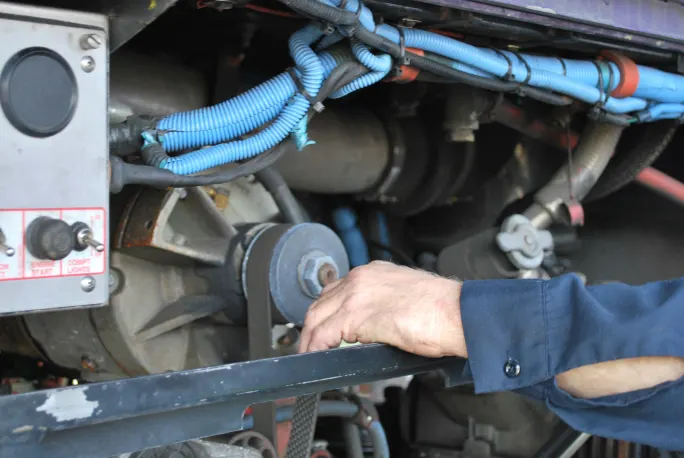
Advances in operational data are helping agencies better target maintenance efforts, reducing downtime and maximizing asset performance.
GRTC
Independent studies conducted over several decades indicate that only about 10% to 15% of asset failures are attributable to predictable material fatigue, leaving the great majority unpredictable.
When time-based schedules are applied uniformly, inspections can deliver diminishing returns.
In many cases, situations occur in ways that are not time-dependent, are difficult to detect through visual inspection, or are not meaningfully influenced by inspection frequency.
As a result, maintenance programs may devote significant effort to inspecting for conditions that:
This does not reflect poor practice; rather, it reflects maintenance strategies that were developed when less was known about failure behavior.
Today, a deeper understanding of patterns creates an opportunity to better align inspection and maintenance efforts with issues that most directly affect reliability.
Planned maintenance is essential, but whenever an asset is taken out of service, opened up, or reassembled, there is potential for unintended variability introduced by human factors and disturbed components.
This is one reason many agencies are reassessing whether every task adds proportional value relative to the labor required and the operational risk. The familiar adage, “If it ain’t broke, don’t fix it,” reflects a principle that is increasingly supported by data — not as a call to defer maintenance, but as guidance to do the right work, at the right time, for the right reasons.
Maintenance professionals instinctively recognize this dynamic through experience.
However, what’s often missing isn't awareness but a structured, defensible way to translate that experience into maintenance decisions that improve reliability while reducing unnecessary intervention.
The goal isn’t perfection, and it certainly isn’t abandoning preventive maintenance. It’s about making informed decisions in an imperfect operating environment, using the best data available to refine maintenance strategies continuously. That means learning from the data available to agencies.
Here are three practical opportunities for agencies that do not require introducing new technology, replacing assets, or major organizational change.
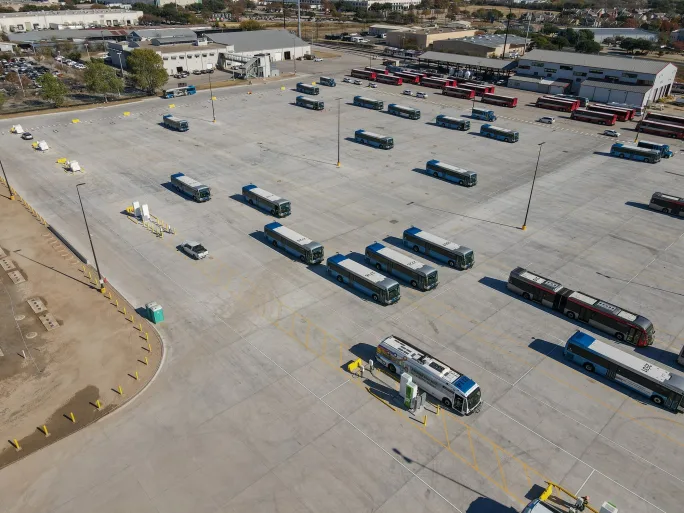
By aligning maintenance work with real-world asset performance, agencies can improve efficiency while making better use of limited workforce resources.
CapMetro/WSP
For every maintenance task, ask one simple question: What failure is this task intended to prevent?
Then ask another: Does that failure follow a time-based or age-related pattern?
If the answer to the second question is “no,” the task deserves closer examination. In many transit systems, preventive maintenance activities are designed to detect failures that occur randomly or catastrophically — and are therefore not meaningfully influenced by inspection frequency.
Where tasks are not clearly linked to preventable failure modes, agencies may have opportunities to adjust scope or frequency, redirecting effort to activities with higher demonstrated value.
This isn’t about doing less; it’s about focusing time and expertise on where it will make the greatest impact. Following reliability-centered maintenance principles validate whether an existing task still adds the intended value.
Once it is clear what you’re maintaining, the next question is how often this evaluation should be done.
Ask:
I worked with a rail agency that shifted from a rigid time-based cycle to a modestly extended mileage-based interval. This change reduced maintenance costs by millions of dollars, while simultaneously increasing fleet availability by approximately four railcars.
When tasks can be safely aligned to mileage, runtime, or condition, agencies may reduce workload while maintaining — or improving — reliability.
Most agencies already capture significant amounts of maintenance data in their computerized maintenance management systems (CMMSs) or enterprise asset management (EAM) systems. The challenge isn’t data availability within the CMMS or EAM — it’s how that data is used.
It’s key to incorporate maintenance data into a maintenance strategy. This can be done as an ongoing discipline by:
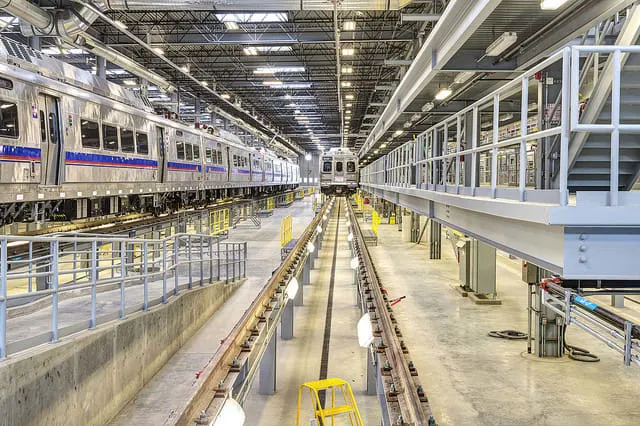
Smarter use of maintenance data is helping agencies balance reliability, cost and workforce capacity across their fleets.
Denver RTD
These are not abstract ideas — they have the potential to be powerful ones.
Over-maintenance affects more than budgets. It draws from scarce labor, reduces asset availability, and can require agencies to operate larger fleets than necessary to meet service needs and satisfy customer expectations.
At a time when transit agencies are working hard to recruit and retain skilled maintenance professionals, even modest reductions in low-value work can help protect limited workforce capacity while keeping assets in service.
When maintenance effort is better aligned with data-driven information showing how assets actually fail, agencies see tangible benefits: more meaningful labor hours spent on high‑value tasks, less asset downtime, higher availability, and improved reliability driven by reductions in preventable bus or railcar failures.
In many systems, refining maintenance strategies has proven to be one of the fastest ways to reclaim full-time equivalent capacity without layoffs or service reductions. This allows teams to focus on work that most directly supports safety, reliability, and performance.
At the same time, maintenance data is richer and more accessible than ever before, creating opportunities to streamline operations in ways that were difficult or impractical just a few years ago.
The opportunity now is not to abandon what has worked, but to build on it. Use data, experience, and intent to refine maintenance decisions continuously.
The most effective agencies maintain discipline, feedback, and purpose. They are working smarter, not harder.
About the Author: Doug Stevenson, Senior Vice President, Asset Management, WSP in the US
Data-driven maintenance involves using data and analytics to refine maintenance practices, improve efficiency, and make more informed decisions regarding asset performance.
*Summarized by AI
Loading data...

Management
Behind the seamless trips were months of planning, multimodal partnerships, and lessons agencies and operators can carry into the next mega-event.







Management
Once viewed primarily as transit operators, agencies are now leveraging land, partnerships, and long-term planning to boost ridership, expand housing, and strengthen communities.
Management
An Urban Institute evaluation found that a fare-free transit program increased ridership, reduced transportation barriers, and improved access to jobs, healthcare, and other essential services.
Security and Safety
Transit agencies are redefining safety with care-based response models. See how leaders are improving trust and operations.
Management
Advances in data and analytics are giving transit agencies new opportunities to refine maintenance practices, improve efficiency and make more informed decisions about asset performance.
Technology
The farebox is no longer just a payment machine. Learn how agencies are using new tech and pricing strategies to rethink how riders pay for transit.
Management
How stress, unresolved trauma, and chronic burnout can impact operator performance—and the steps agencies can take to improve safety and well-being.
Management
Mentorship programs at VTA and King County Metro are transforming the experience of new bus operators — boosting retention, improving safety, and strengthening connections among frontline workers, unions, and management.
Motorcoach
With more operators nearing retirement and investor interest on the rise, now is the time to plan your exit strategy. Here’s how to prepare your business for a successful sale that avoids leaving money on the table.