



[Photos] Tour NY MTA's next-generation subway cars
The Metropolitan Transportation Authority Board recently approved the purchase of 535 state-of-the-art, next-generation R211 subway cars. Prior to the approval, NYC Transit presented prototypes of the new cars at 34 Street -Hudson Yards to seek customer feedback, as well as introduce the future of the New York City subway to the public.
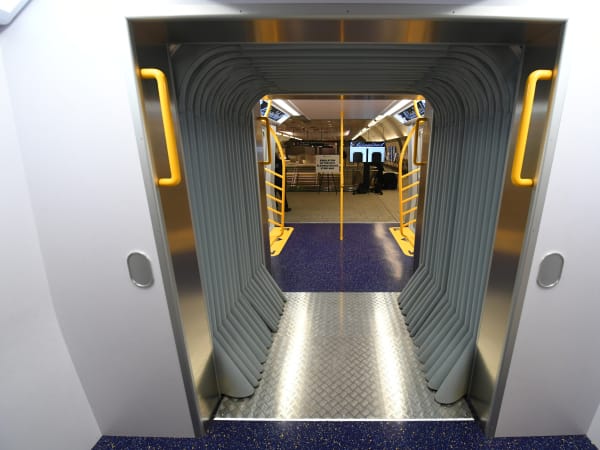
Some of the R211 cars will feature an “open gangway” pilot program located at the ends of the cars. Photo: MTA New York City Transit/Marc A. Hermann
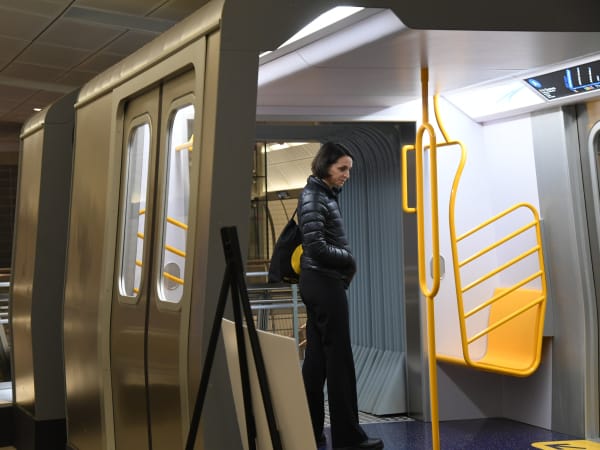
The $1.4 billion contract, awarded to Kawasaki Rail CarInc., includes options for up to 1,077 additional cars, for a total acquisition of up to 1,612 cars at a cost of $3.7 billion. Photo: MTA New York City Transit/Marc A. Hermann
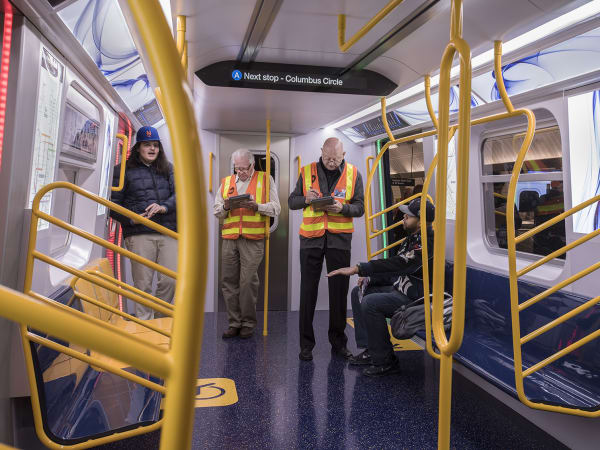
During December's open house, MTA staff was on-hand and on social media as customers helped further refine the design. Photo: MTA New York City Transit/Marc A. Hermann
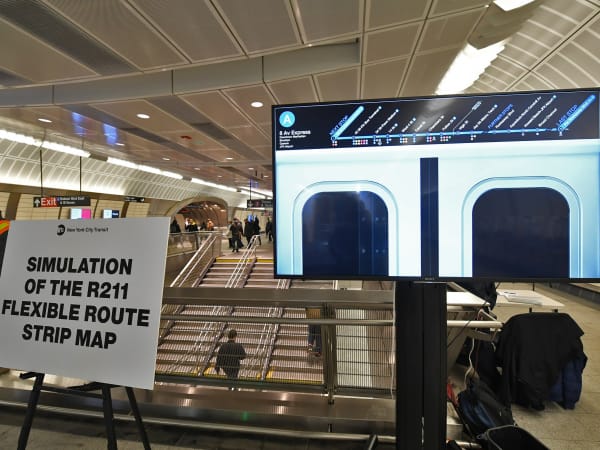
In December 2017, New York City Transit presented prototypes of the new R211 designs at 34 Street -Hudson Yards to seek customer feedback, as well as introduce the future of the New York City subway to the public. Photo by MTA New York City Transit/Marc A. Hermann
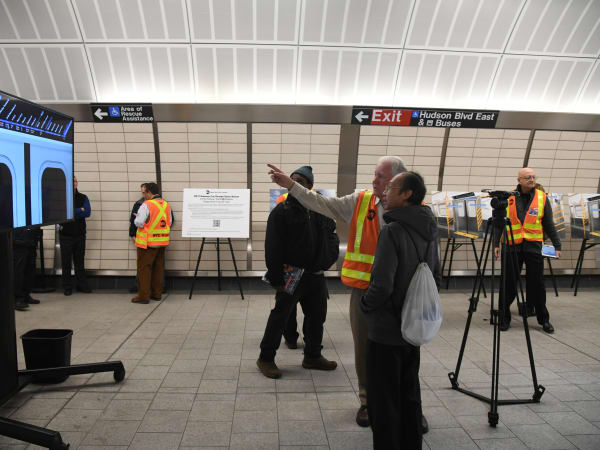
For the initial, base contract, Kawasaki will design and deliver 440 new closed-end cars for the B Division, 75 closed-end cars for Staten Island Railway, and 20 innovative open gangway cars as part of a pilot program to MTA New York City Transit. Photo: MTA New York City Transit/Marc A. Hermann
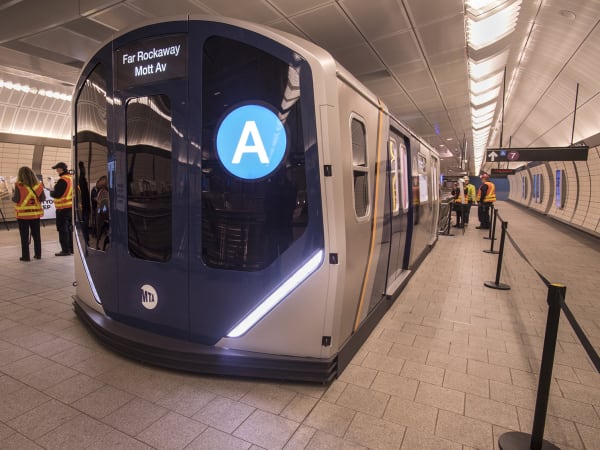
Cars delivered to the B Division will be compatible with an advanced signaling system known as Communications-Based Train Control, enabling New York City Transit to deliver more frequent and reliable service by operating trains more closely together. Photo: MTA New York City Transit/Marc A. Hermann
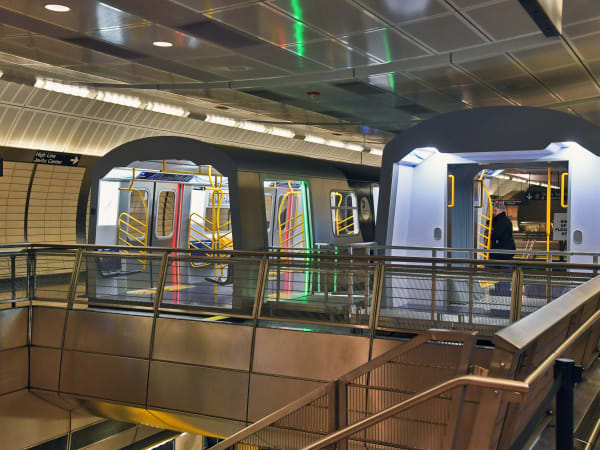
The cars will be built and tested in Kawasaki facilities in Yonkers, N.Y., and Lincoln, Neb. Photo: MTA New York City Transit/Marc A. Hermann
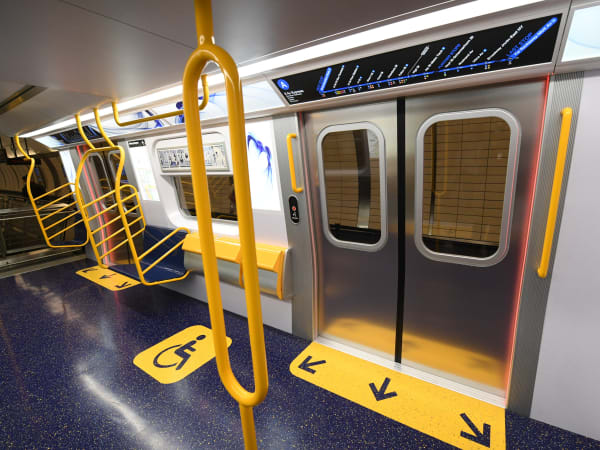
All of the cars also include digital displays that will provide real-time, location-specific information about service and stations, new grab rails including double-poles, and brighter and clearer lighting, signage, and safety graphics. Photo: MTA New York City Transit/Marc A. Hermann
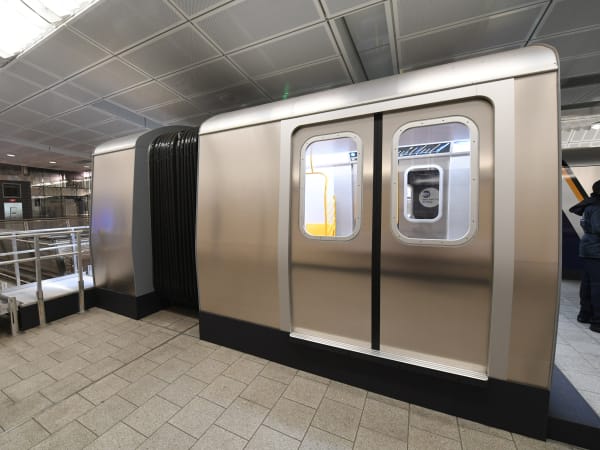
The R211 cars feature 58-inch-wide door openings, which are eight inches wider than standard doors on existing cars. Photo: MTA New York City Transit/Marc A. Hermann
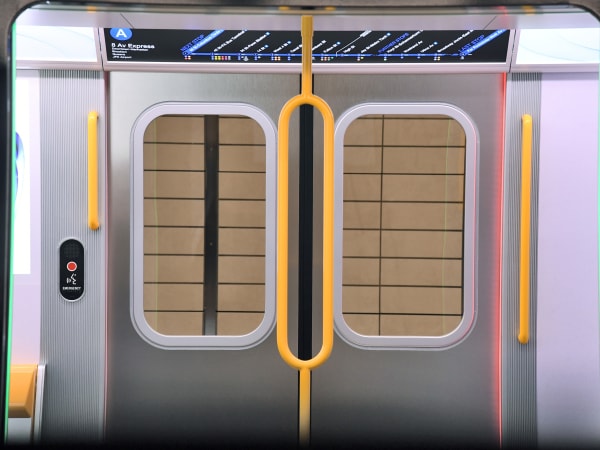
The expanded doors are designed to reduce delays and speed up train movement by speeding boarding and reducing the amount of time trains sit in stations. Photo: MTA New York City Transit/Marc A. Hermann