



2019 Women in Transportation:HNTB's Kimberly Slaughter, Lane Transit District's Aurora Jackson
Women in Transportation: Metro-North Railroad's Catherine Rinaldi
Welcome to our annual feature where we profile exceptional women from various facets of the transportation industry.
by Janna Starcic, Executive Editor
September 11, 2019
Catherine Rinaldi is president of Metro-North Railroad.
Metro-North Railroad
3 min to read
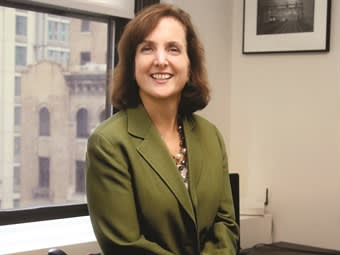
Catherine Rinaldi is president of Metro-North Railroad.
Metro-North Railroad
Catherine Rinaldi, President, Metro-North Railroad
Grew up: Huntington, Long Island, N.Y.
Studies: I was an English major at Yale and went on to law school at the University of Virginia.
Career aspirations: I wanted to be a journalist, believe it or not.
Industry start: I worked in the counsel’s office for former Governor George Pataki and my portfolio included transportation, energy and the environment. It was my first exposure to MTA. Later, I joined MTA as its general counsel.
Early influence: I was a law clerk for many years. As a law clerk, you need to read carefully and write clearly and quickly. It has helped me in every job that I have held since.
Current role: As President of Metro-North, I lead a team of approximately 6,700 talented transportation professionals. Metro-North is the second-busiest commuter railroad in North America. We provide commuter rail service to customers in southeastern New York and Connecticut, and, under contract with NJ Transit, to customers in Orange and Rockland Counties. Our mission is to be a safe, reliable and efficient railroad providing regional mobility and excellent service to our customers.
Accomplishment: I am the first female president of Metro-North. Railroading is traditionally a very male-dominated profession, and I have heard from many women at the railroad how much my promotion to the role of president meant to them, and how much it signals that things have changed in the industry.
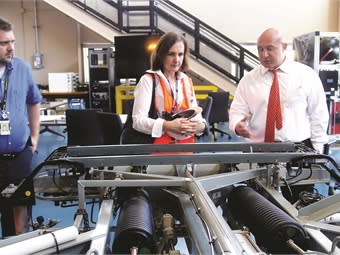
"The most rewarding thing about my job is the opportunity to go out into the field and talk to Metro-North employees," says Metro-North Railroad President Catherine Rinaldi.
Metro-North Railroad
Rewarding: The most rewarding thing about my job is the opportunity to go out into the field and talk to Metro-North employees. It’s important to show that I care about what they do, and it’s important for them to know that senior leadership understands their work and their challenges.
Projects: Last October, Metro-North launched Way Ahead, a customer-facing initiative that sets out how Metro-North will set the standard for safety, reliability and innovation in the delivery of excellent customer service. Way Ahead, which builds on Metro-North’s earlier strategic plan, is based upon three priorities — Metro-North’s customers, our people and our infrastructure — and is guided by three principles: safety, integrity and innovation. We have developed strategies to advance the Way Ahead program and recently issued a six-month update in which we highlighted a number of new initiatives that have improved the customer experience. These include the introduction of station ambassadors at our six busiest stations, the introduction of Fordham stops on New Haven Line trains, right-of-way clean-up in the Bronx, with the removal of 47 tons of waste at a location near Woodlawn and another 3.8 tons of trash at a location near Melrose, replacement of the Grand Central Terminal “Big Board,” and replacement of bridges in Southeast and Mount Vernon.
Profound moment: I was Chief of Staff at MTA Headquarters during Superstorm Sandy. I witnessed the devastation that the storm wrought across the MTA system, and I saw first-hand the heroic efforts that were taken to restore service in the days following the storm. It was inspiring to see the entire MTA family of agencies pull together during a very difficult time for the city and state of New York, and it brought home to me how central the MTA is to the economic health and vibrancy of the entire region.
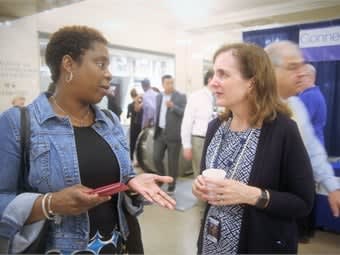
Rinaldi speaking to customers.
Metro-North Railroad
Inspiration: I am inspired by the Metro-North team every time we have an operational emergency. We pull together and get the job done. It is the greatest honor of my life to lead this group of talented and dedicated professionals.
Favorite pastimes: I have a six-year-old son. I tell myself that he keeps me young, but it sure doesn’t feel that way on some days. When I am outside of work, I am mostly chasing him around or driving him to and from activities. Because my job is so unpredictable, quality family time is particularly precious.
Subscribe to Our Newsletter
More Management
New York MTA Launches Historic $1.9B Signal, Track Modernization Project
Funded in part by congestion pricing revenue, the project will replace nearly century-old signals along the A and C lines in Brooklyn and Queens.
Read More →
Brian Dickson on Building Stronger, More Resilient Transportation Organizations
Bus Business Consultants Founder Brian Dickson discusses the leadership principles, operational discipline, and strategic planning that separate transportation companies positioned for long-term success from those stuck in survival mode.
Read More →
LA Metro Breaks Ground on Vermont BRT Project
The 12.4-mile corridor is projected to serve 66,200 daily riders, reduce travel times by up to 24%, and create the nation's busiest bus rapid transit corridor.
Read More →
Building Stronger Leaders, More Resilient Transit Teams
Dr. Carol Parker Walsh discusses leadership development, employee retention, workplace culture, and preparing transit’s workforce for AI and automation.
Read More →
Roman Cornell on ABC Companies’ Evolution and the Future of Passenger Transportation
The company’s CEO discusses carrying forward a third-generation family legacy, ABC’s continued evolution in passenger transportation, support for increasingly complex fleets, and how technology and continued investment could help operators improve uptime.
Read More →
CATS Launches West Charlotte Microtransit Zone, Expands Transit Services
The new microtransit zone connects residents to key destinations as Charlotte Area Transit System rolls out the first phase of its 2055 Transit System Plan.
Read More →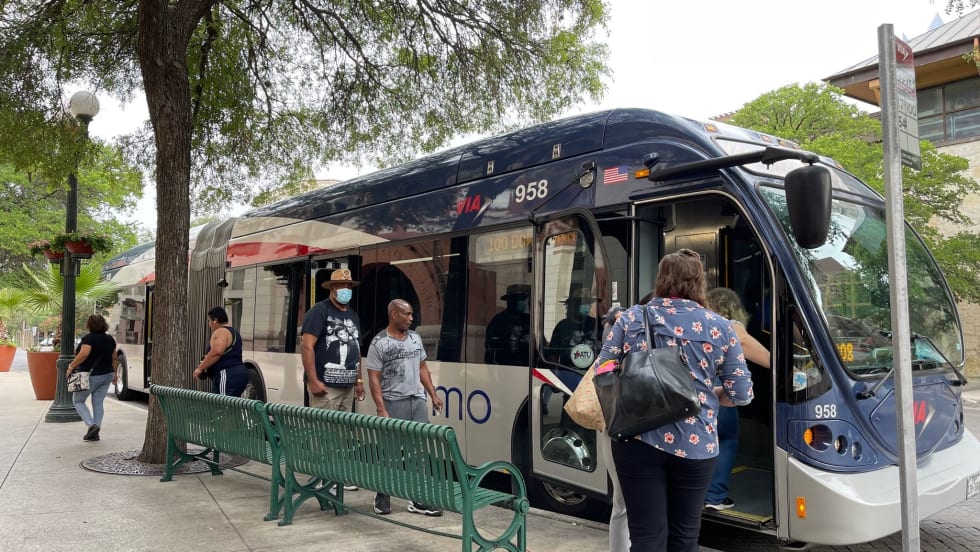
VIA Bus Ridership Grows 10.1% Through August 2026
San Antonio's VIA Metropolitan Transit reported the highest bus ridership growth among major Texas transit systems. Federal Transit Administration data ranked it second among the nation's 50 largest transit systems.
Read More →
CSA Group Releases Climate Resilience Standard for Transit, Passenger Rail
Developed with support from the Standards Council of Canada, CSA D700 guides assessing climate-related risks and planning adaptation measures for transit and passenger rail systems.
Read More →
ETA CEO John Maglio on Transit Technology, Innovation, and Building Agency Trust
ETA founder and CEO John Maglio explores the evolution of transit technology, the importance of reliable systems, and how stronger partnerships can help agencies improve operations and the passenger experience.
Read More →
COTA Launches First Customer Experience Action Plan to Improve Transit Service
The new plan outlines improvements to service reliability, accessibility, communication, and the overall rider experience across Central Ohio's transit system.
Read More →