



Passenger rail, bus service boosts real estate values, report finds
The report explored seven metropolitan regions, including Boston, Los Angeles, and Seattle, that provide access to heavy rail, light rail, commuter rail, and BRT.

The seven sample areas were examined by residential and commercial sales performance, rent, neighborhood characteristics, local government interventions, and housing affordability for properties near transit.
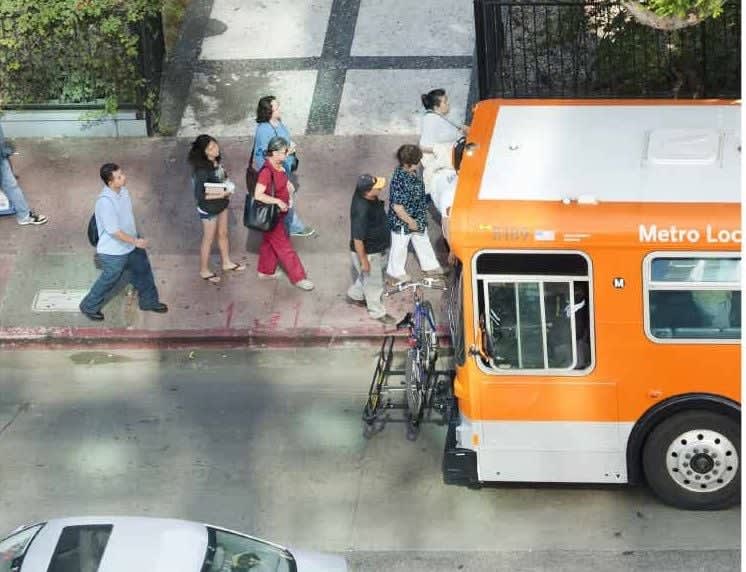
L.A. Metro
The seven sample areas were examined by residential and commercial sales performance, rent, neighborhood characteristics, local government interventions, and housing affordability for properties near transit.
L.A. Metro
Neighborhoods located within one-half mile of public transit services outperformed those in areas farther from public transit based on several factors, according to a report released by the American Public Transportation Association (APTA) and the National Association of Realtors®.
“The Real Estate Mantra – Locate Near Public Transportation” highlighted the critical role public transportation plays in determining real estate values, revealing that commercial and residential real estate market sales thrive when residents have mobility options close by.
The report explored seven metropolitan regions, including Boston, Los Angeles, and Seattle, that provide access to heavy rail, light rail, commuter rail, and bus rapid transit. Residential properties within these areas had a higher median sale price of 4% to 24% between 2012 and 2016, the report found. Commercial property values also experienced gains in the studied cities, where four of the regions saw median sales price per square foot increase between five and 42 percentage points in areas close to public transit.
Data also showed that residents of transit-oriented areas experience lower transportation costs, have higher access to jobs and are less likely to own cars. Transportation costs in transit-oriented areas are significantly lower than other regions, with an average annual savings of $2,500 to $4,400 for the typical household. One in four households near transit do not own a vehicle, according to the study.
The seven sample areas were examined by residential and commercial sales performance, rent, neighborhood characteristics, local government interventions, and housing affordability for properties near transit.
“Access to public transportation is a hugely valuable community amenity that increases the functionality and attractiveness of neighborhoods, making nearby communities more desirable places to live, work, and raise a family,” said NAR 2019 First VP Charlie Oppler, who spoke at a press conference held during APTA’s TRANSform Conference in New York. “The results of our report, conducted over multiple years alongside the American Public Transportation Association, should reiterate to policymakers at all levels of government the importance of investing in modern, efficient infrastructure that facilitates growth and helps our nation keep pace in a rapidly evolving world.”
To read the full study, click here.
More Management

METRO Opens Submissions for 2026 Motorcoach Awards
Nominations are now being accepted for METRO Magazine’s Operator of the Year and Innovative Operator of the Year awards.
Read More →
New York MTA Advances Final Contract for Second Avenue Subway Expansion
Contract Four is the largest in the Second Avenue Subway Phase 2 project and includes construction of station infrastructure, tracks, and signals for the subway expansion, MTA officials said. Work on Contract Four will begin in 2027.
Read More →
Transit Agencies Highlight Safety Gains at National Summit
Leaders from 15 major transit systems shared crime-reduction results and safety initiatives while discussing the role of continued federal support.
Read More →

NITA Names New Leadership, Expands Reduced-Fare Program at First Board Meeting
The new regional transit authority appointed its first board chair and interim executive director while extending reduced fares across CTA, Metra, and Pace for eligible riders.
Read More →
Beyond the Checklist: A Structured Approach to Transit Maintenance
Reliability-Centered Maintenance helps transit agencies move beyond routine checklists to focus limited resources on the assets and failures that have the greatest impact on safety, reliability, and service.
Read More →
APTA 2026 Nominating Committee Selects Leadership Slate, Names Chair and Vice Chair Nominees
Leadership changes will help shape the association’s priorities and its representation of the transportation industry during the 2026–2027 term.
Read More →
DART Launches Major Security, Fare Enforcement Initiative
The 90-day demonstration will deploy coordinated security teams at five light rail stations while testing controlled access and gathering data to guide future investments.
Read More →
Advancing Fare Collection Through Technology and Innovation
Learn about delivering 1300 gates at 91 stations while managing fare evasion. Explore the large scale deployment, solution customization and real-world results that affect the region. Prepare for deployment in your region now.
Read More →
Game Day in Motion: Moving Millions During the 2026 World Cup
Between packed transit stations and team motorcoaches, see how agencies and operators across North America tackled the transportation demands of the 2026 FIFA World Cup.
Read More →
Surface Transportation Extension Averts Shutdown, Leaves Transit Funding Gap
The stopgap keeps federal transportation programs moving, but missing advance funding could complicate the transit and rail projects agencies are planning next.
Read More →